Cookies help us deliver the best experience on our website. By clicking Accept you are agreeing to the placement and use of cookies as described in our privacy policy.


If you’ve looked into building or buying a hydroponic system, you’ve encountered net cups : the small mesh containers that hold plants above nutrient solution. They’re a small component with a big job, and understanding how they work helps you make better decisions about your growing setup.
Key takeaways
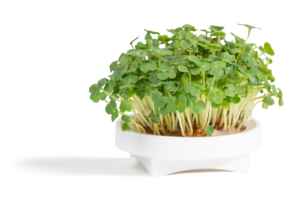 Net cups are mesh containers that support plant roots in hydroponic systems while allowing water and nutrient flow.
- Standard sizes range from 2″ to 8″, most home herb and greens systems use 2″ cups.
- Growing medium inside the net cup (clay pebbles, rockwool, coco coir) anchors the plant and manages moisture.
- Pre-seeded grow pods like Gardyn’s yCubes eliminate the need to select, fill, and seed net cups manually.
- Seedless yCubes are available for growers who want to use their own seeds.
What are net cups?
Net cups (also called mesh cups or net pots) are small, basket-like containers with open mesh sides. They fit into holes cut or molded into hydroponic system panels, with the bottom of the cup touching or submerged in the nutrient solution below. The mesh allows roots to grow through the sides and bottom into the solution while the cup itself supports the plant stem.
Net cups are the standard interface between a hydroponic plant and its growing system. They’re inexpensive, reusable, and available in sizes from 2 inches (suitable for herbs and small greens) up to 8 inches (for larger fruiting plants like tomatoes or cucumbers).
Growing media: what goes inside a net cup
Net cups are filled with a growing medium:an inert substrate that anchors the plant, manages moisture around the root crown, and supports beneficial microbial life. Common options:
| Growing medium | Best for | Notes |
| Clay pebbles (LECA) | Most hydroponic setups | Reusable, pH neutral, excellent drainage |
| Rockwool | Seed starting, commercial growing | Great germination rates; not reusable |
| Coco coir | DWC and drip systems | Organic, retains moisture well |
| Perlite | Mixing with other media | Improves drainage and aeration |
| Starter plugs | Automated systems | Pre-formed, consistent sizing |
For most home growers, clay pebbles are the default choice, they’re easy to clean between growing cycles, pH-neutral, and available everywhere. Rinse new clay pebbles thoroughly before use to remove dust that can affect pH.
Sizing: which net cup size do you need?
The right size depends on your plants and system design:
- 2″ cups: Ideal for herbs, lettuces, and leafy greens. The standard for most compact home systems.
- 3″ cups: A step up for slightly larger herbs or greens. Common in mid-size systems.
- 4″–6″ cups: Suitable for larger plants, full-size basil, larger lettuces, young tomatoes.
- 8″ cups: For fruiting plants in dedicated systems where root mass needs more support.
Most vertical hydroponic towers and compact home systems are designed around 2″ cups : the system’s column spacing and reservoir design are calibrated for this standard.
From net cups to grow pods
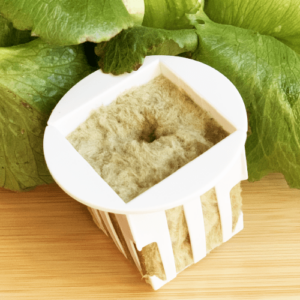 Traditional net cups require you to source growing medium, fill each cup, plant a seed or seedling, and wait for germination, all before your main growing system is even involved. Grow pods streamline this by pre-forming the medium into a single compact unit, sometimes with seeds already embedded.
Gardyn takes this further with yCubes, pre-seeded, pre-formulated growing pods that drop directly into Gardyn’s hydroponic columns. No medium to source, no seeds to plant, no germination guesswork. Each yCube contains a specific plant variety, already optimized for Gardyn’s Hybriponic™ growing environment.
Gardyn yCube varieties
yCubes are available in over 50 varieties across herbs, greens, fruiting plants, and edible flowers. Some popular choices:
Herbs
Basil, Sweet Thai basil, Purple basil, Mint, Cilantro, Chives, Thyme, Rosemary, Oregano, Dill, Sage, Italian parsley, Lemongrass, Sweet marjoram, Holy basil
Greens and lettuces
Arugula, Butterhead lettuce, Romaine, Kale, Lacinato kale, Red Swiss chard, Bok choy, Red sails, Red salad bowl, Green mustard, Watercress
Fruiting plants
Cherry tomatoes, Cucumbers, Jalapeños, Sweet peppers, Banana peppers, Mini strawberries, Green beans, Mini cauliflower
For growers who want to use their own seeds
Prefer to grow from your own seed collection? Seedless yCubes are available : the same pre-formed growing medium, ready for your own seeds. This combines the convenience of the Gardyn system with the flexibility to grow any variety you choose.
|
|
Frequently asked questions
Can I reuse net cups?
Yes, standard net cups and most growing media (particularly clay pebbles) can be cleaned and reused multiple growing cycles. Rinse with diluted hydrogen peroxide solution between uses, then rinse thoroughly with plain water before adding new plants.
What size net cup does Gardyn use?
Gardyn’s yCube system uses a proprietary pod format designed for the Gardyn column architecture. Seedless yCubes maintain the same form factor, so the transition to your own seeds is seamless.
Do I need to pH-adjust the water when using yCubes?
Gardyn’s system is designed to work within a standard water quality range. For most tap water sources, no adjustment is needed. Kelby will flag any issues it detects in your grow environment.
How do I know when to replace a yCube?
Kelby monitors plant health and will notify you when a plant is ready to harvest or when a yCube should be replaced. Most herbs and greens are ready to harvest within 3–5 weeks; fruiting plants have longer cycles.