Cookies help us deliver the best experience on our website. By clicking Accept you are agreeing to the placement and use of cookies as described in our privacy policy.


Fresh herbs die fast on a kitchen counter and even faster in a refrigerator drawer. Most people have had the experience of buying a bunch of cilantro for one recipe and throwing away most of it a week later.
This guide covers the correct storage method for each type of fresh herb : the ones that behave like cut flowers, the ones that tolerate refrigeration, and why the best solution for always having fresh herbs available is not a storage method at all.
Key takeaways
- Tender herbs (basil, cilantro, parsley, mint, chives) and woody herbs (thyme, rosemary, sage, oregano) require different storage approaches.
- Basil should never be refrigerated, cold damages the cells and turns it black. It keeps best at room temperature in water like cut flowers.
- Most herbs store longest wrapped in barely damp paper towel inside a sealed container in the coldest part of the refrigerator.
- Freshness at purchase determines storage life, herbs already in decline at the store will last days, not weeks.
- The most effective solution to herb freshness is eliminating the need to store them: growing herbs at home means cutting only what you need, only when you need it.
Herb storage by type
Basil, never refrigerate
Basil is cold-sensitive, refrigerator temperatures (35–40°F) cause cellular damage that turns it black within 24–48 hours. Store fresh basil at room temperature, stems in an inch of water (like cut flowers), loosely covered with a plastic bag. Change the water every two days. Kept this way, basil lasts 1–2 weeks.
Purple basil, Thai basil, and holy basil follow the same rule.
Cilantro and Italian parsley, water method
Both cilantro and Italian parsley store best trimmed and placed upright in a jar with an inch of water, covered loosely with a plastic bag, in the refrigerator. Change the water every 2–3 days. Stored this way, they last 2–3 weeks.
Mint, water or damp paper
Mint is fairly cold-tolerant. Either the water-jar method (refrigerator) or wrapped in barely damp paper towel in a sealed container. It keeps 1–2 weeks.
Chives, damp paper towel
Chives keep best wrapped in a damp paper towel inside a sealed container in the refrigerator. Do not store in water : the hollow stems become waterlogged. 1–2 weeks.
 Woody herbs (thyme, rosemary, sage, oregano), damp paper, longer life
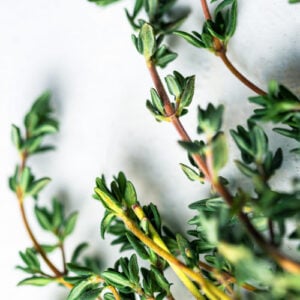
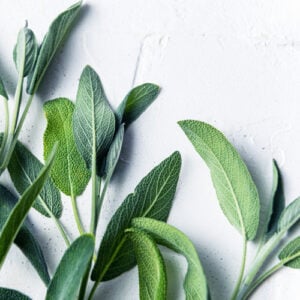
Thyme, rosemary, sage, and oregano have lower moisture content and keep significantly longer than tender herbs. Wrapped loosely in a damp (not wet) paper towel inside a container in the refrigerator, they last 2–4 weeks. They also dry well, see below.
Dill, like parsley, more delicate
Dill is feathery and wilts fast. Water-jar method in the refrigerator, loosely covered. Use within 1 week.
| Herb | Best storage method | Temperature | How long |
| Basil | Stems in water, loosely covered | Room temp (never fridge) | 1–2 weeks |
| Cilantro | Stems in water, loosely covered | Refrigerator | 2–3 weeks |
| Italian parsley | Stems in water, loosely covered | Refrigerator | 2–3 weeks |
| Mint | Stems in water or damp paper towel | Refrigerator | 1–2 weeks |
| Chives | Damp paper towel in sealed container | Refrigerator | 1–2 weeks |
| Dill | Stems in water, loosely covered | Refrigerator | Up to 1 week |
| Thyme | Damp paper towel in sealed container | Refrigerator | 2–4 weeks |
| Rosemary | Damp paper towel in sealed container | Refrigerator | 2–4 weeks |
| Sage | Damp paper towel in sealed container | Refrigerator | 1–2 weeks |
When herbs need preserving: freezing and drying
Freezing herbs
The best herbs to freeze: parsley, cilantro, chives, basil (in oil), dill. Wash, dry thoroughly, chop finely, pack into ice cube trays with olive oil, freeze solid, transfer to bags. The oil-herb cubes drop directly into soups, sauces, and sautés. Do not freeze rosemary or thyme, their texture after freezing is poor; they’re better dried.
Drying herbs
Woody herbs dry excellently: thyme, rosemary, oregano, sage. Air-drying: bundle and hang in a dry, ventilated space for 1–2 weeks. Oven-drying: 170°F for 2–4 hours with the door cracked. Dehydrator: 95–115°F for 2–4 hours. Store dried herbs in a sealed container away from light.
Tender herbs (basil, cilantro, parsley, mint) dry less successfully, they lose most of their flavor. Better to freeze as oil cubes.
Why you’re always throwing away herbs, and the structural fix
The core problem with fresh herb storage is that commercial herbs are sold in large quantities but used in small amounts per recipe. A recipe calls for two tablespoons of cilantro; you buy a bunch of 30 stems. You store it correctly, but you use it for one recipe and forget about it. Two weeks later, it’s gone.
The structural fix is growing herbs at home and harvesting only what you need, when you need it. A basil yCube growing in a Gardyn system doesn’t need storing, you cut exactly the leaves a recipe requires, from a living plant, with no waste and no degradation. The plant continues growing. The concept of “how long does basil last” becomes irrelevant.
See also: 5 ways to use fresh herbs.
| “I used to spend two or three dollars on herbs for one recipe and throw away the rest. Now I grow what I need. I haven’t bought a bunch of cilantro from a store in eight months.”
Rosanna T., Gardyn Studio owner, Portland OR |
| Never throw away herbs again. |
| Cut only what you need, only when you need it. Basil, cilantro, parsley, mint, chives, all growing in your Gardyn, all harvest-ready daily. |
Further reading: UC Davis Postharvest Technology Center — Fresh herb storage and postharvest handling; USDA — Proper storage for fresh herbs at home; FDA — Selecting and serving produce safely
Frequently asked questions
Why does basil turn black in the refrigerator?
Basil is cold-sensitive : a tropical plant that suffers cellular damage below about 50°F. The refrigerator (35–40°F) ruptures cell membranes, releasing polyphenol oxidase, which reacts with oxygen to produce the dark melanin compounds that cause blackening. The solution is room-temperature storage in water.
Can you freeze fresh basil?
Yes, but not as whole leaves, they turn black and mushy when thawed. Blend basil with olive oil, pour into ice cube trays, freeze, then transfer to bags. The oil-basil cubes keep for 3–6 months and work well in cooked applications (sauces, soups, pasta). For fresh use on salads or caprese, there is no substitute for fresh leaves.
How long does fresh cilantro last?
With proper storage (stems in water, loosely covered, refrigerated), fresh cilantro keeps 2–3 weeks. Without proper storage (thrown loose into the crisper drawer), it lasts 3–5 days. Most people’s cilantro dies in the crisper drawer, not because of cilantro’s nature, but because of storage method.
What is the best way to keep herbs fresh longer?
For tender herbs: the water-jar method, trim stems at an angle, place in an inch of fresh water, cover loosely, refrigerate (except basil, which stays at room temperature). For woody herbs: barely damp paper towel in a sealed container, refrigerated. Both methods significantly outperform loose storage in a crisper drawer.