Cookies help us deliver the best experience on our website. By clicking Accept you are agreeing to the placement and use of cookies as described in our privacy policy.


Walk into any urban kitchen with a Gardyn and the first thing people notice isn’t the plants, it’s the math. Thirty varieties of herbs, greens, and vegetables, growing floor to ceiling, in the footprint of a bar stool. That’s the promise of vertical hydroponic growing, and one of the most practical shifts happening in home food production right now. This guide covers how these systems work, what separates a great one from a mediocre one, and which plants thrive in them.
Key takeaways
- Vertical hydroponic systems grow plants in stacked columns, letting you harvest significantly more food per square foot than traditional horizontal growing.
- Not all vertical systems are alike, lighting coverage, plant capacity, and maintenance demands vary widely between products.
- Gardyn’s Hybriponic™ technology combines the best of hydroponic growing in a compact vertical format with built-in LED lighting and AI monitoring.
- The Gardyn Home fits 30 plants in just 2 square feet; the Gardyn Studio fits 16 plants in 1.4 square feet : both require no green thumb.
- Herbs, leafy greens, and fruiting plants all thrive in vertical hydroponic systems when lighting and nutrients are properly managed.
Walk into any urban kitchen with a Gardyn and the first thing people notice isn’t the plants, it’s the math. Thirty varieties of herbs, greens, and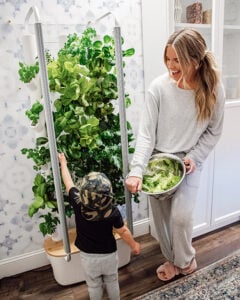 vegetables, growing floor to ceiling, in the footprint of a bar stool. That’s the promise of vertical hydroponic growing, and it’s one of the most practical shifts happening in home food production right now.
But vertical systems aren’t all created equal. Some are soil-based towers that still require weeding and watering. Others rely on outdated pump systems that need constant tinkering. And a handful, including Gardyn, have combined vertical growing with smart hydroponic technology, integrated lighting, and AI monitoring to create something genuinely different.
This guide covers how vertical hydroponic systems actually work, what to look for before you buy, which plants thrive in them, and how to set one up successfully, whether you’re a first-time grower or upgrading from a windowsill herb collection.
What is a vertical hydroponic system?
A vertical hydroponic system is a soilless growing setup that arranges plant sites in a vertical column rather than spread across a horizontal surface. Nutrient-rich water is circulated through the system, delivering everything plants need directly to their roots : no soil required.
The vertical orientation is the key innovation. Instead of needing a garden bed, raised planter, or wide shelf, plants grow up. A column that occupies 2 square feet of floor space can support 30 individual plants : a feat that would require 30 separate pots, dozens of trips to the watering can, and significantly more surface area using traditional methods.
How hydroponic growing works
In a hydroponic system, plant roots are suspended in or exposed to a nutrient solution : a carefully balanced mix of the minerals plants would normally extract from soil. Without the need to push roots through dense earth to find nutrients, plants redirect that energy into leaf and stem growth. The result: faster growth rates (up to 5x compared to soil), higher yields, and healthier plants with less intervention.
Gardyn’s systems use Hybriponic™ technology : a proprietary approach that optimizes nutrient delivery for vertical growing. Pre-seeded yCubes slot directly into the column, eliminating the need for growing media setup, seeding, or transplanting.
Vertical vs. horizontal hydroponic setups
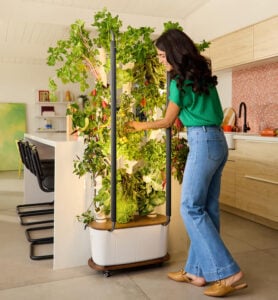 Most DIY hydroponic setups are horizontal, long trays or channels where plants sit side by side at the same height. These work well in greenhouses or purpose-built grow rooms, but they’re impractical for homes. They take up significant floor or counter space, and lighting has to cover a wide horizontal area evenly.
Vertical systems solve both problems. The column design concentrates plants in a small footprint, and integrated LED panels (as in Gardyn’s design) can illuminate all plant sites from a central position : no separate grow light purchase or mounting required.
Types of vertical hydroponic systems
Before choosing a system, it helps to understand the different approaches on the market. They vary significantly in complexity, cost, and how hands-on you need to be.
Nutrient film technique (NFT) towers
NFT systems pump a thin stream of nutrient solution continuously over plant roots. In a vertical tower format, this means the solution flows down through channels, past each plant site, and collects in a reservoir at the base before being pumped back up. These systems are efficient but require careful pump maintenance and pH monitoring.
Deep water culture (DWC) in vertical formats
DWC systems suspend plant roots directly in aerated nutrient solution. Adapting this to vertical formats requires more complex infrastructure, and it’s less common in consumer products. DWC excels for single large plants (like tomatoes) but is less suited to the multi-variety, small-plant setups most home growers want.
Hybriponic™ systems (Gardyn)
Gardyn’s Hybriponic™ technology was purpose-designed for vertical indoor growing. The system circulates nutrient-rich water through each plant pod with precision timing, ensuring roots receive both hydration and adequate oxygen. Kelby, Gardyn’s AI assistant, monitors plant health and adjusts care schedules automatically, so you’re not manually tracking pH levels or light cycles.
| System type | Maintenance level | Best for | Gardyn equivalent |
|---|---|---|---|
| NFT tower | High, pump, pH, nutrient monitoring | Experienced growers | , |
| DWC vertical | High, aeration, water levels, pH | Large single plants | , |
| Hybriponic™ (Gardyn) | Low, AI-monitored, pre-seeded pods | Beginners to advanced | Home & Studio |
| Soil tower | Medium, watering, soil replacement | Outdoor/patio growing | , |
What to look for when choosing a vertical hydroponic system
Not every vertical system will fit your space, lifestyle, or growing goals. Here are the five factors that matter most.
Lighting coverage
This is the single biggest variable in vertical growing success. Plants at the top of a column need the same light intensity as plants at the bottom, and most external grow lights can’t achieve this without complex mounting and multiple fixtures.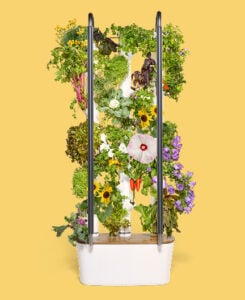
Gardyn’s systems include integrated LED panels that run the full height of the column, ensuring every plant site receives consistent, full-spectrum light. No measuring, no repositioning, no separate purchase.
Plant capacity and footprint efficiency
The ratio of plants grown to floor space used is the most practical metric. The Gardyn Home grows 30 plants in 2 square feet. The Gardyn Studio grows 16 plants in 1.4 square feet. Compare that to a pot-per-plant setup, 30 herb pots would require a dedicated room.
Maintenance and automation
Vertical hydroponic systems require regular nutrient solution changes, pH monitoring, and light schedule management. The question is whether you handle all of that manually or the system handles it for you. Gardyn’s Kelby AI monitors plant health 24/7 and sends alerts when action is needed, dramatically reducing the daily attention required.
Water usage
Hydroponic systems are significantly more water-efficient than soil gardening, Gardyn uses 95% less water than outdoor soil growing, requiring roughly 2 gallons per week regardless of how many plants are growing. For apartment dwellers or anyone managing a water budget, this is a meaningful advantage.
Startup cost vs. long-term value
Higher-end vertical systems require a larger upfront investment but reduce ongoing costs through lower water usage, elimination of soil purchasing, and reduced food waste. Use our system comparison page to see a full breakdown of Gardyn Home vs. Studio.
|
Setting up your vertical hydroponic system
Setup complexity varies by system. For a Gardyn, the process is straightforward, most members are growing within 30 minutes of unboxing.
Choose your location
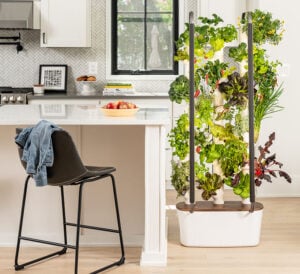 Vertical hydroponic systems need a stable, level surface within reach of a power outlet. Consider proximity to your kitchen for convenience, herbs and greens you harvest regularly are most useful within arm’s reach of where you cook. Avoid placing systems directly in front of south-facing windows where direct sun can disrupt LED-based light cycles.
Fill the reservoir and add nutrients
Most systems have a water reservoir at the base. Fill it to the indicated level and add the recommended nutrient solution. Gardyn’s membership includes pre-measured nutrient pods delivered to your door, eliminating the need to mix or measure solutions yourself.
Insert your plant pods
Gardyn’s pre-seeded yCubes slot directly into the column. Each pod contains seeds embedded in a biodegradable growing medium : no soil, no transplanting, no mess. Browse the full plant catalog to build your first grow list.
Connect and activate
For smart systems like Gardyn, download the companion app, connect to your home Wi-Fi, and Kelby handles the rest, setting light schedules, monitoring plant health, and alerting you to any issues.
|
|
What to grow in a vertical hydroponic system
Vertical systems work best for plants that grow upright and benefit from consistent moisture. Here’s what thrives.
Herbs
- Basil, Sweet Genovese, Purple basil, and Sweet Thai basil all grow vigorously in vertical columns
- Mint, spreads enthusiastically; great for dedicated pods
- Cilantro, quick-growing; stagger plantings for continuous harvest
- Chives, compact, consistent producers
- Thyme, oregano, and rosemary : slower-growing but long-lasting
Leafy greens
- Arugula : ready in as few as 3 weeks; nutty, peppery flavor
- Butterhead lettuce, soft, sweet leaves; excellent for salads
- Kale and Lacinato kale, nutrient-dense; harvest outer leaves as needed
- Red Swiss chard, beautiful color; stems and leaves both edible
- Bok choy, compact grower; great for stir-fries
Fruiting plants
- Cherry tomatoes, compact variety; consistent producers with good light
- Jalapeños : slow to mature but high yield once established
- Mini strawberries : a family favorite; sweet and prolific
- Sweet peppers, excellent in systems with strong integrated lighting
Common questions about vertical hydroponic design
How tall are vertical hydroponic systems?
Consumer systems range from about 3 to 6 feet tall. Gardyn systems stand roughly 5 feet tall and fit comfortably in most rooms without requiring ceiling clearance adjustments.
Can I run multiple systems together?
Yes, many Gardyn members run both a Home and Studio in the same space. Each unit connects independently to the Kelby app and can be monitored from a single dashboard.
Do vertical hydroponic systems smell?
Healthy hydroponic systems are virtually odorless. If a system develops a strong smell, it’s typically a sign that the reservoir needs changing, Kelby will flag this before it becomes a problem.
Frequently asked questions
How much electricity does a vertical hydroponic system use?
Gardyn’s integrated LED lighting is energy-efficient, running on a schedule optimized by Kelby. Most members see an addition of $5–15 per month to their electricity bill depending on local rates.
Can I grow year-round with a vertical hydroponic system?
Yes : one of the primary advantages of indoor vertical hydroponic growing is complete independence from seasons. You can grow the same crops in January that you grow in July.
How long does it take for plants to grow in a vertical hydroponic system?
Most herbs and greens reach first harvest within 3–6 weeks. Gardyn grows plants up to 5x faster than soil gardening. Fruiting plants like tomatoes and peppers take longer, typically 8–12 weeks to first harvest.
Do I need to buy nutrient solution separately?
Gardyn’s membership includes scheduled delivery of yCubes and nutrient solution, so you never have to source or measure nutrients independently.
What happens if a plant doesn’t sprout?
Gardyn’s yCubes are pre-seeded with germination rates optimized for indoor hydroponic conditions. If a pod doesn’t sprout within the expected window, Kelby flags it and Gardyn’s support team can provide a replacement.
Are vertical hydroponic systems good for kids?
Genuinely, vertical systems at column height make growing accessible to children. Gardyn members frequently report that kids engage more than expected, from planting pods to tracking growth through the app to harvesting for dinner.
How often do I need to change the water?
Gardyn recommends refreshing the reservoir approximately every two weeks. Kelby sends reminders when it’s time to refill, so you’re not guessing or setting calendar alerts independently.