Cookies help us deliver the best experience on our website. By clicking Accept you are agreeing to the placement and use of cookies as described in our privacy policy.


The Mediterranean diet consistently ranks as one of the most heart-protective eating patterns in the world. Decades of clinical research link it to reduced cardiovascular disease risk, lower LDL cholesterol, decreased systemic inflammation, and improved longevity. But reading about its benefits and actually eating this way every day are two very different things.
One of the most significant barriers to Mediterranean eating isn’t motivation, it’s access to the fresh, flavorful produce the diet depends on. Herbs that have lost their punch after a week in the refrigerator. Greens that wilt before they reach your plate. The gap between what the research prescribes and what actually ends up in your kitchen.
Growing Mediterranean diet staples at home closes that gap completely. As someone with a Ph.D. in food science from Cornell and years of research at the intersection of nutrition and indoor agriculture, I can tell you: the nutritional difference between produce consumed at peak freshness and produce that has traveled hundreds of miles is not trivial. What follows is both the science behind why this matters and the practical guide to growing it yourself using Gardyn’s Hybriponic™ system.
Key takeaways
- The Mediterranean diet’s heart-protective effects are well-established, but depend on the freshness and nutrient density of the produce
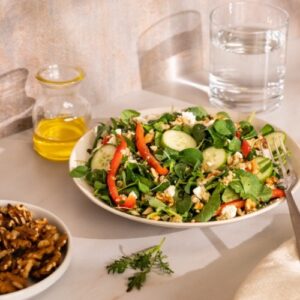 consumed.
 - Many key Mediterranean diet plants, herbs, leafy greens, tomatoes, peppers, thrive in Gardyn’s indoor Hybriponic™ system.
- Nutrient content degrades significantly after harvest; growing at home and consuming at peak freshness maximizes the diet’s benefits.
- Homegrown Mediterranean herbs like rosemary, thyme, oregano, and basil contain higher concentrations of antioxidants and polyphenols when harvested fresh.
- An indoor Gardyn garden eliminates pesticide exposure, supply chain delays, and seasonal limitations, giving you consistent access to heart-healthy produce year-round.
The science behind the Mediterranean diet and heart health
The Mediterranean diet is not a single prescriptive plan, it’s a pattern of eating drawn from the traditional diets of countries bordering the Mediterranean Sea. What the research consistently identifies as its active cardiovascular components are: abundant fresh vegetables and herbs (particularly rich in polyphenols and flavonoids), olive oil as the primary fat source, regular legume consumption, moderate whole grain intake, and minimal processed food.
The landmark PREDIMED trial : a randomized controlled trial of over 7,400 participants, found that adherence to a Mediterranean diet supplemented with olive oil or nuts reduced major cardiovascular events by approximately 30% compared to a low-fat control diet. Subsequent meta-analyses have confirmed associations with reduced LDL oxidation, improved endothelial function, and decreased C-reactive protein (a key marker of systemic inflammation).
The mechanisms are primarily phytochemical: polyphenols from herbs and greens function as antioxidants that reduce oxidative stress on arterial walls; omega-3 fatty acids from fatty fish and walnuts modulate inflammatory pathways; dietary fiber from vegetables and legumes supports the gut microbiome composition associated with better cardiovascular outcomes.
What’s often missing from the conversation about these benefits is how dramatically nutrient content changes between harvest and consumption. The fresh herbs and vegetables at the center of Mediterranean eating are not shelf-stable commodities, they’re living tissues that begin degrading the moment they’re cut. Growing them at home is not merely convenient; from a nutritional standpoint, it’s meaningfully different.
Why freshness is a nutritional issue, not just a culinary one
The polyphenols and antioxidants that make Mediterranean herbs and greens cardioprotective are among the most fragile nutrients in the food supply. Research from UC Davis and Penn State has documented significant degradation in leafy greens within days of harvest, vitamin C losses of up to 50% in spinach within 4 days of cold storage; antioxidant content in lettuce declining by 40–60% after two weeks. These aren’t marginal differences.

Fresh herbs are particularly vulnerable. The volatile aromatic compounds in basil, rosemary, and oregano, many of which have documented anti-inflammatory properties, begin to dissipate within hours of harvest. The rosmarinic acid in fresh rosemary, the thymol in thyme, the eugenol in basil: these bioactive compounds are present in dramatically higher concentrations in freshly harvested herbs than in anything that spent time in a refrigerator or shipping container.
When you grow Mediterranean herbs and greens at home and harvest them directly into your cooking, you’re capturing nutritional value at its peak. This is the core argument for home growing from a health perspective : not merely freshness as a sensory quality, but freshness as a determinant of the actual nutritional content of what you eat.
Mediterranean diet staples you can grow at home
The good news is that a large proportion of the most nutritionally valuable Mediterranean diet plants are also among the most productive and manageable indoor crops. Here’s what grows well in a Gardyn system and why each one matters for cardiovascular health.
Herbs: the polyphenol powerhouses
Mediterranean cuisine is defined by its herbs, and those herbs are among the most antioxidant-rich foods in the human diet, gram for gram outpacing most fruits and vegetables in polyphenol concentration. Fresh herbs harvested at home deliver this nutritional payload in a way dried or refrigerated herbs simply cannot.
- Basil, rich in flavonoids including orientin and vicenin, with documented antioxidant and anti-inflammatory properties. Eugenol content : the compound that gives basil its distinctive aroma, has been studied for its effects on platelet aggregation.
- Oregano : one of the highest antioxidant scores of any herb, driven by rosmarinic acid and thymol. Used liberally in Greek, Italian, and Spanish cooking, and with good reason.
- Rosemary, contains carnosic acid and rosmarinic acid, both potent antioxidants studied for neuroprotective and anti-inflammatory effects. Fresh rosemary harvested and used immediately retains far higher concentrations of these compounds than any dried or packaged equivalent.
- Thyme, thymol and carvacrol are the primary bioactives, with antimicrobial and anti-inflammatory properties. Thyme is also a notable source of vitamin K and manganese.
- Italian parsley, extraordinarily high in vitamin K, vitamin C, and apigenin : a flavonoid with documented effects on inflammatory markers. Used as both a cooking herb and a finishing garnish across Mediterranean cuisines.
- Mint, rosmarinic acid content is comparable to rosemary; menthol compounds contribute digestive benefits. Used extensively in Middle Eastern and North African Mediterranean cooking.
- Chives, member of the allium family, containing quercetin and kaempferol alongside the organosulfur compounds associated with cardiovascular benefits in garlic and onions.
Leafy greens: the foundation of Mediterranean eating
Abundant leafy greens are a defining feature of traditional Mediterranean diets, consumed both raw in salads and cooked in dishes across every Mediterranean country. Their contribution to cardiovascular health operates through multiple mechanisms: dietary nitrates that support endothelial function, folate that modulates homocysteine metabolism, and lutein and zeaxanthin that protect against oxidative damage in arterial tissue.
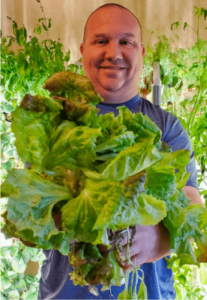 Arugula, exceptionally high in dietary nitrates, which the body converts to nitric oxide : a key regulator of vascular tone and blood pressure. One of the most nutritionally potent leafy greens for cardiovascular health.
- Kale, exceptional levels of vitamin K, vitamin C, quercetin, and kaempferol. The glucosinolate compounds in kale have been studied foranti-inflammatory effects.
- Butterhead lettuce, good source of folate, vitamin K, and beta-carotene. Mild flavor makes it extremely versatile across Mediterranean salads and mezze preparations.
- Romaine, higher folate content than most lettuce varieties; also a reliable source of chromium and vitamin C. The classic base for tabbouleh-adjacent salads.
Fruiting plants for Mediterranean cooking
While olive oil and fish provide the omega-3 and healthy fat components of Mediterranean eating, home-grown fruiting plants round out the picture with carotenoid-rich produce that works across countless Mediterranean dishes.
- Cherry tomatoes, lycopene content : the carotenoid associated with reduced LDL oxidation and cardiovascular risk, is actually higher in cooked tomatoes than raw. Roasting or sautéing your home-grown cherry tomatoes increases lycopene bioavailability.
- Sweet peppers : one of the richest dietary sources of vitamin C and beta-cryptoxanthin. Vitamin C is essential for collagen synthesis in arterial walls and functions as a regenerator of vitamin E’s antioxidant activity.
- Banana peppers, traditional in Mediterranean pickled preparations; contain quercetin and capsaicin-adjacent compounds with anti-inflammatory properties.
Building a heart-healthy Mediterranean garden with Gardyn
A Gardyn Home or Gardyn Studio can be configured specifically for Mediterranean diet cooking. The key is selecting a mix of herbs, greens, and fruiting plants that supports your actual cooking patterns, so the garden becomes part of your daily meals, not a separate project.
A recommended Mediterranean heart-health plant mix
For a Gardyn Home (30 pods), a Mediterranean-focused configuration might look like:
- Herbs (8–10 pods): basil, sweet Thai basil, Italian parsley, oregano, rosemary, thyme, mint, chives, dill, savory
- Leafy greens (10–12 pods): arugula, butterhead lettuce, romaine, kale, red Swiss chard, bok choy
- Fruiting plants (6–8 pods): cherry tomatoes, sweet peppers, banana peppers, cucumbers
- Specialty (2–4 pods): lemongrass, sweet marjoram, or wheatgrass for juicing
For a Gardyn Studio (16 pods), prioritize the highest-use items: 4–5 herbs (basil, parsley, oregano, thyme, chives), 5–6 greens (arugula, butterhead, kale), and 3–4 fruiting plants (cherry tomatoes, sweet peppers).
The harvest-to-plate principle
The core practice that distinguishes growing-for-health from growing-for-convenience is harvesting immediately before use. Rather than batch-harvesting and storing, develop the habit of stepping to the Gardyn before each meal to take what you need. Arugula torn from the stem ten 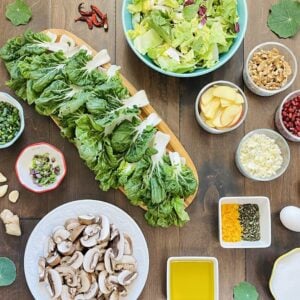 minutes before serving a salad. Basil leaves plucked as you finish the pasta sauce. Thyme stripped from the sprig and added to braising liquid as it goes on the heat.
This practice requires almost no additional time : the Gardyn is in your kitchen. But from a nutritional standpoint, it’s the difference between a Mediterranean diet as it was traditionally eaten (garden-fresh, peak-season, consumed within hours of harvest) and Mediterranean diet as most people eat it in modern life.
Pairing your garden with other Mediterranean diet pillars
A home garden handles the herb, green, and fresh vegetable components of the Mediterranean diet with exceptional quality. To complete the pattern, pair your homegrown produce with quality olive oil (your primary cooking and dressing fat), fatty fish or walnuts two to three times per week for omega-3s, legumes (lentils, chickpeas, white beans) as a regular protein source, and moderate whole grain intake through whole wheat bread, farro, or barley.
The fresh herbs from your Gardyn aren’t garnishes, they’re active nutritional components. Use them generously: a tablespoon of fresh oregano on a Greek salad, a handful of arugula wilted into a lentil dish, fresh parsley incorporated into a grain bowl. Mediterranean cooking uses herbs by the handful, not the pinch.
| Mediterranean plant | Key cardiovascular nutrients | Grow time (Gardyn) | Best culinary uses |
|---|---|---|---|
| Eugenol, flavonoids, vitamin K | 3–4 weeks | Sauces, salads, finishing | |
| Dietary nitrates, folate, vitamin K | 3–4 weeks | Salads, pizza, pasta | |
| Rosmarinic acid, thymol, antioxidants | 5–6 weeks | Sauces, grills, dressings | |
| Carnosic acid, rosmarinic acid | 6–8 weeks | Roasts, bread, oils | |
| Lycopene, vitamin C, potassium | 6–8 weeks | Salads, roasting, sauces | |
| Vitamin K, quercetin, glucosinolates | 4–5 weeks | Salads, sautés, soups | |
| Vitamin C, beta-cryptoxanthin | 7–9 weeks | Stuffed, roasted, raw | |
| Vitamin K, apigenin, vitamin C | 4–5 weeks | Tabbouleh, sauces, garnish |
|
Frequently asked questions
What foods are in the Mediterranean diet?
The Mediterranean diet centers on abundant fresh vegetables and herbs, olive oil as the primary fat, legumes, whole grains, fish and seafood (especially fatty fish), moderate amounts of poultry and dairy, and minimal red meat and processed food. Fresh herbs, particularly basil, oregano, rosemary, thyme, and parsley, appear in virtually every meal and contribute significantly to the diet’s antioxidant and polyphenol content.
What does the Mediterranean diet do for heart health?
Clinical research, including the landmark PREDIMED trial, associates adherence to the Mediterranean diet with approximately 30% reduced risk of major cardiovascular events. The mechanisms include reduced LDL oxidation from polyphenols in herbs and vegetables, improved endothelial function from dietary nitrates in leafy greens like arugula, anti-inflammatory effects from omega-3 fatty acids, and favorable impacts on the gut microbiome that modulate cardiovascular risk markers.
Can I grow Mediterranean herbs indoors year-round?
Yes, and this is one of the strongest arguments for indoor growing from a dietary health perspective. Basil, oregano, thyme, rosemary, and Italian parsley all grow continuously in Gardyn’s automated indoor system, with no seasonal gaps. This means you can maintain the herb-intensive cooking that defines Mediterranean eating regardless of the time of year.
Is fresh arugula good for heart health?
Arugula is one of the most cardiovascularly beneficial leafy greens due to its high dietary nitrate content. The body converts dietary nitrates to nitric oxide, which relaxes blood vessel walls and improves blood flow : a mechanism that has been studied in relation to blood pressure management and athletic performance. Arugula also provides folate (which helps regulate homocysteine, an amino acid linked to cardiovascular risk at elevated levels) and vitamin K, essential for vascular health.
Does growing food at home improve its nutritional value?
Growing food at home and consuming it at peak freshness preserves nutritional content that degrades rapidly after commercial harvest. Research documents significant vitamin C losses in leafy greens within days of harvest, and substantial reduction in the polyphenol and antioxidant content of fresh herbs over the same period. While the food is nutritionally identical at the moment of harvest, home-grown produce consumed immediately after picking consistently delivers higher nutritional value than store-bought equivalents that have spent days in transit and cold storage.
What are the best anti-inflammatory herbs to grow at home?
The herbs with the strongest documented anti-inflammatory properties that grow well indoors are rosemary (carnosic acid, rosmarinic acid), oregano (rosmarinic acid, thymol), thyme (thymol, carvacrol), basil (eugenol, flavonoids), and Italian parsley (apigenin, vitamin C). All five grow productively in a Gardyn system and are staple ingredients in Mediterranean cooking.
How much rosemary should I eat for heart health?
Rosemary is culinary, not medicinal, there’s no established therapeutic dose. The research on rosemary’s bioactive compounds is primarily mechanistic; the cardiovascular benefits of the Mediterranean diet come from the overall dietary pattern rather than any single ingredient. Use rosemary generously in cooking as part of a broader Mediterranean dietary approach: roasted into vegetables, infused into olive oils, incorporated into marinades and sauces.
Can someone with heart disease follow the Mediterranean diet?
The Mediterranean diet has the strongest evidence base of any dietary pattern for secondary cardiovascular prevention, meaning it has been studied in people who already have cardiovascular disease and shown to reduce subsequent events. However, specific dietary needs for people managing heart disease, heart failure, or related conditions should always be tailored in consultation with a cardiologist and registered dietitian. This article is educational and should not be interpreted as medical advice.
|