Cookies help us deliver the best experience on our website. By clicking Accept you are agreeing to the placement and use of cookies as described in our privacy policy.


If you’ve ever killed a houseplant and quietly vowed never to try again, this guide is for you. Indoor gardening has a reputation for being finicky, but the truth is most beginners fail not because they lack a green thumb, but because traditional approaches weren’t designed for the way modern people live: busy, space-constrained, and without a yard in sight.
This complete guide covers everything you need to start growing food indoors, from the simplest low-effort setups to how smart technology has fundamentally changed what’s possible for first-time growers. By the end, you’ll know exactly what to plant, what equipment you need, and how to get your first harvest in as little as four to six weeks.
Key takeaways
- You don’t need a yard, outdoor space, or a green thumb to grow fresh food at home.
- Hydroponic indoor gardens grow plants up to 5x faster than soil and use 95% less water.
- The best starter plants are basil, lettuce varieties, mint, and herbs, all low-maintenance and fast to harvest.
- Smart garden systems like Gardyn automate light, watering, and plant care so you can focus on the harvest, not the upkeep.
- Gardyn Home fits 30 plants in 2 square feet : ideal for families; Gardyn Studio fits 16 plants in 1.4 square feet : ideal for solo growers and smaller kitchens.
- Most Gardyn growers start harvesting within 4–6 weeks.
What is indoor gardening?
Indoor gardening is exactly what it sounds like: growing plants inside your home. But the scope is broader than most people realize. It includes everything from a single pot of herbs on a windowsill to a fully automated vertical growing system that produces 30 plants at once in a kitchen corner.
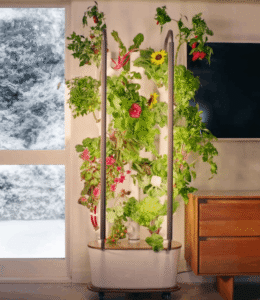 At its core, indoor gardening gives you control over the variables that outdoor gardens leave to chance, weather, pests, seasons, and soil quality. When you grow indoors, you decide the light cycle, the nutrients, and the temperature. That’s actually a huge advantage for beginners, because you’re not fighting nature; you’re working with a controlled environment.
The most common forms of indoor gardening include:
- Soil-based container gardening, pots, planters, and grow bags on windowsills or under grow lights
- Hydroponic systems, growing in nutrient-enriched water without soil, which accelerates growth significantly
- Smart automated systems, all-in-one units that handle light, water, and nutrients automatically
- Microgreens growing : fast-turnaround seedlings harvested at 7–14 days for concentrated nutrition
For most beginners today, smart hydroponic systems represent the easiest, most reliable entry point, and we’ll explore why throughout this guide.
The best plants to grow indoors as a beginner
Choosing the right plants is the single biggest factor in whether you succeed as a new indoor grower. Start with forgiving, fast-growing varieties that give you visible progress quickly, nothing builds momentum like watching something you planted actually thrive.
Herbs : the ultimate beginner plant
Herbs are the perfect introduction to indoor growing. They’re fast-germinating, don’t need much vertical space, produce harvests you can use immediately in cooking, and signal clearly when they need attention (wilting or yellowing leaves are hard to miss).
Top beginner herbs to try:
- Basil, grows quickly, thrives in warm indoor temperatures, and is ready to harvest in 3–4 weeks. Pinch the top to encourage bushy growth.
- Mint, nearly indestructible, spreads eagerly, and produces harvests for months. Great for tea, cocktails, and cooking.
- Cilantro : fast grower with two weeks from sprout to first harvest in hydroponic setups. Best grown in cooler conditions.
- Chives, cut-and-come-again herb that regrows continuously. Very low maintenance.
- Thyme : slow to start but extremely hardy once established. Drought-tolerant and long-lived.
- Italian parsley, reliable and versatile in cooking. Grows well in lower light conditions.
- Oregano, prefers drier conditions, makes it forgiving if you skip a watering.
Leafy greens : fast harvests, high nutritional payoff
Leafy greens are the workhorses of indoor gardening. They’re among the fastest-growing edible plants, respond well to partial harvesting (meaning you pick outer leaves and the plant keeps producing), and deliver significant nutritional value.
- Butterhead lettuce, mild, sweet flavor, compact habit, and ready in 3–4 weeks. One of the most popular Gardyn plants.
- Romaine, crisp, sturdy leaves ideal for salads. Tolerates a range of light conditions.
- Arugula, peppery flavor, germinates quickly, and can be harvested as microgreens or full leaves.
- Kale : one of the most nutrient-dense options, and productive for multiple harvests.
- Bok choy : fast-growing Asian green with crunchy stems and mild flavor. Great for stir-fries.
Fruits and vegetables for the more adventurous beginner
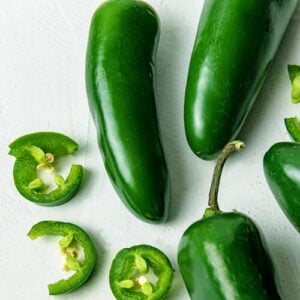 Once you have your first harvest under your belt, fruiting plants open up a whole new dimension of indoor growing. These take longer and need more light, but the payoff, home-grown tomatoes and peppers, is extraordinary.
- Cherry tomatoes, sweetest results come from compact varieties optimized for indoor growing. Allow 6–8 weeks to first harvest.
- Jalapeños, prolific producers in warm, well-lit conditions. Great for home cooks who love heat.
- Cucumbers, grow fast in hydroponic systems and are ready in 6–8 weeks with proper support.
- Mini strawberries : a crowd-pleaser, especially for families with kids. Slower to produce but worth the wait.
| “I’ve not only managed to keep plants alive for once in my life, but I’m thriving with a full, vibrant indoor jungle of herbs, vegetables, and greens that I use constantly.”
Verified Gardyn customer |
Indoor gardening methods compared
Not all indoor growing methods are created equal, especially for beginners. Here’s a direct comparison of the main approaches so you can choose the right starting point.
| Method | Setup difficulty | Space required | Maintenance level | Time to first harvest | Best for |
|---|---|---|---|---|---|
| Windowsill containers (soil) | Easy | Minimal | Medium | 8–12 weeks | Single herbs, decorative plants |
| Grow light + soil pots | Medium | Moderate | Medium–High | 6–10 weeks | Vegetables, herbs |
| Basic hydroponic kit | Medium | Compact | Medium | 4–6 weeks | Lettuce, herbs |
| Smart hydroponic system (Gardyn) | Very easy | 2 sq ft | Very low | 4–6 weeks | Beginners, families, busy adults |
Why hydroponics works better for beginners
The conventional wisdom that soil is more “natural” and therefore easier is actually backwards when it comes to indoor growing. Soil indoors introduces variables that are hard to manage: inconsistent moisture, risk of over-watering, gnats and pests, and nutrient depletion over time.
Hydroponic systems, which deliver nutrients directly to roots in water, sidestep all of those problems. Plants grow up to 5x faster because roots have constant access to oxygen and nutrients, rather than spending energy searching through soil. Water usage drops by up to 95% compared to traditional gardening because water recirculates in a closed loop rather than evaporating or draining away.
Gardyn’s proprietary Hybriponic™ technology takes this further by combining the best of hydroponic growing with an automated system that manages light schedules, water levels, and even plant health monitoring, so the learning curve becomes almost flat.
Setting up your first indoor garden
Whether you’re starting with a handful of pots or a smart growing system, the core principles of a successful setup are the same.
Light: the most important variable
Plants need light to photosynthesize, and indoor light levels, even near a bright window, are typically insufficient for most edible plants. A south-facing window in summer may work for herbs, but east or north-facing windows rarely provide enough intensity.
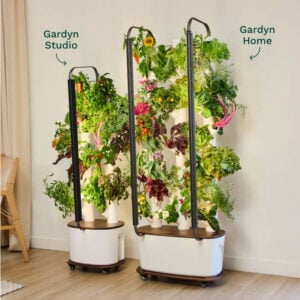 Grow lights solve this completely. Full-spectrum LED grow lights have become affordable, energy-efficient, and specifically tuned to the wavelengths plants need most. In smart systems like Gardyn, grow lights run on automated 16-hour cycles timed to optimize growth : no timers, no guesswork.
Water: more plants die from overwatering than underwatering
The most common beginner mistake in soil gardening is overwatering. Most indoor herbs and vegetables prefer their roots to dry out slightly between waterings : the “moist but not wet” principle.
In hydroponic systems, this concern is largely eliminated. Plants draw exactly the water they need from the reservoir, and roots access air pockets that prevent waterlogging. A Gardyn system uses approximately 2 gallons of water per week : the entire reservoir, versus the unpredictable water demands of multiple soil pots.
Nutrients: keeping it simple
Soil plants need regular fertilizing : a source of confusion for beginners who aren’t sure what to use or how often. Hydroponic plants receive nutrients dissolved directly in the water, and with a managed system, this is handled for you automatically.
For soil gardeners, a balanced liquid fertilizer (look for roughly equal N-P-K ratios) applied every two weeks during active growth is a reliable starting point. Check the Gardyn plant book for specific guidance on individual varieties.
Temperature and humidity
Most common edible plants thrive in the same temperature range humans prefer, 65–75°F (18–24°C). Average home temperatures work well. Avoid placing plants near heating vents, air conditioners, or drafty windows, which create temperature swings that stress plants.
Humidity matters most for tropical herbs like basil. If your home is very dry, a small humidifier near your growing area can improve results significantly.
Step-by-step: starting with a Gardyn system
If you’re starting with a Gardyn, here’s the straightforward path to your first harvest:
- Set up your system. Plug in, fill the reservoir, and install your yCube plant pods, each one is pre-seeded with a specific plant variety.
- Connect Kelby. Gardyn’s AI assistant activates automatically and begins monitoring your plants from day one.
- Choose your plant mix. Gardyn Home holds 30 yCubes; Gardyn Studio holds 16. Mix herbs, greens, and a few fruiting plants for variety and continuous harvests.
- Let the system do the work. Lights run automatically. Kelby sends you notifications if water needs topping up or if a plant needs attention.
- Start harvesting. Most herbs and greens reach harvest size in 4–6 weeks. Harvest frequently to encourage new growth : the more you pick, the more plants produce.
Common beginner mistakes, and how to avoid them
Experience from thousands of first-time indoor growers points to a handful of patterns that predict early failure, and they’re all avoidable.
Choosing difficult plants first
Fruiting plants like tomatoes and peppers are rewarding but more demanding. They need more light, more nutrients, and more patience. Starting with herbs and leafy greens gives you early wins that build confidence.
Ignoring light requirements
A windowsill that looks bright to human eyes may only deliver 10–20% of the light intensity a productive edible plant needs. If your plants are stretching toward light sources, producing small pale leaves, or growing very slowly, inadequate light is almost always the cause. Invest in a grow light or choose a smart system with integrated lighting.
Overwatering : the number one killer of indoor plants
Water-logged roots can’t absorb oxygen, leading to root rot that’s often irreversible by the time symptoms appear above the soil line. Before watering any soil-grown plant, push a finger an inch into the soil, if it’s still moist, wait.
Harvesting too little
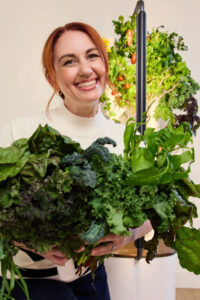 New growers often hesitate to harvest, afraid of taking too much. In reality, regular harvesting stimulates new growth. For herbs, always harvest from the top, this encourages the plant to branch and produce more leaves. For lettuce, harvest outer leaves first and leave the inner growth point intact.
Not setting up systems for forgetfulness
Plants are living systems with ongoing needs. If your life is busy, choose an approach that accounts for this, automated grow lights, self-watering reservoirs, or a smart system with built-in monitoring. Even experienced gardeners find smart systems take the mental load off and consistently produce better results.
How smart technology changed indoor growing
Five years ago, indoor growing required regular attention, trial and error, and a willingness to learn by doing, often by failing first. Smart growing technology has fundamentally changed that equation.
The most significant shifts:
AI-assisted plant monitoring
Gardyn’s AI assistant, Kelby, monitors each plant in real time using sensors and camera-based visual analysis. It can detect early signs of stress, yellowing leaves, growth stagnation, root issues, before they become visible problems and sends you actionable guidance before a plant fails. As one user put it: “It’s like having a personal plant coach 24/7.”
Automated grow lighting
Full-spectrum LED arrays integrated directly into smart growing systems deliver precisely calibrated light to every plant, eliminating the guesswork of window placement entirely. Gardyn’s light cycles are optimized for each plant variety automatically, you don’t configure anything.
Closed-loop water systems
Smart hydroponic reservoirs recirculate water, reducing weekly water use to around 2 gallons for a full 30-plant system. This is 95% less water than equivalent soil gardening. The reservoir level is monitored automatically; Kelby notifies you when a top-up is needed.
Remote management via app
The Kelby app gives you a live feed of your garden’s health, time-lapse growth videos, harvest reminders, and personalized plant care recommendations, all from your phone. For busy people who travel or simply can’t check their plants daily, this is transformative.
Which Gardyn system is right for you?
Gardyn offers two systems designed for different household sizes and growing goals. Both use the same Hybriponic™ technology and are equally beginner-friendly : the difference is scale.
| Gardyn Home | Gardyn Studio | |
|---|---|---|
| Plant capacity | 30 yCubes | 16 yCubes |
| Footprint | 2 sq ft | 1.4 sq ft |
| Starting price | ~$899 | ~$449 |
| Best for | Families, enthusiasts, large kitchens | Solo growers, apartments, first-timers |
| Weekly water use | ~2 gallons | ~1.5 gallons |
| Time to first harvest | 4–6 weeks | 4–6 weeks |
Not sure which fits your space? Compare Gardyn Home and Gardyn Studio side by side.
All systems use the same yCube plant pods, pre-seeded with your plant of choice, compatible with both systems, and available in over 100 varieties. You can customize your mix at any time.
|
Frequently asked questions
Note: The FAQ section below is an addendum beyond the main article word count, written to capture additional long-tail keyword queries and AI overview eligibility.
What is the easiest plant to grow indoors for beginners?
Basil, mint, and butterhead lettuce are consistently the easiest entry points. All three germinate quickly, tolerate some inconsistency in care, and produce harvests within 3–4 weeks in a hydroponic system. Mint is particularly forgiving, it’s difficult to kill and grows vigorously in almost any indoor condition.
Can I grow vegetables indoors without sunlight?
Yes, full-spectrum LED grow lights replace sunlight entirely, and in many cases outperform natural window light for edible plants because intensity, spectrum, and duration are all controllable. Smart systems like Gardyn run automated 16-hour light cycles calibrated specifically for edible plants, with zero input from you.
How much space do I need to start an indoor garden?
As little as 2 square feet is enough for a meaningful indoor garden. Gardyn Home grows 30 plants in that footprint, enough to produce fresh salads, herbs, and greens for a family of four. Gardyn Studio fits 16 plants in just 1.4 square feet, making it viable even in the smallest apartments.
How long does it take to grow herbs indoors?
In a hydroponic system, most herbs reach harvest size in 3–5 weeks. Basil and cilantro are typically ready in 3–4 weeks; rosemary and thyme take longer, 6–8 weeks to reach a productive size. In soil, add 2–3 additional weeks to those timelines.
Do indoor plants need special soil?
If you’re growing in soil, a high-quality potting mix (not garden soil) is essential, garden soil compacts in containers and drains poorly. Look for mixes designed for containers that contain perlite or vermiculite for drainage. That said, hydroponic growing bypasses soil entirely, eliminating this variable and the maintenance that comes with it.
What are the benefits of growing food at home?
Growing your own food indoors delivers benefits across several dimensions. Nutritionally, produce consumed within minutes of harvest retains significantly more vitamins than store-bought produce that has traveled hundreds of miles, studies show leafy greens can lose up to 50% of some nutrients within days of harvest. Economically, a single Gardyn yCube can produce the equivalent of multiple grocery store bunches over its lifecycle. And practically, having fresh herbs and greens immediately available changes how you cook, you reach for fresh ingredients because they’re right there, not because you planned ahead.
How much does it cost to run an indoor garden?
Ongoing costs vary by method. A Gardyn membership covers yCubes, nutrients, and support. Electricity costs for LED grow lights are minimal, typically $2–5 per month. Water usage on a Gardyn system is approximately 2 gallons per week, making it one of the most water-efficient food production methods available.
Is indoor gardening good for families with kids?
Indoor gardening is one of the most engaging and educational activities for children. Watching plants grow from seed to harvest teaches patience, biology, and basic nutrition in a hands-on way. Gardyn Home is particularly popular with families, parents regularly share that children are more willing to eat vegetables they helped grow themselves. The Kelby app also provides kid-friendly updates on plant progress.
What is Hybriponic™ technology?
Hybriponic™ is Gardyn’s proprietary growing technology that combines the benefits of hydroponic water delivery with optimized growing conditions for each plant variety. Unlike standard hydroponic systems, Hybriponic™ technology is integrated into a fully automated system, lights, nutrients, and water management are handled by the system and monitored by Kelby AI. Learn more at mygardyn.com/how-it-works.
Can I grow food indoors year-round?
Yes, this is one of the defining advantages of indoor growing. There are no seasons, no frost dates, no planting windows. An indoor garden with integrated grow lighting produces continuously regardless of what’s happening outside. This is particularly valuable in colder climates where outdoor growing is limited to a few months per year.
Start small, grow confident
The biggest barrier to indoor gardening isn’t skill, it’s starting. Every successful indoor grower started with a single plant and learned by doing. The difference today is that smart growing systems have removed most of the ways beginners used to fail: inconsistent light, overwatering, pest intrusions, and nutrient deficiencies are all handled automatically.
Whether your goal is fresh herbs for cooking, salads for the family, or simply proving to yourself that you can keep something alive, an indoor garden is achievable this week. Browse the full range of yCube plant varieties or explore Gardyn’s full system lineup to find the right starting point for your space and lifestyle.
|