Cookies help us deliver the best experience on our website. By clicking Accept you are agreeing to the placement and use of cookies as described in our privacy policy.


Most people who’ve killed houseplants have the same story: it wasn’t a lack of interest, it was a lack of feedback. No one told them the plant needed more water three days ago, or that windowsill light in January isn’t enough for a herb that evolved in the Mediterranean sun. Smart garden systems exist to close that gap, combining hydroponics, integrated lighting, and AI monitoring to create growing environments that work and tell you what they need before things go wrong.
Key takeaways
- Smart garden systems combine automated watering, integrated lighting, and app-based monitoring to make indoor growing accessible without horticultural expertise.
- The defining difference between smart and standard systems is whether the technology actively monitors plant health : not just automates water delivery.
- Kelby, Gardyn’s AI assistant, monitors each plant individually and sends alerts before problems become visible : the closest thing to having a horticulturist watching your plants 24/7.
- Smart systems are especially valuable for busy households, frequent travelers, and anyone who has tried and failed with traditional indoor plants.
- The right smart garden depends on how much you want to grow, your space constraints, and how much interaction you want with the growing process.
Most people who’ve killed houseplants, or watched a basil plant slowly yellow on a windowsill, have the same story. It wasn’t a lack of interest. It was a lack of feedback. No one told them the plant needed more water three days ago, or that the windowsill light in January isn’t enough for a herb that evolved in the Mediterranean sun. By the time the problem was visible, it was too late.
Smart garden systems exist to solve exactly this problem. They combine hydroponics, integrated lighting, sensors, and AI monitoring to create growing environments that work, and that tell you what they need before things go wrong.
This guide explains how smart garden systems work, what separates the good ones from the great ones, and how to choose the right system for your home, lifestyle, and growing goals.
What is a smart garden system?
A smart garden system is an indoor growing setup that automates one or more key growing functions, lighting, watering, nutrient delivery, or monitoring, and typically connects to a smartphone app for remote management and plant health alerts.
What makes a garden system ‘smart’?
True smart garden systems go beyond timers and basic automation. The key capabilities that separate genuinely smart systems from marketing-inflated basics:
- Individual plant monitoring: sensors or AI vision that tracks each plant’s health separately, not just aggregate system status.
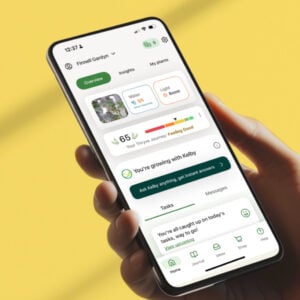
- Proactive alerts: notifications that flag problems before they’re visible to the naked eye.
- Adaptive scheduling: light and water cycles that adjust based on plant growth stage, not just a fixed timer.
- App integration: remote monitoring and control, so you can check plant status whether you’re in the kitchen or across the country.
Gardyn’s Kelby AI hits all four. It uses computer vision to monitor each plant site individually, tracks growth patterns over time, and sends targeted alerts when a specific plant needs attention.
How smart garden systems work
Hydroponic growing foundation
Most smart garden systems are hydroponic. Gardyn’s Hybriponic™ technology is purpose-built for vertical indoor growing, optimizing nutrient delivery timing and concentration for the plants in each specific yCube.
Integrated lighting
Plants need light to photosynthesize, and indoor light, even in a sunny apartment, is rarely adequate for heavy producers like herbs and leafy greens. Gardyn’s built-in LEDs run the full height of the column and are calibrated to the specific needs of each plant variety.
AI monitoring and the Kelby difference
Kelby uses computer vision to analyze plant health, tracks growth patterns against expected timelines, and alerts you when something is off : a yellowing leaf that hasn’t yet spread, a plant that’s growing slower than expected, a pod that hasn’t sprouted in the normal window. For most users, this is the single most valuable feature: catching problems early, when they’re still fixable.
|
Smart garden system types: what’s on the market
Countertop pod systems
 Small, self-contained units that hold 3–12 herb pods on a countertop. Good for growing a few herbs; not capable of producing meaningful quantities of vegetables or greens. Entry-level systems, fine for dipping a toe in, but limited in what they can produce.
Mid-range hydroponic systems
Larger countertop or shelf units that grow 12–20 plants. Better lighting than entry-level options, some app connectivity, and more plant variety support. Maintenance is more involved, manual nutrient mixing, pH monitoring, separate light scheduling.
Smart vertical hydroponic systems
The most capable category for home growing. Gardyn’s Home and Studio sit in this category : the most complete smart garden systems available for home use.
| Category | Plant capacity | Lighting | AI monitoring | Best for |
|---|---|---|---|---|
| Countertop pod system | 3–12 | Basic LED strip | None or basic | Casual herb growers |
| Mid-range hydroponic | 12–20 | Grow light (may need separate) | App reminders | Serious beginners |
| Smart vertical (Gardyn) | 16–30 | Integrated full-spectrum LED | Kelby AI per-plant | All levels, max yield |
How to choose a smart garden system
What do you actually want to harvest?
A countertop pod system is fine if you want a constant supply of fresh basil and mint. It’s completely inadequate if you want to grow salad greens, fruiting plants, or a meaningful variety of herbs year-round.
How much floor or counter space do you have?
The Gardyn Studio occupies 1.4 square feet of floor space and grows 16 plants. For apartments, condos, or any home without dedicated growing space, vertical beats horizontal every time.
How much maintenance are you willing to do?
Gardyn’s Kelby AI manages light schedules, monitors plant health, sends care reminders, and alerts you to problems before they escalate. The typical time commitment for an active Gardyn is under 15 minutes per week, mostly harvesting and adding water.
What’s the total cost of ownership?
Gardyn’s membership bundles yCubes and nutrients into a predictable monthly cost. Most active Gardyn members find the economics favorable within the first year compared to what they spend on fresh herbs and produce.
What to grow in a smart garden system
Best herbs for smart gardens
- Basil : fast-growing, high-use; great entry point
- Mint, prolific producer; great for cocktails, teas, and cooking
- Cilantro, notoriously hard to keep alive in soil; thrives in hydroponic systems
- Chives, low maintenance, consistent harvest
- Italian parsley, thyme, and oregano
Best greens for smart gardens
- Arugula : ready in 3 weeks; peppery, versatile
- Butterhead lettuce, tender, sweet; continuous harvest
- Kale and Lacinato kale, nutrient-dense; harvest outer leaves
- Romaine, crisp, full heads in 5–6 weeks
- Red Swiss chard, colorful and productive
Fruiting plants for smart gardens
- Cherry tomatoes, compact variety; excellent with Gardyn’s full-spectrum lighting
- Mini strawberries : a household favorite; sweet and prolific
- Jalapeños : slow to mature but high yield
- Sweet peppers : great for snacking and cooking
|
Frequently asked questions
What is the best smart garden system?
For most households, Gardyn’s systems offer the most complete combination of plant capacity, integrated lighting, and AI monitoring. The Gardyn Studio is the best entry point; the Gardyn Home is the right choice for families wanting to grow a meaningful portion of their fresh produce.
Do smart gardens actually work for people who kill plants?
Yes, this is exactly who smart systems are designed for. Kelby flags issues early, when they’re still correctable. Many Gardyn members describe themselves as former plant killers who now grow successfully for the first time.
How much time does a smart garden require?
Gardyn members typically spend 10–15 minutes per week on active maintenance, mostly harvesting, adding water, and replacing spent yCubes. Kelby handles monitoring, scheduling, and alert generation.
Can I grow enough food to make a real difference in my grocery spending?
It depends on what you grow. Herbs and salad greens offer the best return, fresh basil at retail costs $3–5 per bunch, and a Gardyn system can produce continuous harvests of a dozen herb varieties year-round.
What happens when I go on vacation?
Kelby monitors plant health continuously and can alert a trusted friend via the app if something needs attention. For trips up to two weeks, most plants continue without issue : the system manages water levels and light cycles automatically.
Are smart garden systems good for kids?
Very much so : the app engagement element makes growing accessible and interesting to children. Browse Gardyn’s plant catalog for varieties that resonate with younger growers, cherry tomatoes and mini strawberries are consistent family favorites.
How does a smart garden system connect to my home network?
Gardyn systems connect via Wi-Fi and pair with the Kelby app on iOS and Android. Setup typically takes under 10 minutes.
Can I use Gardyn yCubes to grow plants not in the standard catalog?
Gardyn’s yCube catalog includes over 50 varieties selected for their performance in indoor hydroponic conditions. The catalog expands regularly. For growers interested in varieties not currently available, Gardyn’s support team can advise on compatibility.