Cookies help us deliver the best experience on our website. By clicking Accept you are agreeing to the placement and use of cookies as described in our privacy policy.


The food pyramid is back. After more than a decade as MyPlate, the federal government’s primary nutrition visual was overhauled in January 2026 as part of the 2025–2030 Dietary Guidelines for Americans. The new pyramid is inverted: the foods you should eat most sit at the top and widest part. Vegetables and fruits now share top billing with protein, dairy, and healthy fats. Whole grains sit at the narrower bottom. And for the first time in the guidelines’ history, highly processed foods are explicitly named as something to avoid.
This article explains what changed, what the science says about the update, and why the core message of the new pyramid — eating more real, whole, minimally processed food — is one of the most practical shifts you can make at home.
Key takeaways
- The USDA and HHS released the 2025–2030 Dietary Guidelines for Americans on January 7, 2026, featuring a new
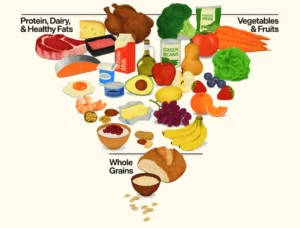 inverted food pyramid with vegetables and fruits at the top.
 - The new pyramid elevates protein, healthy fats from whole foods, and vegetables/fruits while reducing emphasis on grains compared to the 1992 original.
- For the first time, the guidelines explicitly call for avoiding highly processed foods — a significant shift from all previous editions.
- Vegetables and fruits are positioned at the widest part of the pyramid, meaning they should make up the largest share of daily eating.
- Growing your own herbs and greens at home is one of the most direct ways to meet the new pyramid’s emphasis on fresh, unprocessed produce every day.
From the original pyramid to the new one: a brief history
The USDA introduced the original food pyramid in 1992. It placed bread, cereal, rice, and pasta at the base — suggesting these should dominate daily eating — with fats and sweets at the narrow top. Fruits, vegetables, dairy, and protein occupied the middle tiers.
In 2011, the USDA replaced the pyramid with MyPlate, a circular plate graphic divided into four sections: fruits, vegetables, grains, and protein, with a small dairy circle alongside. MyPlate was easier to understand at a glance and explicitly showed that half the plate should be produce.
On January 7, 2026, the USDA and HHS jointly released the 2025–2030 Dietary Guidelines for Americans, bringing back the pyramid format but inverting it. The full guidelines are available at realfood.gov and the USDA press release details the key policy changes.
What the new inverted pyramid looks like
The new pyramid is wider at the top and narrower at the bottom, reversing the original hierarchy:
- Top (widest, eat most): protein, dairy, and healthy fats alongside vegetables and fruits
- Middle: whole grains (2–4 servings per day)
- Bottom (narrowest): limit highly processed foods, refined carbohydrates, and added sugars
The placement of vegetables and fruits at the same level as protein is a meaningful shift. In the original pyramid, produce was a middle tier. In MyPlate, it was half the plate. In the new pyramid, it shares the top.
| 1992 food pyramid | MyPlate (2011) | New pyramid (2025–2030) | |
|---|---|---|---|
| Foundation/base | Bread, cereal, rice, pasta | Grains (quarter of plate) | Whole grains (narrowest) |
| Produce | Middle tier | Half the plate | Top tier — equal with protein |
| Protein | Middle tier | Quarter of plate | Top tier, every meal |
| Fats/dairy | Use sparingly (top) | Small dairy circle | Top tier, healthy fats emphazised |
| Processed foods | Not addressed | Not addressed | Explicitly named as foods to avoid |
What the new guidelines actually recommend
The 2025–2030 guidelines are notably brief compared to previous editions — 10 pages versus the 164-page 2020–2025 version. The HHS fact sheet provides a concise policy summary. The core message is “eat real food.”
Vegetables and fruits: the foundation of the new pyramid
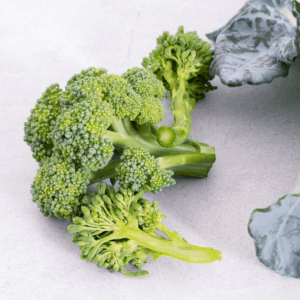 Vegetables and fruits are placed at the top of the new inverted pyramid, co-equal with protein. The guidelines carry forward quantitative recommendations from previous editions, with the emphasis on variety, colour, and frequency. The CDC reports that only about 1 in 10 adults meet recommended daily vegetable intake — meaning this is the tier where most Americans have the most room to improve.
At Gardyn, growing your own leafy greens and herbs is directly aligned with this priority. Our plant library includes kale, arugula, butterhead, romaine, bok choy, watercress, red Swiss chard, and more than 30 herb and green varieties — all available as yCubes.
Protein: higher recommendations, emphasis on quality
The new guidelines recommend 1.2 to 1.6 grams of protein per kilogram of body weight daily — roughly double the previous recommended dietary allowance of 0.8 g/kg. Both animal and plant-sourced proteins are recommended: eggs, poultry, seafood, red meat, beans, nuts, and seeds. The guidelines specify that protein should be served with no or minimal added sugars, chemical additives, or refined carbohydrates. See PBS News’ breakdown of the protein changes for a detailed comparison.
Healthy fats from whole foods
Healthy fats are now elevated rather than avoided. The guidelines identify meats, poultry, eggs, omega-3-rich seafood, nuts, seeds, full-fat dairy, olives, and avocados as sources of healthy fats. Olive oil is highlighted as a preferred cooking fat. Saturated fat limits (under 10% of daily calories) are retained from previous guidelines. For more on the saturated fat science debate, Harvard T.H. Chan’s analysis is a useful reference.
Whole grains, reduced refined carbohydrates
The guidelines call for prioritising fibre-rich whole grains while significantly reducing consumption of highly processed,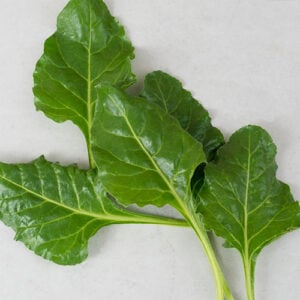 refined carbohydrates including white bread, packaged breakfast cereals, flour tortillas, and crackers. The whole grain serving goal is 2–4 servings per day. This connects directly to Gardyn’s healthy meal prep guidance, which covers building component-based meals around whole grains and fresh herbs.
Avoiding highly processed foods: the biggest shift
This is the most significant change from previous editions. The 2020–2025 guidelines did not mention ultra-processed or highly processed foods at all. The new guidelines explicitly call for avoiding “highly processed packaged, prepared, ready-to-eat, or other foods that are salty or sweet.” Per the HHS fact sheet, this includes foods with artificial flavours, petroleum-based dyes, artificial preservatives, and low-calorie non-nutritive sweeteners.
A CDC report on chronic disease found that 55% of the U.S. population receives more than half of their daily calories from ultra-processed foods. Research published in The BMJ (2024) linked high ultra-processed food consumption to 32 adverse health outcomes. This is the science base behind the new guideline language.
| What nutrition scientists are saying
Reception from the scientific community has been mixed. Harvard T.H. Chan School of Public Health researchers noted that quantitative recommendations for vegetables, fruits, and whole grains are largely consistent with previous editions. The American Heart Association welcomed the emphasis on vegetables, fruits, and whole foods and the explicit call to avoid highly processed foods. Points of scientific debate include the elevated emphasis on animal protein and full-fat dairy. Frank Hu, Professor of Nutrition and Epidemiology at Harvard, noted that “the mixed messages surrounding saturated-fat-rich foods such as red meat, butter, and beef tallow may lead to confusion and potentially higher intake of saturated fat and increased cardiovascular risk.” The core guidance — more vegetables, less processed food, more whole grains — reflects broad consensus. See Harvard T.H. Chan’s full analysis at nutritionsource.hsph.harvard.edu. |
Why the new pyramid makes fresh vegetables harder to follow, not easier
The new pyramid places vegetables and fruits at the top — but most Americans fall well short of this tier. The CDC’s vegetable consumption data consistently shows only about 1 in 10 adults meet recommended daily intake.
The barrier is rarely knowledge. Most people know they should eat more vegetables. The barrier is access, convenience, and freshness. Grocery produce typically travels 1,500–2,000 miles from farm to retail shelf. Studies show up to 40% of household produce is wasted before use, often because it spoils. The vegetables the new pyramid most elevates — fresh leafy greens and herbs — are the most perishable. Gardyn’s own post on why eating at harvest is healthier explores the nutritional case for reducing the time between plant and plate.
|
How Gardyn fits the new food pyramid
Gardyn’s Hybriponic™ technology grows 30 herbs and greens in 2 square feet of floor space using the Gardyn Home, with harvest on demand. The connection to the new food pyramid is direct.
Vegetables and fruits at the top of the pyramid
The new pyramid puts vegetables and fruits at the widest, highest point. Gardyn grows the leafy greens and herbs that are hardest to keep fresh from the grocery store. A full overview of what’s available is in the Gardyn plant library.
- Kale yCube and kale lacinato
- Arugula, butterhead, romaine, red sails
- Bok choy, watercress, red Swiss chard
- Basil, mint, cilantro, parsley, thyme, rosemary, and more
Zero processing, zero additives
The new guidelines explicitly call for avoiding highly processed foods with artificial flavours, dyes, and preservatives. Gardyn-grown produce has no supply chain, no packaging, no preservatives, and no pesticides. The Gardyn blog post on pesticide residues explains the nutrient delivery approach. Because the plant grows in a closed indoor environment, it is the definition of minimally processed: it is not processed at all.
Herbs as daily vegetables, not garnishes
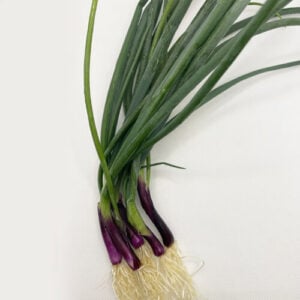 The new pyramid’s emphasis on vegetables extends to herbs, which are nutritionally dense and chronically underused. Fresh basil, cilantro, parsley, and mint are meaningful sources of vitamins K, C, and A, as well as anti-inflammatory compounds. Having them growing at home via Gardyn’s herb yCubes means they move from an occasional garnish to a daily ingredient. See 5 ways to use fresh herbs for practical ideas.
Supporting protein quality
The new guidelines emphasise high-quality protein at every meal, paired with minimal additives. Fresh herbs and greens are the natural pairing for quality protein: grilled fish with herb sauce, eggs with fresh greens, grilled chicken with a salad harvested minutes earlier. The Gardyn healthy meal plans post shows how to build these combinations throughout the week.
| Grow the new food pyramid at home |
| Gardyn’s Hybriponic™ system grows 30 herbs and greens in 2 square feet — the fresh produce the new guidelines put at the top of the pyramid, always ready to harvest. |
Practical ways to build each pyramid tier into your week
Vegetables and fruits: build the habit of harvest
The simplest change: replace packaged salad greens with greens you grow yourself. A handful of arugula and butterhead harvested at mealtime requires no washing, no chopping bag, no checking for slime. Over a week this adds up to materially higher vegetable intake than most households achieve from grocery store produce that competes with convenience food. The Gardyn post on food economics breaks down the cost comparison.
Protein every meal: pair with fresh herbs
The new guidelines recommend protein at every meal. Grilled fish, eggs, chicken, and legumes all pair naturally with fresh herbs. Mint with lamb, cilantro with fish tacos, basil with eggs, parsley with roasted vegetables. Fresh herbs from a Gardyn system make this effortless because they are always available and require zero planning. See Gardyn’s easy meal prep ideas for practical weekly planning.
Whole grains with fresh produce
The guidelines recommend 2–4 servings of whole grains per day. Grain bowls — farro, quinoa, bulgur, brown rice — topped with fresh greens and herbs hit the whole grain and vegetable tiers simultaneously. The Gardyn tabbouleh recipe (bulgur with fresh parsley and mint) maps directly to the new pyramid and takes under 15 minutes when herbs are growing at home.
Replace processed snacks with fresh greens
The most actionable implementation of the “avoid highly processed foods” guidance is replacing packaged snacks with fresh produce. A handful of arugula or watercress, fresh mint in water, or basil in a meal are practical substitutions. For the science on why fresh is better than pre-cut or pre-packaged, see why eating at harvest is healthier.
Further reading: USDA/HHS — 2025–2030 Dietary Guidelines press release; Full guidelines PDF — realfood.gov; Harvard T.H. Chan — Dietary guidelines analysis; CDC — Fruit and vegetable consumption data; The BMJ (2024) — Ultra-processed foods and 32 adverse health outcomes
Frequently asked questions
What is the new food pyramid for 2025–2030?
The 2025–2030 food pyramid was released on January 7, 2026 by the USDA and HHS. It is an inverted pyramid placing vegetables and fruits alongside protein, dairy, and healthy fats at the widest top section, with whole grains at the narrower base. It also, for the first time, explicitly calls for avoiding highly processed foods.
Who released the new food pyramid?
The new food pyramid was released jointly by the U.S. Department of Agriculture (USDA) and the U.S. Department of Health and Human Services (HHS) on January 7, 2026. The full guidelines and interactive tools are at realfood.gov.
What changed from MyPlate to the new pyramid?
MyPlate (2011–2025) used a circular plate divided into four sections showing proportion: half fruits and vegetables, a quarter each for grains and protein. The new inverted pyramid reinstates the triangular format, places vegetables and fruits co-equal with protein at the top, reduces relative grain emphasis, elevates healthy fats, and for the first time explicitly calls for avoiding highly processed foods. Full comparison is at the USDA press release.
What does the new pyramid say about vegetables?
Vegetables and fruits are at the top (widest) section of the new pyramid, meaning they should make up a major portion of daily eating. See Gardyn’s full plant library for the full range of greens and herbs available to grow at home.
How does Gardyn help with the new food pyramid?
Gardyn’s Hybriponic™ system grows 30 herbs and greens in 2 square feet with continuous harvest on demand. The vegetables it grows map directly to the top tier of the new pyramid. See the Gardyn Home and Gardyn Studio for system options.
Are the new dietary guidelines controversial?
Some aspects have drawn scientific debate. Harvard T.H. Chan researchers and the American Heart Association welcomed the emphasis on vegetables, whole foods, and avoiding highly processed foods, while flagging concerns about the elevated animal protein and full-fat dairy guidance. The core message — eat more vegetables, less processed food, whole grains — reflects broad scientific consensus.