Cookies help us deliver the best experience on our website. By clicking Accept you are agreeing to the placement and use of cookies as described in our privacy policy.


Growing food at home is one of the most practical things a household can do: it reduces grocery spending on the items most prone to spoilage, delivers freshness that supermarket produce cannot match, and puts the food supply for everyday meals directly under your control.
The barrier most people hit is not space, cost, or skill. It is not knowing where to start. There are dozens of ways to grow food at home, and they are not all equally suited to every household. A rooftop container garden and a 2-square-foot indoor hydroponic column are both valid approaches; they just suit different situations, goals, and time commitments.
This guide covers the full picture: what you can realistically grow at home, which method suits your space and lifestyle, how to get started, what the economics look like, and how modern indoor growing systems have changed what is possible for households without a garden.
Key takeaways
- The highest-value crops to grow at home are fresh herbs and salad greens: expensive to buy, used
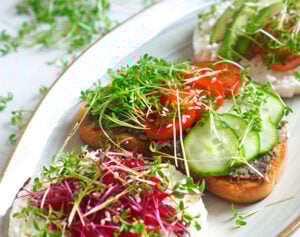 daily, and dramatically better when harvested fresh.
- Every household can grow food at home, regardless of outdoor space. The method depends on what you have: a garden, a balcony, a windowsill, or just a kitchen corner with a power outlet.
- Home food growing does not need to replace the grocery store to be worthwhile. Producing the herbs and greens you use every day delivers real value in freshness, savings, and reduced waste.
- Indoor hydroponic systems with integrated lighting make year-round food growing possible in any home, in any season, regardless of window orientation or climate.
- Gardyn’s Hybriponic system grows 30 herbs and greens in 2 square feet, automated by Kelby AI, with about 5 minutes of weekly attention.
What you can realistically grow at home
Set the right expectations first
Full food self-sufficiency at home requires substantial land, significant time, and farming expertise that takes years to develop. For most households, this is neither realistic nor necessary.
Meaningful home food production is something different: a consistent supply of the specific fresh ingredients you buy most often, use in the smallest quantities, and waste most frequently. That target is achievable for almost any household, and it delivers genuine value.
The highest-value crops for home growing
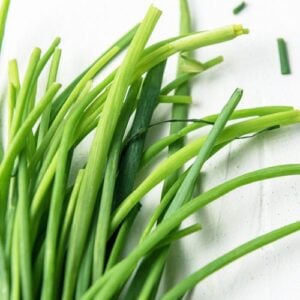 Fresh herbs are the most valuable crop per square foot of any home garden. A standard grocery store bunch of basil costs between $3 and $5 and typically yields two or three uses before wilting. A single basil plant growing in a hydroponic system produces usable leaves every week for months.
Salad greens are the second highest-value crop. Pre-washed salad mixes cost $5 to $8 per bag, last three to five days after opening, and often contain produce cut and packed days or weeks before purchase. Greens harvested directly from a home garden retain their full nutritional content at the moment of eating.
Microgreens are a third high-value option: harvested 7 to 14 days after germination, requiring minimal space and delivering concentrated nutrition. The Gardyn Microgreens Kit is purpose-built for home microgreens production.
What grows well in different home settings
| Setting | Best crops | Method | Year-round? |
|---|---|---|---|
| Garden or outdoor space | Tomatoes, beans, root veg, brassicas | Raised beds or ground planting | Seasonal |
| Balcony or patio | Tomatoes, peppers, herbs, lettuces | Container growing | Seasonal |
| Sunny south-facing window | Small herbs (basil, chives, parsley) | Windowsill pots | Partial (summer only) |
| Any indoor space with power outlet | Herbs, salad greens, microgreens | Indoor hydroponic system | Yes |
| Kitchen counter | Herbs, small greens | Countertop hydroponic kit | Yes (with grow lights) |
Home food growing methods: which suits your situation
Outdoor garden growing
A garden is the most productive option for households with access to outdoor space. Raised beds produce excellent yields of vegetables, fruits, and herbs through the growing season. The trade-off is seasonal limitation in most climates, time investment in soil preparation, planting, weeding, watering, and pest management, and the skills needed to produce consistent results.
Outdoor growing suits households who enjoy gardening as an activity and have time for it. For those who want consistent fresh produce with minimal management, the outdoor garden is not always the right answer.
Balcony and container growing
Balcony and patio container growing extends home food production to households without a garden. Tomatoes, peppers, herbs, and lettuces all grow well in containers with adequate sun. Limitations include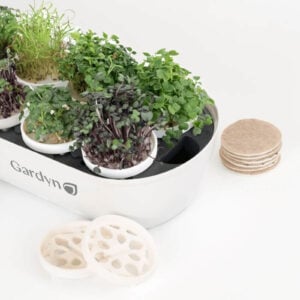 weight restrictions in some buildings, seasonal access in cold climates, and the need for consistent watering and feeding.
Container growing is most productive on south or west-facing balconies that receive at least six hours of direct sun per day. North-facing or partially shaded balconies are better suited to leafy greens and herbs, which tolerate lower light.
Windowsill growing
A sunny windowsill supports productive herb growing through summer months. South-facing windows in North America receive enough direct sun from April through September for basil, chives, parsley, and thyme to grow well. The limitation is light intensity in winter: a south-facing window on a December afternoon may deliver less than 1,000 lux, well below the 6,000 to 10,000 lux that productive herbs need.
Windowsill growing works as a low-cost seasonal supplement. For year-round production, supplemental lighting is needed.
Indoor hydroponic growing
Indoor hydroponic systems grow food without soil, delivering nutrients directly to roots via water. Combined with integrated grow lighting, they make food production possible in any indoor space, in any season, regardless of window orientation or climate.
Modern automated systems have removed most of the technical overhead that made early home hydroponic setups demanding. See the overview of types of hydroponic systems for a full comparison of approaches, and the indoor gardening for beginners guide for practical setup guidance.
What to grow first: starting with highest-value crops
Start with the herbs you use every day
The most effective starting point is the herbs that appear in your cooking most regularly: the items you buy most often, use in small quantities, and throw away half of when they spoil.
- Basil: pasta, pizza, salads, eggs, sandwiches. The most used culinary herb and the most expensive to buy fresh relative to quantity used.
- Mint: drinks, desserts, lamb, Middle Eastern and Asian cooking. Vigorous grower, multiple varieties, continuous harvest.
- Cilantro: Mexican, Asian, Indian, and Middle Eastern dishes. High frequency use across many cuisines.
- Chives: eggs, potatoes, soups, dips. The easiest herb to maintain; snip and regrow continuously.
- Thyme: roasted vegetables, chicken, fish, sauces. Intensely flavoured; a little goes a long way.
- Parsley: garnish, tabbouleh, sauces, Middle Eastern cooking. Steady producer; harvest outer stems to promote regrowth.
Add continuous-harvest greens
Cut-and-come-again greens are the next logical addition: crops that regrow after cutting, providing ongoing harvests from a single plant.
- Arugula: peppery, fast-growing, ready in 3 to 4 weeks. Excellent in salads, pasta, and on pizza.
- Butterhead lettuce: soft, tender leaves, compact growth. One of the most productive indoor crops per square foot.
- Kale: high nutritional density, stores well after harvest, cut-and-come-again.
- Red Swiss chard: colourful, nutrient-dense, versatile in cooking.
- Watercress: grows exceptionally well in hydroponic conditions, among the most nutritionally dense leafy greens available.
The nutritional case for home-grown produce
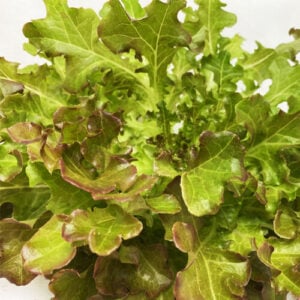 Fresh produce begins losing nutritional content immediately after harvest. Vitamin C in spinach declines by roughly 50% within a week of harvest under refrigeration. Leafy greens lose antioxidants progressively as they travel through the supply chain from farm to supermarket to your kitchen.
Produce harvested and eaten the same day retains the full nutritional profile it had at peak ripeness. This is the fundamental advantage of home growing: it eliminates the gap between harvest and consumption. See the research overview at why eating at harvest is healthier.
How much food can you actually produce at home?
Realistic output by method
| Method | Plant count | Crop types | Weekly harvest estimate |
|---|---|---|---|
| Windowsill pots | 3 to 4 pots | 3 to 4 herbs | Small; occasional sprigs |
| Balcony containers (seasonal) | 6 to 10 pots | Herbs, cherry tomatoes, lettuce | Moderate during growing season |
| Countertop hydroponic kit | 6 to 12 pods | Herbs and small greens | Regular herb harvests |
| Gardyn Studio (Hybriponic) | 16 plants | Herbs and greens | Consistent daily harvests |
| Gardyn Home (Hybriponic) | 30 plants | 30+ herb and green varieties | Substantial daily harvests |
| Small raised bed (outdoor) | Variable | Seasonal vegetables and herbs | High in summer; none in winter |
For a detailed breakdown of what a Gardyn system produces over time, see the how much food does a Gardyn produce guide.
Herbs: the highest output-to-effort crop
A single mature basil plant in a Hybriponic system produces enough fresh basil for 2 to 3 culinary uses per week during peak growth. A Gardyn Home running 6 herb varieties simultaneously provides a continuous supply across the range of everyday cooking. Most Gardyn members report that they have not bought fresh herbs from a supermarket since their system was established.
Greens: daily salad without the bag
Arugula and butterhead lettuce are among the fastest-producing crops in a hydroponic system, reaching first harvest in 3 to 4 weeks and continuing to produce for weeks or months with regular cutting. Running 4 to 6 greens in rotation provides enough fresh salad leaves for a household to eat salad daily without buying pre-washed bags.
The economics of growing food at home
Where the return is highest
The economic return on home food growing is highest for crops with three characteristics: high retail price per unit, high frequency of use, and high waste rate in grocery store form. Fresh herbs score high on all three.
A household that uses fresh basil three times per week at $4 per bunch spends around $600 per year on basil alone, typically throwing away 40 to 60% of each bunch before it wilts. A Hybriponic system growing continuous basil replaces that spending with a fraction of the ongoing cost.
Understanding the full cost
An honest assessment of home growing economics includes:
- System cost: the upfront purchase amortised over its useful life
- Ongoing consumables: yCubes or seeds, nutrient solution, electricity
- Time cost: weekly maintenance time, at whatever value you assign to it
For Gardyn’s Hybriponic system, electricity consumption is approximately 65 to 90 kWh per year in total. The system requires about 5 minutes of attention per week. The full Gardyn economics breakdown models this in detail against typical grocery spending on the same crops.
What home growing does not replace
Home growing at household scale does not economically replace staple calories: grains, legumes, root vegetables, and fruit. The cost of inputs for producing these at home does not compare favourably with commercial agriculture and retail distribution. The value of home growing is concentrated in fresh, perishable, high-turnover crops where the freshness premium and waste reduction create real financial benefit.
|
How to get started growing food at home
Step 1: Assess your space honestly
The starting point is an honest assessment of what space you have and what light it receives.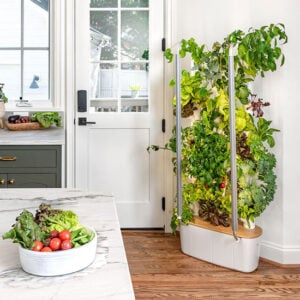
- Do you have outdoor space? If so, what direction does it face, and how many hours of sun does itreceive?
- Do you have a south or west-facing window with strong direct light? If so, windowsill growing is viable seasonally.
- Are you in a north-facing apartment or low-light home? If so, integrated grow lighting in an indoor system is the only reliable route to year-round production.
- How much floor space can you dedicate? Even 2 square feet in a kitchen corner is enough for a full Hybriponic herb and greens garden.
Step 2: Choose your method based on your goals
| Your goal | Best method |
|---|---|
| Year-round herbs and greens, minimal time | Gardyn Hybriponic system (Home or Studio) |
| Learn how hydroponics works as a hobby | DIY Kratky or DWC setup |
| Seasonal outdoor vegetables and fruits | Raised beds or container growing |
| Supplement herbs in summer, windowsill only | Windowsill herb pots |
| Microgreens for nutrition and variety | Gardyn Microgreens Kit |
Step 3: Start with plants you actually cook with
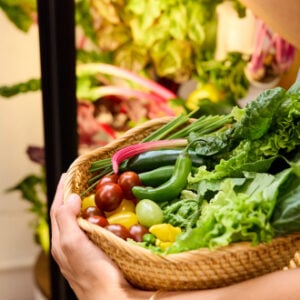
The most common mistake in home food growing is starting with plants that sound interesting rather than plants you actually use. If you rarely use rosemary, growing rosemary will not save money or improve cooking. Start with the 3 to 5 herbs and greens that appear most frequently in your kitchen and build from there.
The Gardyn plant library covers 50+ varieties. The full yCube range includes pre-seeded pods for all major culinary herbs and salad greens.
Step 4: Set up your system and maintain it consistently
Whatever method you choose, consistent management is what separates systems that produce continuously from those that produce for a few weeks and then decline. The most common failure mode in home food growing is not system failure: it is inconsistent attention leading to nutrient drift, light stress, or dehydration.
This is exactly what Gardyn’s Kelby AI addresses. Rather than relying on the grower to maintain consistency, Kelby manages water cycles, light schedules, and plant health monitoring automatically. The grower’s role is to refill water once a week and harvest. See how Hybriponic technology works.
| The most common home growing mistake
Starting with too many plants and too much variety before establishing a reliable routine. Whether you choose a DIY hydroponic setup or a Hybriponic system, start with the crops you know you will use, establish a simple maintenance habit, and scale from there. A system you actually maintain reliably outperforms a more ambitious system you do not. |
Growing food for specific household needs
Growing for a busy household or family
Households with demanding schedules benefit most from automated systems where growing requires minimal daily attention. The value is not just the produce; it is that fresh herbs and greens are available on demand without a trip to the shops.
For families with children, home growing creates a tangible connection between food and where it comes from. Children who grow herbs and greens are measurably more likely to eat them. The guide to indoor growing for families covers this in more detail.
Growing in a small apartment
Apartment growing is where the Hybriponic system has the clearest advantage over traditional growing methods. No outdoor access is needed, no modifications to the apartment are required, and the system operates entirely from a standard electrical outlet.
The Gardyn Home grows 30 plants in 2 square feet of floor space. The Gardyn Studio grows 16 plants in an even more compact form. Both are freestanding, produce no mess or soil, and can be relocated at any point. See the indoor growing for apartments guide.
Growing for health and nutrition goals
Home growing supports specific nutrition goals in ways that grocery shopping cannot. Watercress, kale, and

arugula are among the most nutritionally dense leafy greens available; they also suffer the most significant nutrient loss between harvest and consumption in the commercial supply chain.
Growing these crops hydroponically at home and harvesting at the moment of use preserves their full nutritional profile. For nutrition-focused growing strategies, see the Mediterranean diet at home and the nutrition science overview.
Common home growing problems and how to solve them
Plants growing slowly or producing little
The most common cause is inadequate light. Most kitchens and living rooms do not deliver the light intensity that productive herbs and greens need, particularly in winter. A south-facing window on an overcast January day may deliver as little as 200 to 500 lux. Basil needs 6,000 to 10,000 lux for productive growth.
Solutions: move plants closer to the best available window, add a dedicated grow light, or switch to a system with integrated grow lighting. See the full spectrum grow lights guide and the LED grow lights buyer’s guide for guidance.
Herbs bolting (flowering prematurely)
Bolting is triggered by temperature stress, light stress, or natural maturity. Cilantro and basil are most prone. Bolted herbs develop bitter flavour and divert energy from leaf to seed production.
Solutions: harvest regularly before the plant matures, pinch flower heads immediately when they appear, maintain consistent temperatures, and ensure light is consistent rather than intermittent. In a Hybriponic system, Kelby AI maintains the light schedule that minimises bolting stress.
Yellow leaves
Yellowing typically indicates nitrogen deficiency (older lower leaves yellow first), pH imbalance causing nutrient lockout (nutrients are present but cannot be absorbed outside the correct pH range of 5.5 to 6.5), or overwatering in soil-based systems.
In a traditional hydroponic system, check pH first before adjusting nutrient levels. Most apparent deficiencies in hydroponics are pH problems. See the pH and EC in hydroponics guide.
Running out of plants before the next harvest
The solution is succession planting: starting new plants every 2 to 4 weeks so that as mature plants are harvested, younger plants are coming into production. In a Hybriponic system with 30 plant sites, this can be managed by keeping a rolling rotation of yCubes at different growth stages.
Growing food at home with Gardyn’s Hybriponic system
What Hybriponic technology is
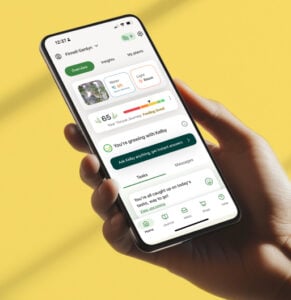 Hybriponic is Gardyn’s proprietary growing technology, designed from the ground up for indoor home use. It combines precision timed water delivery with an aeroponic-inspired root zone that maximises oxygen exposure between cycles. Kelby AI manages water schedules, light cycles, and plant health monitoring automatically.
The result is a system that grows 30 herbs and greens continuously in 2 square feet, requiring about 5 minutes of attention per week, year-round regardless of season, climate, or window orientation. See how Hybriponic technology works.
Gardyn Home vs Gardyn Studio
| Gardyn Home | Gardyn Studio | |
|---|---|---|
| Plant capacity | 30 plants | 16 plants |
| Best for | Full herb and greens garden | Smaller households or limited space |
| Lighting | Integrated full-spectrum LEDs | Integrated full-spectrum LEDs |
| Management | Kelby AI automated | Kelby AI automated |
| Weekly time | Approximately 5 minutes | Approximately 5 minutes |
yCubes: the plant pod system
yCubes are Gardyn’s pre-seeded growing pods. Each yCube contains seed already embedded in growing medium formulated for Hybriponic growing. Insert the yCube into the column, and Kelby AI manages moisture and light from germination through to harvest. No seed starting phase, no growing medium to source, no germination management required.
The yCube library covers 50+ varieties: all major culinary herbs, salad greens, fruiting plants, and flowers. A seedless yCube is also available for growers who want to use their own seeds. Browse the full yCube range.
What Kelby AI does
Kelby is Gardyn’s built-in plant intelligence system. It manages water delivery timing, light schedule optimisation by plant variety, health monitoring via camera and sensor data, and alerts when a plant needs attention.
This is the core design difference between Hybriponic and every traditional hydroponic system: the management overhead has been automated rather than passed to the grower. For a household that wants fresh herbs and greens without the technical commitment of DIY hydroponics, this is the practical solution.
| Start growing food at home today |
| Gardyn’s Hybriponic system: 30 herbs and greens, 2 square feet, Kelby AI management. About 5 minutes of attention per week, year-round. |
Further reading: FAO: Urban and peri-urban food production; USDA NIFA: Urban agriculture and home food production; ReFED: Reducing household food waste; Rickman et al. (2007): Nutritional comparison of fresh, frozen, and canned fruits and vegetables
Frequently asked questions
What is the easiest food to grow at home?
Fresh herbs are the easiest and highest-value starting point. Chives, mint, and parsley are the most forgiving, tolerating lower light and inconsistent watering. In a Hybriponic system with automated management, even the more demanding herbs like basil grow reliably. See the best herbs to grow indoors guide for a full ranking by ease.
How much space do I need to grow food at home?
As little as 2 square feet of floor space. Gardyn’s Hybriponic system grows 30 herbs and greens in that footprint. Windowsill growing requires even less space but is seasonal and light-dependent. A single 4 by 4 foot raised bed outdoors is enough to produce meaningful quantities of seasonal vegetables.
Can I grow food indoors without a garden?
Yes. Indoor hydroponic systems with integrated grow lighting grow food without any outdoor access, in any season, regardless of window orientation. Gardyn’s Hybriponic system requires only a power outlet and 2 square feet of floor space.
How much does it cost to grow food at home?
It depends on the method. A basic windowsill herb setup costs under $20. A quality DIY hydroponic system with grow lights costs $150 to $400. Gardyn’s complete Hybriponic systems include all equipment, integrated lighting, and Kelby AI management. For a detailed return-on-investment analysis, see the Gardyn economics comparison.
Is home-grown food more nutritious than shop-bought?
In most cases, yes, because of the time between harvest and consumption. Leafy greens and herbs begin losing vitamins and antioxidants immediately after cutting. Produce eaten on the day of harvest retains its full nutritional profile. For the research detail, see why eating at harvest is healthier.
How long does it take to see results from home growing?
In a Hybriponic system, fast-growing crops like arugula and butterhead lettuce are ready to harvest in 3 to 4 weeks. Herbs typically reach first harvest in 3 to 5 weeks depending on variety. Microgreens are the fastest: 7 to 14 days from planting to first cut.
What is Hybriponic growing?
Hybriponic is Gardyn’s proprietary growing technology: precision timed water delivery combined with an aeroponic-inspired root oxygenation approach, automated by Kelby AI. It was designed specifically for indoor home use. See how it works.
Can I grow food at home year-round?
With an indoor hydroponic system and integrated grow lighting, yes. Outdoor and windowsill growing is seasonal in most climates. Hybriponic systems operate year-round regardless of season, climate, or window orientation, because they provide their own light source and controlled growing environment.