Cookies help us deliver the best experience on our website. By clicking Accept you are agreeing to the placement and use of cookies as described in our privacy policy.


Most Western recipes treat herbs as a finishing touch: a pinch of parsley, a basil chiffonade. In Middle Eastern, Southeast Asian, and Persian cooking traditions, herbs are structural ingredients used by the cup, not the tablespoon. These recipes follow that logic. The herb is the salad. Everything else is the supporting cast.
Key takeaways
- Authentic tabbouleh is a parsley salad with a small amount of bulgur: not a bulgur salad with a little parsley. The ratio
 matters completely.
 - Fresh herb salads have an exceptional nutritional profile: parsley, mint, and cilantro are among the most antioxidant-dense foods per gram, delivering concentrated benefits in relatively small quantities.
- Herbs grown at home and cut immediately before eating have dramatically more volatile aromatic intensity than refrigerated store-bought herbs.
- Growing Italian parsley, mint, and cilantro simultaneously in a Gardyn system means herb-forward dishes are always ready without a shopping trip.
Proper tabbouleh: the ratio that matters
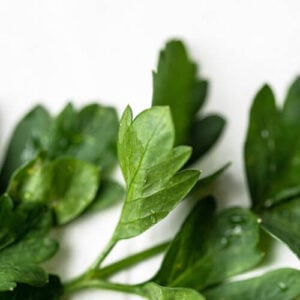
The most common tabbouleh mistake in Western recipes is treating bulgur as the base and parsley as a flavoring. In Lebanese and Palestinian cooking, the ratio is inverted: tabbouleh is 75–80% herb by volume, with bulgur as a minor textural element. The correct ratio transforms the dish.
Serves 4 as a side. Ingredients:
- 3 large bunches Italian parsley (fine stems included), approximately 3 packed cups after chopping
- ½ cup fresh mint leaves, finely chopped
- ¼ cup fine bulgur (soak in boiling water 15 minutes, drain, squeeze dry)
- 3 medium ripe tomatoes, finely diced, juices squeezed out
- 4 spring onions or ½ small white onion, finely chopped
- Juice of 2–3 lemons (start with 2, taste, adjust)
- 4–5 tbsp good olive oil
- ½ tsp allspice (optional but traditional) · salt and black pepper
Method: Chop parsley finely, stems and all, the stems carry flavor. Combine with mint, tomato, onion, and bulgur. Dress with lemon and olive oil. Season assertively. The tabbouleh should be heavily lemony. Let it sit 15–20 minutes before serving for the flavors to meld. Traditionally served with lettuce or endive leaves for scooping.
Gardyn shortcut: 3 packed cups of parsley is a large harvest from one yCube, plan to use a full Italian parsley yCube for a batch, paired with mint from a separate pod. Both grow continuously and regrow after cutting.
Four more herb-forward salads
Persian herb platter (Sabzi Khordan)
Not a composed salad but a Persian tradition: a fresh herb platter served alongside meals. Each herb is eaten fresh, with bread and cheese. The herbs are the food.
- Components: Whole sprigs of mint · Italian parsley · basil · chives or spring onions · radishes · walnuts · feta or white cheese
- Serve: Arranged loosely on a plate or board. Guests take herbs and wrap with bread and cheese. There is no dressing : the herbs are eaten as-is.
Vietnamese herb salad (Gỏi cuốn-style)
The herb quantities that seem extreme in Western recipes are correct.
- Ingredients: 1 cup mint · 1 cup cilantro · ½ cup Thai basil · 2 cups shredded cabbage · 1 cup rice noodles (cooked and cooled) · ½ cup toasted peanuts · 1 cup bean sprouts
- Nuoc cham dressing: 3 tbsp fish sauce · 3 tbsp lime juice · 2 tbsp sugar · 1 garlic clove (minced) · 1 small red chili (finely sliced) · 4 tbsp water. Stir until sugar dissolves.
- Protein: Shredded poached chicken, grilled shrimp, or pan-fried tofu. Toss through right before serving.
Cilantro-heavy Mexican herb salad
For people who love cilantro : a salad where it is unambiguously the star.
- Ingredients: 2 packed cups cilantro (stems included) · 1 cup arugula · 1 avocado (cubed) · 1 cup cherry tomatoes · ½ cup
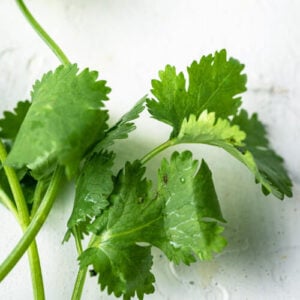 corn kernels (grilled or charred) · ¼ cup pepitas
 - Dressing: Lime-cumin: 3 tbsp lime juice · 1 tsp ground cumin · ½ tsp honey · 4 tbsp olive oil · salt.
Spring onion and mint fattoush
A Lebanese classic where the herb ratio is aggressive and the pita is mandatory.
- Ingredients: 1 cup Italian parsley · ½ cup mint · 2 cups romaine · 2 tomatoes (diced) · 1 cucumber (diced) · 4 radishes (sliced) · 2 pitas (torn, toasted until crisp)
- Sumac dressing: 3 tbsp lemon juice · 1 tsp sumac · ½ tsp allspice · 1 garlic clove (minced) · 5 tbsp olive oil.
The nutritional case for herb-forward eating
Fresh herbs are among the most nutritionally dense foods per gram. They’re typically treated as a garnish added in such small quantities that they contribute negligible nutrition. Used in the quantities these recipes call for, by the cup : the picture changes:
| Herb | Notable nutrients per 100g | What that looks like in practice |
| Italian parsley | Vitamin K (1,640% DV) · Vitamin C (133% DV) · Folate (38% DV) | A generous cup of tabbouleh’s herb component delivers significant K and C |
| Mint | Antioxidants (rosmarinic acid) · Vitamin A · Iron | Vietnamese herb salad quantities deliver real antioxidant load |
| Cilantro | Vitamin K · Vitamin A · Quercetin | 2 cups of cilantro in a salad is not a garnish, it’s a nutritional contribution |
| Basil | Eugenol (anti-inflammatory) · Vitamin K · Manganese | Persian herb platter quantities shift it from flavor agent to nutritional component |
See: why eating at harvest is healthier : the nutrient degradation that occurs between harvest and consumption is proportionally higher for vitamins C and folate, both concentrated in parsley and mint.
| “Making tabbouleh with parsley from the Gardyn was the first time I understood why people care about fresh herbs. The smell when you’re chopping it, that’s what it’s supposed to smell like.”
Yasmine H., Gardyn Home owner, Detroit MI |
| Parsley and mint, always ready to harvest. |
| Italian parsley and mint yCubes grow continuously, cut as much as a recipe needs, and they regrow. Tabbouleh-ready parsley whenever you want it. |
Further reading: USDA FoodData Central — Parsley, fresh: nutritional profile; NIH — Parsley flavonoids: apigenin and anti-inflammatory effects; Whole Grains Council — Bulgur wheat: nutrition and preparation
Frequently asked questions
What is the correct ratio of parsley to bulgur in tabbouleh?
Traditional Lebanese tabbouleh is approximately 4 parts herb (parsley and mint) to 1 part bulgur by volume : the inverse of most Western recipe ratios. The bulgur is a textural accent, not the base. If your tabbouleh looks mostly beige, the ratio is wrong.
Can I make tabbouleh without bulgur?
Yes, tabbouleh is naturally easy to make gluten-free by replacing bulgur with quinoa (most common substitute), fine cauliflower rice, or simply omitting the grain entirely. The herb-tomato-lemon-olive oil combination stands on its own.
How long does fresh herb salad last?
Dressed herb salads (tabbouleh, fattoush) keep 1–2 days refrigerated, with the herbs wilting but still flavorful. Undressed components keep 3–4 days separately. For the best texture, dress immediately before serving and make in quantities you’ll eat within 24 hours.
Which herbs can I grow at home for these recipes?
Italian parsley, mint, cilantro, Thai basil, and basil, all core ingredients in herb-forward salads, grow well in a Gardyn hydroponic system. All are cut-and-come-again plants: harvest what you need, and they regrow from the base.