Cookies help us deliver the best experience on our website. By clicking Accept you are agreeing to the placement and use of cookies as described in our privacy policy.


You buy a bunch of cilantro because the recipe calls for a tablespoon. By Thursday it’s brown and slimy at the bottom of the crisper drawer. The kale you bought with good intentions? Wilted by Wednesday. Sound familiar? You’re not alone, and you’re not failing at meal planning. You’re just working against a system that was never designed for how families actually cook and eat.
Key takeaways
- The average American family throws away approximately $1,500 in food each year, fresh produce accounts for the largest share of that
 waste.
 - The root cause isn’t poor planning: it’s the gap between grocery store quantities and what families actually use before food spoils.
- Growing food at home eliminates the waste cycle entirely, you harvest exactly what you need, when you need it, and the plant keeps producing.
- Gardyn’s Hybriponic™ system grows up to 30 plants in 2 square feet, giving families a continuous supply of fresh herbs and greens without the spoilage.
- The most wasted produce items, fresh herbs, leafy greens, and salad mix, are exactly what Gardyn grows best.
The produce waste problem is bigger than you think
According to the USDA, American households waste between 30 and 40 percent of the food supply, and fresh produce tops the list of what gets thrown away. For a family of four spending a typical amount on fresh fruits and vegetables, that can add up to $60 or more per month in food that never gets eaten.
The frustrating part is that most of this waste happens to people who are genuinely trying to feed their families well. You buy the salad greens because you want everyone eating more vegetables. You pick up fresh basil because you’re planning to make a real dinner on Friday. But life intervenes, schedules shift, and by the time you get to it, the produce is past its prime.
Why the grocery store model doesn’t work for families
Grocery stores sell produce in quantities optimized for their supply chain : not for how your family actually cooks. A bunch of fresh dill serves a recipe that calls for two tablespoons. A clamshell of mixed greens feeds four if everyone eats a full salad every night that week. A pack of fresh herbs wilts within days of purchase, regardless of how carefully you store it.
The math just doesn’t work for most households. You can’t buy exactly the amount of cilantro you need for Tuesday’s tacos. You buy what the store sells, use what you need, and compost (or trash) the rest. Multiply that across every produce purchase, every week, and $60/month in waste is conservative for many families.
The most wasted produce items
| Produce item | Average waste rate | Why it happens | Grows in Gardyn |
|---|---|---|---|
| Fresh herbs (basil, cilantro, parsley) | ~70% wasted | Sold in large bunches; recipes use small amounts | Yes ✔ |
| Leafy greens / salad mix | ~45% wasted | Wilts quickly; clamshells too large for single use | Yes ✔ |
| Kale | ~40% wasted | Bought with good intentions; tough to use quickly | Yes ✔ |
| Arugula | ~50% wasted | Delicate leaves; short shelf life after opening | Yes ✔ |
| Lettuce heads | ~35% wasted | Outer leaves wilt before inner leaves are reached | Yes ✔ |
How growing at home solves the waste problem
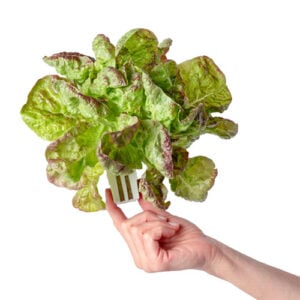 The waste cycle exists because of the gap between purchase quantity and use quantity. When you grow food at home, that gap disappears. You harvest exactly what you need : a handful of basil leaves for tonight’s pasta, a few sprigs of cilantro for the tacos, a small bowl of arugula for a side salad, and the plant keeps growing, ready for the next harvest.
There’s no bunch going brown in the crisper because there is no bunch. There’s a living plant, producing continuously, available whenever you need it. This is the fundamental shift that home growing creates for families: from a spoilage-prone stockpile model to an on-demand harvest model.
Harvest only what you need
Gardyn’s yCube plant pods are designed for exactly this kind of harvest pattern. Herbs like basil, cilantro, and mint regrow continuously after harvest, take what you need tonight, and the plant will have more within days. Leafy greens like arugula and butterhead lettuce work the same way with a cut-and-come-again approach: harvest outer leaves, leave the center, and the plant keeps producing for weeks.
No planning required
One of the hidden stressors of the grocery waste cycle is the mental load it creates. You have to plan your meals far enough in advance to buy produce before it spoils, then execute those plans even when life gets busy. Growing at home removes the planning pressure entirely : the herbs and greens are just there, alive and fresh, whenever you want them. Dinner at the last minute becomes easy when you can walk to your Gardyn and harvest whatever you need right now.
The real savings: what growing at home is actually worth
The financial case for growing at home is strongest for the produce categories families waste most, which happen to be exactly what Gardyn grows best. Fresh herbs bought at the grocery store typically cost $2–$4 per bunch. If your family buys two bunches a week and wastes half of it, that’s $100–$200 per year in herb waste alone.
Add in the salad greens, the kale, the arugula, and the savings from eliminating waste quickly offset the cost of a Gardyn membership. Many active Gardyn families report that the system pays for itself within the first year when they account for both the produce they’re growing and the produce they’re no longer throwing away.
Getting kids involved changes the equation further
There’s a well-documented phenomenon in family nutrition research: children are significantly more likely to eat vegetables they helped grow. When kids have ownership over the plants, checking on them, watering (even though Gardyn handles this automatically), and doing the harvesting, they approach the food differently. That’s not just a nice bonus; it’s a meaningful reduction in mealtime friction that saves both food and stress.
The Gardyn Home grows 30 plants simultaneously, which means enough variety to let each kid have “their” plant to tend : a personal stake in what ends up on the dinner plate.
|
|
Best plants to start with for families
If you’re new to growing at home, start with the produce your family wastes most and uses most. For most families, that means herbs first, they’re the highest-waste, highest-value category, and they grow quickly and reliably in a Gardyn system.
- Basil : ready to harvest in 3–4 weeks; use in pasta, salads, pizza, and Caprese. Also available as sweet Thai basil for Asian-inspired cooking
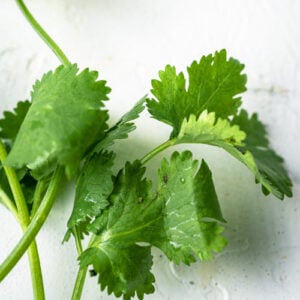
- Cilantro : the most-wasted herb in America; grows quickly and continuously for tacos, salsa, curries, and more
- Mint, vigorous grower; great for drinks, desserts, and adding to fruit salads kids actually enjoy
- Italian parsley : a workhorse herb that’s used in dozens of recipes; far more flavorful fresh than dried
- Arugula : fast-growing salad green; peppery flavor that kids often prefer to bland iceberg
- Butterhead lettuce, soft, mild leaves that even picky eaters tend to accept; harvest outer leaves and the plant keeps producing
- Chives : a kid-friendly herb that’s mild enough for even selective eaters; great on eggs, potatoes, and pasta
What the first month actually looks like
Most families don’t overhaul their eating habits overnight, and they don’t need to. The shift away from the grocery waste cycle happens gradually as you start cooking with what’s growing rather than what’s in the crisper drawer.
Weeks 1–2: planting and watching
After setting up your Gardyn Home and inserting your first yCubes, Kelby AI activates the lighting schedule and watering cycle automatically. Your job is simply to check in daily : a 60-second habit that kids tend to take over enthusiastically once they realize the plants are visibly growing. By the end of week two, fast-growing herbs like basil and mint will be showing strong growth, and arugula may already be ready for a first taste.
Weeks 3–4: first harvests, first shift
This is when the waste cycle starts to break. You’re making dinner and need cilantro, and instead of checking the crisper (empty) or skipping it (like usual), you walk to the Gardyn and snip what you need in 30 seconds. It’s fresher than anything you’ve bought at the store. And there’s more growing for next time. This moment : the first time you harvest for a real meal, is the one most Gardyn families describe as the turning point.
Month 2 and beyond: the new normal
By the second month, most families have significantly reduced their herb purchases and are harvesting several times a week. The waste guilt is gone because there’s nothing to waste, you only take what you need. The mental load of “do I have fresh herbs?” disappears, replaced by the simpler question of “what’s ready to harvest?” The grocery cart gets a little lighter. The crisper drawer stops being a guilt machine.
Frequently asked questions
How much produce can a Gardyn actually replace?
A fully planted Gardyn Home with 30 active plants can provide a consistent supply of fresh herbs and leafy greens for a family of 2–4, depending on how frequently you harvest and which plants you choose. Most active Gardyn families find that herbs are essentially removed from their grocery list entirely, and salad greens are significantly reduced.
What if my family doesn’t eat that many salads?
Herbs are the highest-value starting point because they’re used in almost every type of cooking : not just salads. Fresh basil goes into pasta sauce. Cilantro goes on tacos. Mint goes in drinks. Parsley finishes roasted vegetables. You don’t need to be a salad family to benefit from growing your own; you just need to cook, which most families already do.
How long before I start harvesting?
Most herbs are ready for a first harvest within 3–5 weeks of planting a yCube. Leafy greens like arugula and butterhead can be ready in as little as 2–3 weeks. Gardyn’s Kelby AI monitors your plants and sends a notification when they’re ready to harvest, so you’ll never miss the window.
Is it really pesticide-free?
Yes. Gardyn’s Hybriponic™ system grows plants in a controlled indoor environment with no soil and no exposure to the pests and pathogens that require pesticide treatment in outdoor and commercial growing. No pesticides are used at any stage, from the pre-seeded yCube through every harvest.
What if my kids won’t eat the vegetables?
This is where the “grown it yourself” effect comes in. Research consistently shows that children are more willing to try and eat vegetables they’ve had a hand in growing. Giving kids a role, even just choosing which yCube to plant next or doing the harvesting, changes their relationship with the food. It’s not a guarantee, but it’s the most effective tool most parents have found.