Cookies help us deliver the best experience on our website. By clicking Accept you are agreeing to the placement and use of cookies as described in our privacy policy.


I know the feeling. You were a gardener. You had beds, or containers, or a plot, something living that you tended and grew and harvested from. And then your back gave out, or your knees, or you moved somewhere without outdoor space, and that relationship ended in a way you didn’t quite choose.
This article is for you. Not ‘here’s a product that approximates what you had,’ but the honest account of what it’s like to grow food again when the physical gardening you knew isn’t possible anymore.
Key takeaways
- The emotional core of gardening, connection to growth, daily nurturing, harvest satisfaction, translates fully to indoor hydroponic growin
 g.
g. - Physical barriers that ended traditional gardening (back pain, knee issues, loss of outdoor space) are absent from indoor growing.
- Indoor growing produces familiar culinary plants : the same basil, thyme, rosemary, and lettuces that made garden-to-table cookingmeaningful.
- The daily check-in with a living system provides the same sense of presence and attention that traditional gardeners describe as the heart of the practice.
- Gardyn’s compact system works in a condo, an assisted living apartment, or any indoor space : no backyard required.
What gardening actually meant
Before we talk about what indoor growing offers, it’s worth being honest about what traditional gardening meant for those who loved it. Because ‘growing plants’ is underselling it.
For most dedicated gardeners, the practice was about presence. The time spent in the garden was time spent paying close attention to something living, noticing daily changes, responding to needs, making small decisions that accumulated into results. It was meditative in the original sense: the mind engaged with something outside itself.
It was also about competence and craft. Knowing when to pinch back basil to prevent bolting, reading the soil, timing harvests for peak flavor, this was accumulated knowledge that produced tangible outcomes. The harvest wasn’t just food; it was evidence of skill.
And it was about being connected to natural cycles : the rhythm of growth from seed to harvest, in a way that daily life rarely provides.
What back pain (and knees, and moving) takes away
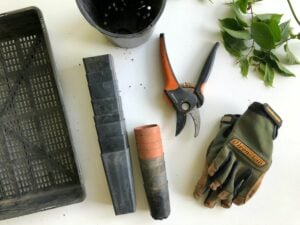
The physical demands of traditional gardening are real. Ground-level work, planting, weeding, harvesting root vegetables, turning soil, requires 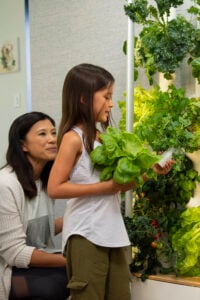 sustained low-level posture that becomes acutely painful for many people as they age. The joy of the garden gets filtered through an increasingly expensive physical cost.
For those who’ve moved to condos, apartments, or assisted living, the problem is different: the space simply doesn’t exist anymore. Container gardening on a small balcony is possible in theory, but it still requires bending, still depends on weather, and still demands the daily watering attention that full outdoor beds once absorbed.
The loss is real. Finding a genuine replacement matters.
What transfers, and what’s different
Let me be specific about what does and doesn’t translate from traditional gardening to indoor hydroponic growing.
What transfers completely
- The daily connection with living plants, checking on growth, noticing changes, responding to what you see
- The harvest satisfaction, snipping fresh herbs, pulling salad leaves, tasting something you grew yourself
- The knowledge that accumulates, learning which varieties you prefer, when to harvest for peak flavor, how to extend production
- The kitchen-to-table relationship, cooking with herbs and greens moments after harvest
- Sharing the harvest, giving fresh herbs to neighbors, family, friends
What’s different
- Scale: a Gardyn system is 30 plants at most, not an outdoor bed
- Soil: absent entirely : the connection to earth is replaced by a clean hydroponic system
- Weather and seasons: irrelevant, indoor growing is year-round and climate-controlled
- Physical effort: dramatically reduced : no kneeling, digging, or heavy lifting
The plants that bring it home
For gardeners returning to growing after a gap, familiar plants matter. The flavors and aromas of basil, thyme, rosemary, sage, and oregano are deeply familiar : the same herbs that defined the traditional garden kitchen. The lettuces, butterhead, romaine, arugula, produce the same cut-and-come-again harvest rhythm that experienced gardeners know well.
And then there are the plants that might be new: sweet Thai basil, red tatsoi, holy basil, red sorrel. Part of the pleasure of returning to growing is discovering what you haven’t grown before.
|
The morning ritual that comes back
Many gardeners describe a morning ritual, coffee in hand, walking the garden, checking overnight growth, planning the day’s harvest. This ritual is one of the things that’s most missed when traditional gardening ends.
With a Gardyn system in your kitchen or living room, that ritual comes back in a different form. The check is quicker : a glance at the columns, maybe a quick harvest, but the underlying rhythm of daily connection with living things is intact.
For more on the emotional side of this return, see our posts on the benefits of homegrown garden and fresh food, fresh life, fresh perspective.
|
|
Frequently asked questions
Will this really feel like gardening?
The physical experience is different : no soil, no kneeling, no outdoor space. But the core of what gardening means, daily connection with living plants, the satisfaction of harvest, cooking with what you grew, transfers fully. Most returning gardeners describe it as genuinely filling the space the outdoor garden left.
I was an experienced gardener. Will this feel too simple?
Gardyn’s automation handles routine management, but there’s still depth to explore: learning which varieties you prefer, experimenting with harvest timing for flavor, discovering new plant varieties. Experienced gardeners often find that the lack of pest management and weather stress lets them focus on the parts they loved most.
Can I use Gardyn in a condo or assisted living apartment?
Yes, Gardyn systems require only a power outlet and approximately 1.4–2 sq ft of floor space. There’s no installation, no drilling, and no mess. The system is suitable for any indoor space regardless of size.
What if my back pain means I can’t even do the weekly water refill?
A long-spout lightweight pitcher makes the refill accessible for most mobility levels. For periods of significant limitation, a family member or caregiver can handle the weekly refill, it’s a simple, two-minute task. Kelby monitors the rest.