Cookies help us deliver the best experience on our website. By clicking Accept you are agreeing to the placement and use of cookies as described in our privacy policy.


Most salad advice focuses on what to put in a salad. This guide covers something more fundamental: the structural principles that make a salad genuinely satisfying rather than a dutiful side dish, and why the quality of your greens and herbs matters more than any specific combination of toppings.
Key takeaways
- A satisfying salad follows a simple formula: leafy base + substantial protein + textural contrast + acid + fat + fresh herbs. Skipping any element is why salads feel like “not a real meal.”
- Fresh herbs are the most transformative salad ingredient : not a garnish, but a primary flavor component that turns a serviceable salad into something craveable.
- Cut-and-come-again greens (arugula, butterhead, romaine, kale) grown at home provide a continuous harvest: the salad base is always fresh and always ready.
- Homegrown greens harvested minutes before eating contain significantly more vitamins and antioxidants than produce that spent days in transit and refrigeration.
- The “I don’t like salad” problem is almost always a texture or flavor problem : not a salad problem, and is solved by the formula, not willpower.
Why most salads are unsatisfying (and how to fix it)
The salad that feels like a punishment, watery iceberg, a few sad tomato wedges, bottled dressing, is unsatisfying for specific nutritional and sensory reasons. It lacks protein, meaningful fat, and textural interest. It’s mostly water and refined dressing. It doesn’t register as a meal.
The fix is structural. A salad built on the right formula, regardless of specific ingredients, satisfies because it delivers complete macronutrients, sensory variety, and enough volume to actually fill you. Here’s the formula:
| Element | Purpose | Examples |
| Leafy base | Volume, micronutrients, fiber | Arugula, romaine, butterhead, kale, watercress, mixed |
| Protein | Satiety, muscle support | Chicken, salmon, tuna, eggs, chickpeas, lentils, tofu, cheese |
| Substantial ingredient | Structure, carbohydrate or fat base | Grains (quinoa, farro), roasted vegetables, avocado, legumes |
| Textural contrast | Crunch and interest | Toasted seeds or nuts, croutons, radishes, snap peas, cucumber |
| Acid | Brightens everything, essential for flavor balance | Lemon, good vinegar, pickled elements, citrus segments |
| Fat | Satiety, carries fat-soluble vitamins, emulsifies dressing | Olive oil, avocado, tahini, nut-based dressings |
| Fresh herbs | Flavor intensity and complexity | Basil, cilantro, mint, parsley, chives, dill, tarragon |
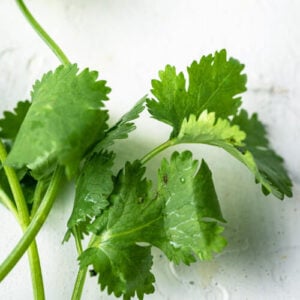
The element most often missing: fresh herbs. They’re the difference between a salad that tastes assembled and one that tastes like it was made by someone who cooks. You don’t need a lot : a small handful of basil or mint or cilantro transforms the flavor profile of everything around it.
Salad recipes by greens base
Arugula salads
Arugula’s peppery bite makes it the most versatile salad base, substantial enough for a main course, interesting enough to hold its own against strong flavors. It’s also among the fastest-growing greens in a Gardyn system, ready to harvest within 3 weeks. See the arugula yCube.
- Classic Italian: Arugula, shaved parmesan, toasted pine nuts, cherry tomatoes, lemon-olive oil dressing, fresh basil. Pepper from the arugula means minimal additional seasoning needed.
- Arugula and grain bowl: Arugula base, warm quinoa or farro, roasted beets or sweet potato, goat cheese, candied walnuts, sherry vinaigrette. Fresh thyme or chives finish.
- Summer stone fruit: Arugula, sliced nectarines or peaches, fresh mozzarella, prosciutto, aged balsamic, fresh mint. No cooking required.
- Pizza-style: Hot pasta or flatbread topped with a big handful of arugula, cherry tomatoes, and parmesan : the heat wilts the arugula slightly. Add fresh basil.
Romaine salads
Romaine’s structure holds up to bold dressings, grilled proteins, and creamy emulsifications better than delicate lettuces. The romaine yCube grows quickly and harvests continuously.
- Classic Caesar: Romaine, anchovy-garlic dressing, parmesan, croutons. Fresh flat-leaf parsley stirred into the dressing adds brightness. Grilled chicken or salmon completes it.
- Grilled romaine: Halve a head lengthwise, brush with olive oil, grill cut-side down for 2 minutes. Top with cherry tomatoes, shaved parmesan, and anchovy vinaigrette. Fresh chives finish.
- Taco salad bowl: Chopped romaine, seasoned black beans, corn, avocado, pico de gallo, crushed tortilla chips, lime-cumin dressing. Fresh cilantro essential.
Butterhead / mixed leaf salads
Butterhead and mixed leaves are the most delicate bases : best with light dressings and ingredients that don’t overpower. Butterhead is one of the
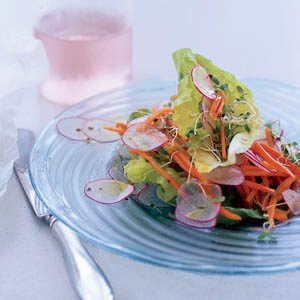
highest-producing Gardyn greens.
- French bistro: Butterhead, hard-boiled eggs, thin-sliced radishes, capers, Dijon vinaigrette, fresh tarragon or chervil. Simple and extraordinary.
- Spring herb salad: Equal parts butterhead and fresh herbs, mint, parsley, basil, chives, treated as a leaf. Cucumber, toasted seeds, lemon dressing. Herbs are not a garnish; they are half the salad.
- Smoked salmon: Butterhead, smoked salmon, cream cheese dollops, pickled red onion, cucumber, fresh dill. Capers optional but recommended.
Kale salads
Kale needs massage, 2–3 minutes of working the leaves with your hands breaks down the tough cell structure and transforms the texture from fibrous to silky. Lacinato kale is particularly suited to salads. Homegrown kale has never been refrigerated or transported, which means it massages more easily.
- Massaged lemon kale: Lacinato kale massaged with lemon juice and olive oil, chickpeas, roasted sweet potato, pepitas, tahini dressing. Fresh parsley stirred through.
- Kale Caesar: Massaged kale base instead of romaine, holds the dressing longer without wilting, better for meal prep. Same dressing, parmesan, croutons.
- Winter kale salad: Kale, roasted butternut squash, dried cranberries, toasted pecans, apple slices, apple cider vinaigrette. Fresh thyme through the dressing.
Herb-forward salads: making fresh herbs the star
Some of the most interesting and satisfying salads are built around fresh herbs rather than treating them as incidental. Middle Eastern and Southeast Asian cooking traditions do this instinctively : the herb quantity would seem wrong from a Western recipe perspective until you taste it.
- Tabbouleh: Italian parsley and mint as the primary volume, bulgur wheat as a minor supporting ingredient. Tomato, cucumber, lemon-olive oil dressing. The herbs are the dish.
- Vietnamese herb salad: Mint, cilantro, Thai basil, shredded cabbage, toasted peanuts, rice noodles, nuoc cham dressing. Every element is equally important.
- Greek-style herb bowl: Cucumber, tomato, olives, feta, red onion, with a full cup of fresh mint and Italian parsley torn through. Lemon, olive oil, dried oregano dressing.
- Fattoush: Arugula or romaine, cucumber, tomato, toasted pita chips, sumac dressing, generous quantities of mint and Italian parsley.
Why fresh-harvested greens make better salads
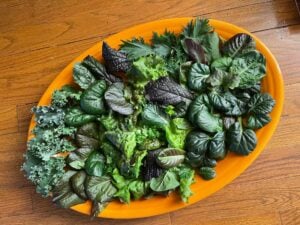
There is a real, measurable quality difference between greens harvested minutes ago and greens that have spent 5–10 days in commercial distribution, and it goes beyond freshness of flavor.
Texture: Living plant cells are turgid, firm, crisp, full of water. After harvest, cells lose pressure through respiration and transpiration. Bagged salad’s characteristic limpness is this process underway. Greens cut and eaten within an hour have a different, noticeably superior texture.
Flavor: Volatile aromatic compounds : the things that give arugula its pepper, basil its anise, mint its coolness, dissipate after harvest. Peak flavor is at the moment of cutting. This is why a Gardyn-grown herb snipped into a salad tastes more intensely of itself than the grocery store equivalent.
Nutrition: Vitamins C and E, folate, and antioxidant compounds begin degrading immediately after harvest and continue degrading throughout storage. See: why eating at harvest is healthier.
|
The Gardyn system grows cut-and-come-again greens continuously, harvest a handful of arugula, butterhead, or watercress and the plant continues producing. Most greens are ready for continuous harvest from week 3–4, producing for 6–8 weeks before replacement. Browse the full yCube greens range.
|
|
Frequently Asked Questions
What makes a salad filling and satisfying?
A satisfying salad needs protein, fat, and fiber : not just leafy vegetables. The formula: leafy base + protein (chicken, eggs, chickpeas, cheese) + substantial ingredient (grains, avocado, roasted vegetables) + textural element (nuts, seeds, croutons) + acid + fat + fresh herbs. Skipping protein and fat is the most common reason salads don’t feel like real meals.
What are the best greens for salads?
The best salad green depends on the dish. Arugula: peppery, bold, pairs well with Italian flavors and strong proteins. Romaine: crisp, holds up to creamy dressings and grilled toppings. Butterhead: delicate, best with light vinaigrettes and subtle ingredients. Kale (massaged): hearty, meal-prep friendly, holds dressing without wilting. Watercress: peppery, excellent with Asian-style dressings. Mixed greens cover all bases when variety is the goal.
How do I make salad dressing from scratch?
The basic vinaigrette ratio: 3 parts oil to 1 part acid (lemon juice or vinegar), plus a small amount of emulsifier (Dijon mustard, honey) and seasoning. Shake or whisk to combine. Variations: tahini-lemon (replace oil with tahini), creamy herb (add Greek yogurt), miso-ginger (add white miso and fresh ginger). Fresh herbs in dressings, chives, parsley, basil, make a significant flavor difference.
How do I eat more vegetables without forcing myself?
The most reliable approach is improving the quality and variety of vegetable preparation rather than increasing quantity of the same thing. Salads built on the formula above, with herbs, textural contrast, and satisfying protein, stop feeling like obligation. Having fresh greens and herbs growing at home means vegetables are always available without a shopping trip, which removes the friction that often causes people to default to less vegetable-heavy options.
Can I grow salad greens indoors year-round?
Yes, and this is one of the primary reasons indoor hydroponic growing is valuable for salad lovers. Seasonal availability, weather dependence, and limited outdoor space are not factors. A Gardyn system grows arugula, romaine, butterhead, kale, watercress, and other salad greens continuously indoors regardless of season or climate.