Cookies help us deliver the best experience on our website. By clicking Accept you are agreeing to the placement and use of cookies as described in our privacy policy.


The 2024 cucumber Salmonella outbreak was one of the largest produce contamination events in recent U.S. history. More than 550 people fell ill across dozens of states, 155 were hospitalized, and the recall expanded from a single supplier to encompass whole cucumbers, diced cucumbers, and multi-ingredient products like salads and party trays containing the affected produce.
Cucumbers have a recurring recall history driven by the same structural factors: field irrigation in arid growing regions, import supply chains that complicate traceability, and a smooth outer skin that consumers assume is easy to clean but that pathogens can penetrate through micro-abrasions during harvesting and transport.
This article covers what happened in the 2024 outbreak, the types of cucumbers most commonly affected, how contamination occurs, how to respond when cucumbers are recalled, and how growing cucumbers at home in an indoor hydroponic system eliminates the contamination pathways entirely.
Key takeaways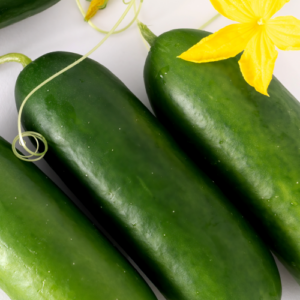
- The 2024 SunFed/Agrotato cucumber Salmonella outbreak sickened 551 people and hospitalized 155 across 26 states, making it one of the largest produce-related outbreaks in years.
- Whole field cucumbers, slicing cucumbers, diced cucumbers, and cucumbers in salads and party trays were all affected by the recall.
- A second cucumber Salmonella outbreak in 2025 (Montevideo strain) caused an additional 69 cases and 22 hospitalizations.
- Most U.S. cucumbers are imported from Mexico, creating long supply chains where traceability is difficult and contamination can occur at multiple points.
- Gardyn sells cucumber yCubes that grow indoors in a closed Hybriponic system, eliminating field irrigation, import chain, and processing facility contamination risks.
The 2024 cucumber Salmonella outbreak: what happened
In late 2024, the CDC identified a multi-state Salmonella outbreak traced to whole fresh cucumbers grown by Agrotato, SA de CV in Sonora, Mexico, and distributed by SunFed Produce LLC. The outbreak grew rapidly.
| Detail | Information |
| Pathogen | Salmonella (multiple strains) |
| Total illnesses | 551 confirmed cases |
| Hospitalizations | 155 |
| Deaths | 0 confirmed |
| States affected | 26 |
| Source | Agrotato, SA de CV (Sonora, Mexico) |
| Distributor | SunFed Produce LLC |
| Products recalled | Whole fresh cucumbers in bulk cardboard and RPC containers |
| Distribution period | October 12 to November 26, 2024 |
The recall quickly expanded beyond SunFed. Sysco Corporation recalled whole and cut cucumbers in multiple formats, including diced cucumber products used by food service operations. Fresh Creative Foods recalled diced cucumber used in Mediterranean party trays sold through Kroger. The contamination rippled through the supply chain into prepared foods, restaurant ingredients, and multi-component retail products.
The 2025 Bedner Growers outbreak
In May 2025, a second major cucumber Salmonella outbreak (Montevideo strain) was traced to Bedner Growers, Inc. in Boynton Beach, Florida, and distributed by Fresh Start Produce Sales. The outbreak caused 69 confirmed cases across 21 states, with 22 hospitalizations. Critically, Bedner Growers was the same farm linked to the 2024 outbreak (different Salmonella strains: Africana and Braenderup in 2024, Montevideo in 2025). The FDA issued a warning letter in November 2025 detailing federal law violations, and the grower announced it would not renew its land leases for 2026.
Separately, in September 2025, the FDA classified a Chefs Warehouse cucumber recall (whole and cut products distributed in Maryland, Delaware, and Virginia) as Class I due to Salmonella contamination, underscoring that cucumber recalls are not isolated events but a recurring industry pattern.
Types of cucumbers affected: whole, slicing, and processed
 Whole field cucumbers
The primary recalled product in 2024 was whole fresh cucumbers shipped in bulk. These are the standard slicing cucumbers sold loose or in bulk displays at grocery stores. The contamination occurred before the cucumbers reached retail, meaning washing at the store or at home could not address pathogens already present on or within the skin.
Diced and cut cucumbers
Sysco recalled diced cucumber products in multiple sizes (1/4 inch skin-on, 1/2 inch seedless skin-on, and other cuts) used primarily by food service operations. Cutting cucumbers exposes interior flesh to any surface contamination present on the skin, and shared cutting equipment in processing facilities can spread pathogens across batches.
Cucumbers in prepared foods
Mediterranean party trays, salads, and restaurant preparations containing cucumbers were recalled as secondary products. These multi-ingredient items are particularly difficult for consumers to trace back to a cucumber recall, which is why checking recalls for ingredient products, not just whole produce, matters.
How cucumbers get contaminated: field irrigation and import chains
Irrigation water in arid growing regions
The majority of cucumbers sold in the U.S. during fall and winter months are grown in Mexico, primarily in Sonora and Sinaloa. These arid regions rely on irrigation systems that can be contaminated by agricultural runoff, wildlife, or inadequate water treatment. The 2024 outbreak was traced to a specific growing operation in Sonora.
Skin penetration during harvest and transport
Cucumbers have a thin, waxy skin that appears smooth but develops micro-abrasions during mechanical harvesting, packing, and transport. Salmonella can enter through these tiny breaks and colonize the area between the skin and flesh, where it becomes inaccessible to surface washing.
Import chain traceability gaps
Cucumbers grown in Mexico pass through multiple handling points: field harvest, packing house, cross-border transport, U.S. distribution center, and retail. Each node introduces potential contamination and complicates traceback when an outbreak occurs. The 2024 investigation took weeks to identify the source farm, during which contaminated cucumbers continued to be sold.
| Import dependency
The United States imports approximately 61% of its fresh fruit and 35% of its vegetables. For cucumbers specifically, the import share is even higher during fall and winter months when domestic production drops. This import dependency creates supply chain length and complexity that directly contributes to recall risk. |
What to do if cucumbers are recalled
- Check recall details. Identify affected brands, lot numbers, pack dates, and distribution states. Cucumber recalls often expand in the days
 following the initial announcement as more distributors and downstream products are identified.
 - Check whole cucumbers and prepared foods. Do not limit your check to loose cucumbers. Salads, wraps, party trays, and any food containing raw cucumber may be affected.
- Discard recalled cucumbers. Do not attempt to peel or cook them as a substitute for disposal. Salmonella can penetrate beyond the skin surface.
- Clean surfaces. Wash cutting boards, countertops, and utensils that may have contacted recalled cucumbers with hot soapy water, then sanitize.
- Monitor for symptoms. Salmonella symptoms (diarrhea, fever, abdominal cramps) typically appear 6 hours to 6 days after exposure and last 4 to 7 days. Seek medical attention for severe symptoms, bloody diarrhea, or symptoms lasting more than a few days.
Growing cucumbers indoors: Gardyn cucumber yCubes
Gardyn sells cucumber yCubes that grow in the Hybriponic™ system. Indoor-grown cucumbers eliminate every contamination pathway responsible for the 2024 and 2025 outbreaks.
- No field irrigation: Clean tap water circulates in a closed loop. No canal water, no agricultural runoff, no proximity to livestock.
- No import chain: Your cucumbers grow in your home. No cross-border transport, no multi-day trucking, no distribution center handling.
- No processing facility: Harvest directly from the plant. No shared cutting equipment, no packing house, no washing line.
- No skin damage: Hand-harvest from the column means no mechanical damage, no micro-abrasions, no entry points for pathogens.
Other recall-vulnerable produce you can grow at home
Cucumbers are one of several produce categories with recurring recall histories. Gardyn grows yCubes for all of the most commonly recalled produce types.
| Recalled produce | Gardyn yCube alternative | Product link |
| Cucumbers | Cucumbers | Click here |
| Cherry Tomatoes | Cherry Tomatoes, Yellow Cherry Tomato | Click here |
| Spinach | Spinach, Perpetual Spinach | Available in app only |
| Lettuce (romaine, spring mix) | Romaine, Butterhead, Red Sails, 14+ varieties | Click here |
| Kale | Kale, Kale Lacinato | Click here |
| Fresh basil | Basil, Thai Basil, Purple Basil, Holy Basil, Lime Basil | Click here |
| Cilantro | Cilantro | Click here |
| Parsley | Italian Parsley | Click here |
| Peppers | Sweet Peppers, Jalapeños, Banana Peppers | Click here |
| Strawberries | Mini Strawberries | Click here |
| Grow cucumbers without the recall risk.
Gardyn’s cucumber yCubes grow indoors in a closed Hybriponic™ system. No field irrigation, no import chain, no processing facility. Shop cucumber yCubes or explore the full Gardyn Home system. |
Further reading
FDA Recalls, Market Withdrawals & Safety Alerts
CDC Investigation: Salmonella Outbreak Linked to Cucumbers (2024)
U.S. PIRG: Food for Thought 2025
Frequently asked questions
Are cucumbers safe to eat right now?
Check the FDA recall database for any active cucumber recalls. If there are no current recalls affecting your brand and purchase date, commercially sold cucumbers are considered safe. For complete elimination of recall risk, Gardyn cucumber yCubes grow indoors in a closed system.
Does peeling cucumbers remove Salmonella?
Not reliably. Salmonella can penetrate through micro-abrasions in the skin and colonize the area between skin and flesh. Peeling may also spread bacteria from the skin to the interior via the peeler or knife. The FDA recommends discarding recalled cucumbers entirely.
Why are so many cucumbers imported?
U.S. domestic cucumber production is concentrated in summer months. During fall and winter, the majority of fresh cucumbers sold in the U.S. are imported from Mexico. This import dependency creates longer supply chains with more handling points, which increases contamination risk and complicates traceback when outbreaks occur.
Can I grow cucumbers indoors?
Yes. Compact cucumber varieties grow well in indoor hydroponic systems with integrated lighting. Gardyn’s cucumber yCubes are designed for indoor growing in the Gardyn Home or Gardyn Studio systems.