Cookies help us deliver the best experience on our website. By clicking Accept you are agreeing to the placement and use of cookies as described in our privacy policy.


As a food scientist, I get asked about organic vs non-organic produce constantly. It’s one of those topics where the scientific evidence is more nuanced than either the marketing or the backlash suggests.
This is my honest attempt to lay out what the peer-reviewed research actually shows, on nutrition, pesticide residue, environmental impact, and cost, and where the analysis leads for health-conscious consumers.
Key takeaways
- Organic produce consistently shows lower pesticide residue than conventional, but “lower” is not the same as
 “none,” and conventional residue is often within legal safety limits.
 - Evidence on nutritional superiority of organic is mixed, some studies show modestly higher antioxidant levels; others show no significant difference.
- Freshness and time-to-harvest have a larger documented impact on nutritional value than organic vs conventional certification.
- Organic is significantly more expensive, selective purchasing (Dirty Dozen prioritized) is more cost-effective than across-the-board organic.
- Homegrown herbs and greens grown without any pesticide input represent a “beyond organic” category that neither label addresses.
The organic certification: what it actually means
The USDA Organic label certifies that produce was grown without synthetic pesticides, synthetic fertilizers, genetically modified organisms (GMOs), or irradiation. It does not mean:
- Pesticide-free, organic farming permits the use of approved naturally-derived pesticides
- Nutritionally superior by a defined margin
- Grown in any particular soil quality (the certification is about inputs, not soil health outcomes)
- Locally grown or fresher
What it does meaningfully signal: lower exposure to synthetic pesticide residues, farming practices that generally support soil health and biodiversity, and the absence of GMO inputs. For consumers primarily motivated by pesticide exposure reduction, organic certification is a genuine differentiator, just not an absolute one.
What the research shows: nutrition
 The nutritional comparison between organic and conventional produce is one of the most extensively studied questions in food science, and one of the most contested.
Studies showing organic nutritional advantages
A widely cited 2014 meta-analysis published in the British Journal of Nutrition (Barański et al.) analyzed 343 peer-reviewed studies and found that organic crops contained significantly higher concentrations of certain antioxidants, including polyphenols and flavonoids, compared to conventional. The proposed mechanism: plants produce more of these compounds as a stress response when grown without synthetic pesticide protection.
Some studies have also found higher levels of omega-3 fatty acids in organic animal products, and modestly higher vitamin C in certain organic produce categories.
Studies finding no significant difference
A 2012 Stanford/Annals of Internal Medicine systematic review of 237 studies found no strong evidence that organic foods are significantly more nutritious than conventional. The authors noted that while some organic produce showed higher levels of certain nutrients, the differences were generally small and inconsistent across studies.
The consensus position
Most nutrition researchers and professional health organizations, including the Academy of Nutrition and Dietetics, take the position that the evidence for organic nutritional superiority is suggestive but not conclusive. The differences, where they exist, are modest. And critically: they are dwarfed by the nutritional differences attributable to freshness.
This is the point that often gets lost in the organic debate: a fresh-harvested conventional herb or green contains dramatically more vitamins and antioxidants than an organic equivalent that spent a week in distribution. Antioxidants and vitamins begin degrading immediately after harvest. Time from harvest to consumption matters far more to nutritional value than organic certification. See: why eating at harvest is healthier.
What the research shows: pesticide residue
This is where the organic vs conventional distinction is clearest and most consistent. Every large-scale comparative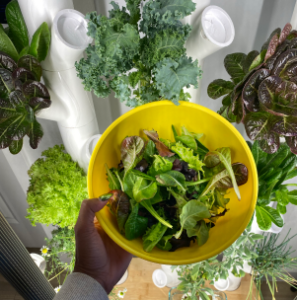 study finds that organic produce carries significantly lower pesticide residue than conventional, typically 30–50% of samples detecting any residue vs 70–80% for conventional, and at much lower concentrations when detected.
The USDA’s Pesticide Data Program (PDP), which tests produce at the point of consumption (washed and ready to eat), consistently finds:
- Conventional produce: 70–80% of samples have detectable pesticide residue
- Organic produce: 20–30% of samples have detectable residue (from drift, cross-contamination, or permitted organic pesticides)
- The residue detected on conventional produce is within legal MRL limits in the vast majority of cases
- Organic residue, when detected, is generally at lower concentrations and from different compound classes
The unresolved question in the pesticide debate is not whether organic reduces exposure, it clearly does, but whether conventional residue levels, which are typically within EPA-established safety thresholds, represent meaningful long-term health risk. The EPA safety margins are substantial, but long-term accumulative exposure and effects on children and developing fetuses are areas of ongoing research.
The cost analysis: is organic worth the premium?
Organic produce typically costs 20–100% more than conventional equivalents, with a median premium of around 40–50% across major categories. For a family with a significant fresh produce budget, this represents a meaningful annual cost difference.
The most evidence-supported approach to cost-effective organic purchasing is selective prioritization based on residue risk:
| Purchase organic priority | Items | Rationale |
| High priority | Strawberries, spinach, kale, peaches, apples, grapes, bell peppers, blueberries, green beans | High residue; systemic pesticides; high consumption frequency |
| Medium priority | Celery, tomatoes, pears, cherries | Moderate residue; frequent consumption |
| Lower priority | Foods from Clean Fifteen: avocados, sweet corn, pineapple, onions, asparagus, cabbage | Low residue regardless of certification |
| Not necessary | Items where you remove the outer layer | Thick-skinned items where flesh residue is minimal |
Environmental considerations
 Beyond personal health, organic advocates point to meaningful environmental differences: organic farming is associated with higher soil biodiversity, lower nitrogen runoff, and better long-term soil health. Conventional agriculture’s reliance on synthetic inputs has documented effects on pollinator populations, soil microbiome, and watershed health.
For consumers who factor environmental impact into purchasing decisions, organic represents a genuine difference, even if the personal health evidence is more mixed than organic marketing suggests.
Indoor hydroponic growing represents a different environmental equation: dramatically lower water use (up to 95% less water than conventional outdoor growing per unit of food produced), no runoff, no soil disturbance, and no pesticide use of any kind.
Beyond the debate: the case for growing your own
The organic vs conventional analysis has a logical endpoint that rarely gets discussed: both options involve produce grown far from where it’s consumed, stored and transported for days to weeks, and subject to residue inputs of some kind.
Growing herbs and greens at home, particularly in a closed indoor hydroponic system, sits in a different category from either. It is:
- Pesticide-free by design: Not “organic approved” pesticide-free. No pesticide input of any kind. A closed indoor environment has no outdoor pest pressure and no pesticide need.
- Harvested at peak nutrition: The freshness factor that most dramatically affects nutritional value. Minutes from plant to plate, not days.
- Transparent: You know exactly what went into your food because you grew it. No certification required because no inputs occurred.
- Cost-effective for high-value items: Fresh herbs are the highest per-unit-cost grocery item for most families. Growing them eliminates that cost category.
For herbs and greens specifically : the category where freshness most affects nutrition and where homegrown is most practical, Gardyn’s Hybriponic™ system represents a genuine alternative to both organic and conventional grocery purchasing. Not because it’s marketed that way, but because the underlying conditions : no soil, no outdoor exposure, no pest pressure, no chemical input, make pesticide use both unnecessary and impossible.
The practical starting point: grow the Dirty Dozen items that are Gardyn-compatible, kale, green beans, plus the herbs that are both expensive and high-residue at the grocery store: basil, cilantro, mint. Then make organic purchasing decisions for what remains based on the residue risk tiers above.
|
Frequently asked questions
Is organic food actually better for you?
The research is mixed. Organic produce consistently shows lower pesticide residue : a meaningful difference for high-residue items like kale, spinach, and strawberries. Evidence for nutritional superiority is suggestive but not conclusive: some studies find modestly higher antioxidant levels in organic; others find no significant difference. Freshness has a larger documented effect on nutritional value than organic vs conventional certification : a fresh-harvested conventional herb contains more nutrients than an organic herb that spent a week in transit.
Is organic produce pesticide-free?
No. Organic certification prohibits synthetic pesticides but permits naturally-derived approved pesticides. USDA testing consistently detects pesticide residue on a portion of certified organic produce, though typically at lower levels and from different compound classes than conventional. “Organic” means lower exposure to synthetic pesticides, not zero pesticide input.
Is buying organic worth the extra cost?
For most households, selective organic purchasing based on residue risk is more cost-effective than across-the-board organic. High-priority items for organic: strawberries, spinach, kale, peppers, apples, grapes, green beans : the EWG Dirty Dozen. Lower priority: anything from the Clean Fifteen, where residue is minimal regardless of certification.
What does “non-GMO” mean and is it the same as organic?
Non-GMO and organic are different certifications. Non-GMO certification addresses only genetic modification, it says nothing about pesticide use. Organic certification includes a non-GMO requirement but also covers synthetic pesticides, synthetic fertilizers, and other inputs. A product can be non-GMO certified but still conventionally grown with synthetic pesticides.
How is hydroponically grown produce different from organic?
Organic certification requires soil-based growing, most indoor hydroponic produce cannot be certified USDA Organic. However, responsible indoor hydroponic growing has no pesticide use requirement: a controlled indoor environment eliminates the pest pressure that drives pesticide application in outdoor agriculture. Gardyn’s system is not organic-certified, but requires zero pesticide input : a different and in some respects more direct standard than organic certification.