Cookies help us deliver the best experience on our website. By clicking Accept you are agreeing to the placement and use of cookies as described in our privacy policy.


If you’ve been following food news over the past several years, a pattern is hard to miss: romaine lettuce, bagged salad greens, and fresh-cut produce appear on food recall lists with troubling regularity. This guide explains why it keeps happening : the actual contamination pathways involved, and what options consumers have to protect themselves, including an approach that removes the supply chain risk entirely.
Key takeaways
- Lettuce recalls are overwhelmingly caused by E. coli O157:H7 and Listeria, pathogens that enter the
 supplychain through contaminated irrigation water, processing facility cross-contamination, or field contact with animal waste.
 - Romaine and bagged leafy greens are the highest-risk fresh produce categories because they are consumed raw and go through centralized processing that can spread contamination across large batches.
- Washing does not reliably remove E. coli from lettuce : the bacteria can attach to leaf surfaces and penetrate tissue through natural openings.
- FDA and USDA maintain active recall databases that can be checked for current advisories.
- Growing romaine, butterhead, arugula, and other leafy greens indoors using Hybriponic™ technology eliminates every contamination vector responsible for produce recalls.
Why lettuce keeps getting recalled: the contamination pathways
Fresh produce recalls, particularly for leafy greens, follow predictable patterns because the contamination pathways are well understood by food safety scientists, even when they’re difficult to eliminate at commercial scale.
Irrigation water contamination
The most common source of E. coli O157:H7 in leafy greens is agricultural irrigation water contaminated with animal waste. Cattle feedlots, dairies, and other livestock operations near farming areas introduce pathogenic bacteria into waterways and groundwater that is then used for irrigation. The 2018 romaine E. coli outbreak, which sickened 210 people across 36 states and killed 5, was traced to irrigation water near a cattle feedlot in Yuma, Arizona.
Processing facility cross-contamination
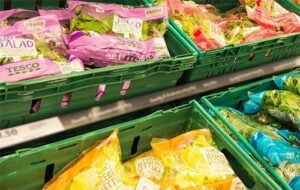
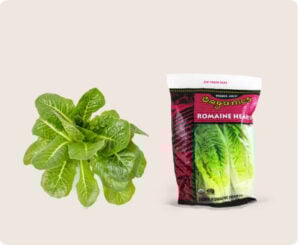 Bagged and pre-cut salad greens go through centralized processing facilities where produce from many farms is washed, cut, mixed, and packaged together. When contaminated product enters a facility, cross-contamination can spread the pathogen across a much larger batch than the original contaminated supply, which is why recalls frequently cover large volumes and broad date ranges.
Field contamination from adjacent animal operations
Direct contact between lettuce fields and animal waste, through flooding, runoff, or bird activity, can introduce pathogens to growing plants. E. coli can attach to the surface of leafy greens and, in some cases, be taken up through the roots and into plant tissue, making washing ineffective.
|
Which produce is most commonly recalled
The FDA and USDA track food recalls by category. Leafy greens, romaine, spinach, bagged salad mixes, arugula, and mixed spring greens, are consistently among the most frequently recalled fresh produce items. The characteristics that make them high-risk:
- Consumed raw: Unlike vegetables that are cooked before eating (which kills pathogens), salad greens go directly from field to plate. There is no kill step.
- Large surface area: Leafy greens have extensive surface area for pathogen attachment and are difficult to wash thoroughly.
- Centralized processing: The bagged salad industry is highly consolidated : a small number of large facilities process enormous volumes, meaning contamination at one point can affect a very large consumer population.
- Open field growing: Outdoor cultivation exposes crops to irrigation water, wildlife, flooding, and proximity to livestock, all routes for pathogen introduction.
| Year | Product recalled | Pathogen | Scale |
| 2018 | Romaine from Yuma, AZ | E. coli O157:H7 | 210 sick, 5 deaths, 36 states |
| 2019 | Romaine from Salinas, CA | E. coli O157:H7 | 167 sick, 1 death, 27 states |
| 2020 | Various bagged salads | Listeria | Multiple brands, large volume |
| 2021 | Packaged salad kits | E. coli | Multi-state |
| 2022–24 | Multiple bagged greens, spinach | E. coli, Listeria | Recurring advisories |
How to check for current food recalls
Two official sources cover virtually all food safety recalls in the United States:
- FDA Recalls, Market Withdrawals & Safety Alerts: fda.gov/safety/recalls-market-withdrawals-safety-
 alerts, updated in real time when new recalls are announced. Filter by product type (produce, vegetables) or search by brand or product name.
 - USDA FSIS Recalls and Public Health Alerts: fsis.usda.gov/recalls, covers meat, poultry, and egg products primarily, but cross-references with FDA for produce recalls.
- CDC Foodborne Illness Outbreaks: cdc.gov/foodsafety/outbreaks, tracks active investigations, often the first indication of a problem before a formal recall is announced.
Practical steps when a lettuce recall is announced:
- Check the recall details: which brands, which date codes, which states are covered.
- Check your refrigerator. If you have the recalled product, do not eat it, discard it and wash the container.
- Do not rely on visual inspection: contaminated produce looks identical to safe produce.
- When in doubt, throw it out. The FDA’s explicit guidance for recalled leafy greens is disposal, not washing.
|
The structural solution: growing your own greens
Every contamination pathway responsible for produce recalls is absent from indoor hydroponic growing. Let’s be specific:
- No irrigation water: Gardyn’s Hybriponic™ system circulates clean tap water in a closed system. There is no agricultural water source, no proximity to livestock operations, and no outdoor water exposure.
- No processing facility: Your greens are harvested directly from the column into your bowl. There is no washing facility, no packaging operation, no cross-contamination point between farm and plate.
- No outdoor field exposure: The growing environment is your kitchen or living space. There is no wildlife contact, no flooding risk, no adjacent livestock, and no soil exposure.
- No supply chain: The distance between plant and plate is measured in steps, not supply chain nodes. The contamination opportunities that exist at every stage of commercial produce distribution simply don’t exist.
This isn’t a marketing claim, it’s a description of the physical conditions. The pathogens responsible for lettuce recalls require specific entry points into the food supply. None of those entry points exist in a closed indoor hydroponic system.
The greens most commonly subject to recalls, romaine, arugula, butterhead, and mixed leafy greens, are all directly growable in a Gardyn system: romaine, arugula, butterhead lettuce, watercress, red sails, kale. Browse the full yCube greens range.
|
|
Frequently asked questions
Why does romaine lettuce keep getting recalled?
Romaine’s recurring recall history is primarily due to E. coli O157:H7 contamination from agricultural irrigation water contaminated by nearby livestock operations, particularly in Arizona’s Yuma Valley and California’s Salinas Valley : the two dominant U.S. growing regions for commercial romaine. The contamination pathway (irrigation water + open field growing + raw consumption) creates recurring risk that is structurally difficult to eliminate in commercial production.
Is romaine lettuce safe to eat right now?
Check the FDA’s current recall database at fda.gov/safety/recalls-market-withdrawals-safety-alerts for any active advisories. Between recalls, commercially grown romaine is generally safe to eat. However, the historical frequency of romaine recalls, multiple significant outbreaks over the past decade, makes it one of the highest-risk fresh produce items when consumed commercially.
Does washing lettuce remove E. coli?
No, washing does not reliably remove E. coli O157:H7 from leafy greens. The bacteria can adhere firmly to leaf surfaces and penetrate through natural openings in the plant. FDA guidance for recalled produce is disposal, not washing. For non-recalled produce, washing under running water reduces surface bacteria and other contaminants, but is not a reliable kill step for E. coli.
How do I find out if a food is being recalled?
The most reliable source is the FDA’s recall database at fda.gov/safety/recalls-market-withdrawals-safety-alerts, updated in real time. Following the FDA on social media (they post recall announcements) is also reliable. For meat and poultry, the USDA FSIS database at fsis.usda.gov/recalls is the primary source. The CDC foodborne illness outbreak tracker at cdc.gov/foodsafety/outbreaks often identifies emerging problems before formal recalls are announced.
Can hydroponically grown lettuce be contaminated with E. coli?
The contamination vectors responsible for E. coli in commercial lettuce, agricultural irrigation water, processing facility cross-contamination, outdoor field exposure to wildlife and livestock, are absent from closed indoor hydroponic systems. Water is clean tap water circulated in a sealed system. There is no outdoor exposure, no processing facility, no supply chain. While no food production method is theoretically zero-risk, the risk profile of indoor hydroponic greens is categorically different from commercial field-grown lettuce.