Cookies help us deliver the best experience on our website. By clicking Accept you are agreeing to the placement and use of cookies as described in our privacy policy.


Most stress management advice falls into one of two categories: cognitive interventions (reframing, journalling, therapy) or physical ones (exercise, breathing, sleep hygiene). What rarely appears on these lists is growing food — despite a substantial and growing research base on horticultural engagement as a stress intervention.
This is partly because most of the research has been conducted in outdoor settings with space and access requirements that exclude a large portion of people who live in apartments or urban environments. Indoor food growing systems change that access equation, making the behavioural and physiological benefits of active plant growing available to anyone with a few square feet of indoor space.
Key takeaways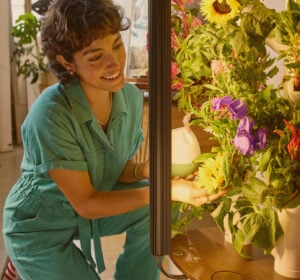
- Purposeful, productive activity — doing something that produces a meaningful outcome — has stronger wellbeing effects than leisure or passive recovery activities, according to occupational therapy and positive psychology research.
- A 2011 study in the Journal of Health Psychology found that 30 minutes of outdoor gardening produced significant cortisol reductions and improved mood compared to indoor reading.
- Survey research from the UK and US found that people who took up food growing during COVID-19 lockdowns reported higher wellbeing scores and lower reported depression than those who did not.
- Attention Restoration Theory proposes that natural environments provide ‘soft fascination’ — effortless, absorbing attention that allows directed attention networks to recover from fatigue and mental overload.
- Mastery and competence are fundamental contributors to psychological wellbeing. Growing food that you successfully harvest and eat creates a simple, repeatable mastery experience that builds a positive identity around food.
- Growing food shifts identity: people who grow food describe themselves as someone who can do this — an identity that is incompatible with the helplessness narrative that often accompanies stress eating and poor food relationships.
Why growing food specifically reduces stress
The purposeful engagement principle
Occupational therapy and positive psychology research consistently finds that purposeful, productive activity — doing something that produces a meaningful outcome — has stronger wellbeing effects than leisure or passive recovery activities. Growing food is purposeful in a primal sense: it produces something you need. This activates reward circuitry in ways that watching television or scrolling social media do not.
The attention restoration mechanism
Attention Restoration Theory proposes that natural environments provide ‘soft fascination’: effortless, absorbing attention that allows directed attention networks in the prefrontal cortex to recover from fatigue. Modern work environments demand constant directed attention. Engaging with plants — which is absorbing but not demanding — provides the restorative attention experience that directed work cannot.
Mastery and competence building
Successfully growing food produces a competence narrative: I am someone who can grow plants. This identity shift has wellbeing effects independent of the specific activity. Research on psychological wellbeing consistently identifies mastery and competence as fundamental contributors to mental health. Growing food that you successfully harvest and eat creates a simple, repeatable mastery experience.
How starting a new hobby adds fulfilment
What the research shows for indoor growing specifically
Workplace indoor gardens
Research published in the Journal of Environmental Psychology found that adding plants to previously unplanted office spaces reduced self-reported stress by 37 percent, fatigue by 38 percent, and irritability by 44 percent. Employees with plants nearer their workstations showed greater benefits than those with plants further away, supporting the proximity effect.
Home growing during periods of high stress
Interest in home food growing increased dramatically during the COVID-19 pandemic, providing a natural experiment. Survey research from the UK and US found that people who took up food growing during lockdowns reported higher wellbeing scores and lower reported depression than those who did not, with effect sizes that persisted after controlling for other variables including income and housing type.
Building growing as a stress management practice
 The morning harvest ritual
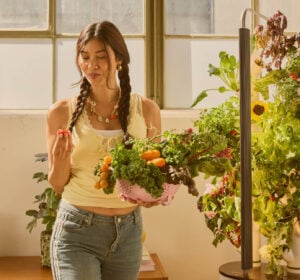
Morning cortisol peaks within 30 to 45 minutes of waking (the cortisol awakening response) before declining through the day. A brief morning engagement with your growing system — checking plant progress, harvesting a small amount for breakfast, tasting directly from the plant — provides purposeful, plant-connected activity that research associates with stress reduction during the highest cortisol period of the day.
The evening wind-down application
For people who struggle with evening mental overload, tending plants in the 30 to 60 minutes before sleep provides the attention restoration and soft fascination that transitions the nervous system from directed work mode toward rest. Harvesting fresh herbs for a pre-sleep tea — which can be brewed from lemon balm or chamomile grown in the same system — combines the behavioural and pharmacological stress-reduction strategies in one activity.
Grow your own herbal tea for cultivation and preparation guidance.
What to grow for maximum stress-management benefit
- Lemon balm and chamomile — volatile compounds with documented mild anxiolytic effects; their scent is itself part of the mechanism
- Fast-growing plants like basil, lettuce, and mint — visible daily progress reinforces the mastery experience and maintains engagement
- Your most-used cooking herbs — connecting the growing practice to daily meal preparation creates two daily engagement touchpoints rather than one
Five ways to use fresh herbs for daily integration ideas.
Frequently asked questions
How long does it take to feel stress reduction benefits from growing plants?
Acute effects (attention restoration, brief cortisol reduction) occur within a single engagement session. Habit-based benefits including improved sense of purpose, mastery, and daily stress regulation develop over two to four weeks of consistent practice.
Does it matter what you grow?
For stress reduction, what matters most is consistent daily engagement, visible growth progress, and purposeful harvesting. For nutritional stress support (magnesium, vitamin C, adaptogenic compounds), variety in what you grow matters more.
Can growing plants help with clinical anxiety or depression?
Horticultural therapy has demonstrated efficacy for depression and anxiety symptoms in clinical populations. For individuals with diagnosed anxiety or depression, growing plants can be a supportive adjunct to professional treatment. It should not replace clinical care.