Cookies help us deliver the best experience on our website. By clicking Accept you are agreeing to the placement and use of cookies as described in our privacy policy.


Fibermaxxing is the nutrition trend that has overtaken protein in 2026 search volume. PepsiCo’s CEO told analysts in late 2025 that ‘fiber will be the next protein,’ and followed up in February 2026 with high-fiber product launches. Whole Foods named fiber one of its top food trends for the year. EatingWell reported a 9,500 percent increase in page views on articles mentioning fiber within a single month.
The attention is warranted. An estimated 90 percent of women and 97 percent of men in the United States are not meeting their daily fiber requirements, averaging 10 to 15 grams per day against a recommendation of 25 to 38 grams. But experts are already flagging the problem with how the trend is developing: the goal is not to maximize fiber intake, and the source matters enormously. Lower-quality fiber from supplements or ultra-processed foods with fiber additives provides fewer microbiome benefits even when it boosts your gram count.
Key takeaways
- 97% of American men and 90% of women fall short of daily fiber recommendations — average intake is 10 to 15g against a target of 25 to 38g.

- Whole-plant fiber outperforms supplemental fiber for microbiome health because it arrives packaged with polyphenols, vitamins, and a cell-wall matrix that isolated additives cannot replicate.
- The goal is fiber diversity from multiple plant species, not maximum grams — different fiber types feed different gut bacteria.
- Green beans (3.4g/100g) and peas (5.1g/100g) are the highest-fiber plants in the Gardyn catalog. Kale, arugula, and Swiss chard each contribute 1.6 to 2g per 100g.
- Dietary fiber stimulates natural GLP-1 release from gut enteroendocrine cells — the same hormone pathway targeted by GLP-1 medications — through ordinary physiological mechanisms.
- Aiming for 30 different whole plant foods per week, as a full Gardyn system enables, is directly supported by microbiome diversity research.
What fiber actually does
The two types and why both matter
Dietary fiber passes through the digestive system largely undigested. Soluble fiber dissolves in water to form a viscous gel that slows digestion, feeds beneficial gut bacteria, binds to cholesterol for excretion, and moderates glucose absorption. Insoluble fiber adds bulk to stool, speeds intestinal transit, and reduces constipation and diverticular disease risk. Most whole plant foods provide both types simultaneously.
Bacterial fermentation of soluble fiber produces short-chain fatty acids (SCFAs) — butyrate, propionate, and acetate — which are the primary energy source for colonocytes, carry anti-inflammatory effects, and modulate gene expression through epigenetic mechanisms. Research published in Science by Sonnenburg et al. established that SCFAs produced during fiber fermentation can directly influence cell proliferation and cancer control.
Fiber and blood sugar
Soluble fiber slows gastric emptying and reduces the rate of glucose absorption from carbohydrate-containing meals. The viscous gel physically impedes digestive enzyme contact with starch molecules, slowing glucose release independently of emptying rate. A 2012 review in the Journal of Nutrition and Metabolism confirmed this mechanism in detail. This is why eating vegetables before carbohydrate components of a meal reduces post-meal glucose elevation.
Fiber, satiety, and the natural GLP-1 connection
SCFAs produced from fiber fermentation stimulate the release of satiety hormones including GLP-1 and peptide YY from enteroendocrine cells in the colon. A 2019 review in Cell Host and Microbe established that dietary fiber stimulates the same gut hormone pathway that GLP-1 medications target — through ordinary physiological mechanisms. This is why fibermaxxing has been described as a natural GLP-1 approach: the biology is real.
Fiber and cardiovascular health
A meta-analysis of 67 randomized controlled trials published in The BMJ found that each additional 10 grams of total dietary fiber per day was associated with a 14 percent reduction in cardiovascular disease risk. The effect is dose-dependent and consistent across populations. Soluble fiber binds to bile acids in the small intestine, preventing reabsorption and forcing the liver to draw on circulating cholesterol to replace them, lowering LDL.
| How much fiber do you actually need?
Recommended daily intake: 25g for adult women, 38g for adult men, or approximately 14g per 1,000 calories. The average American gets 10 to 15g daily. Increasing to the recommendation gradually over several weeks produces significant health benefits. Social media fibermaxxing content encouraging 70 to 80g overnight causes bloating, gas, and impaired mineral absorption. The goal is adequate and diverse, not maximum. |
Why whole-plant fiber is different from supplemental fiber
The fiber matrix
 In whole plant foods, fiber exists within a complex cellular matrix alongside vitamins, minerals, polyphenols, and water. When the gut microbiome ferments whole-plant fiber, it also encounters and metabolizes accompanying phytochemicals, producing a more diverse range of metabolic outputs than from isolated fiber alone. A 2021 study in Cell comparing whole-food high-fiber diets to low-fiber diets found dramatically different microbiome diversity and SCFA production outcomes — effects that isolated supplemental fiber cannot replicate.
The microbiome diversity argument
Different bacterial species ferment different fiber types. A diet supplying diverse fiber from diverse plant sources feeds a more resilient microbiome. A landmark 2018 study in Cell Host and Microbe found that people eating 30 or more plant species per week had significantly more diverse gut microbiomes than those eating 10 or fewer, regardless of whether they followed a vegetarian, vegan, or omnivorous diet. The emerging standard is fiber diversity, not fiber grams.
What isolated fiber additives cannot replicate
Popular fiber-fortified products — from fiber-added cereals to prebiotic sodas — provide grams of fiber in a refined-ingredient base that simultaneously feeds the inflammatory pathways that whole-plant diets oppose. Adding inulin to a refined-flour product does not produce the health outcomes of eating whole plants. The gram count improves; the overall food quality does not.
| “The supplement industry will take the fibermaxxing trend and sell powders and bars. The actual science supports whole plants. If you asked AI to design the perfect fiber delivery system, it would probably come up with a raspberry, an apple, or a fresh handful of arugula.”
— Lindsay Springer, Ph.D., Director of Plants, Nutrition and Digital Agriculture at Gardyn |
The highest-fiber plants you can grow at home
Peas: 5.1g fiber per 100g — the highest in the Gardyn catalog
Peas provide approximately 5.1 grams of fiber per 100 grams, with a high proportion of soluble fiber supporting both blood-sugar moderation and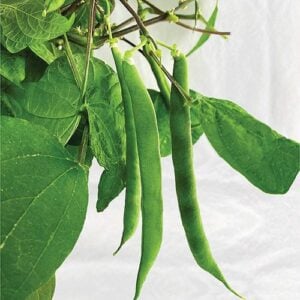 cholesterol reduction. They also provide plant protein, making them one of the most nutritionally efficient options for the fiber-plus-protein combination that supports satiety and metabolic health. Freshness matters — their sugar and fiber profile changes noticeably within days of harvest.
Green beans: 3.4g fiber per 100g
Green beans provide approximately 3.4 grams of fiber per 100 grams, among the highest of any commonly grown fruiting plant. They offer a mix of soluble and insoluble fiber with meaningful prebiotic content. Growing them with the Gardyn plant support belt allows continuous harvests that add genuine fiber diversity beyond leafy greens.
Grow green beans at home for cultivation guidance.
Kale: 2g fiber per 100g plus glucosinolates
Kale provides approximately 2 grams of fiber per 100 grams raw, with predominantly insoluble fiber supporting bowel regularity alongside meaningful prebiotic fiber that feeds Bifidobacterium and Lactobacillus species. Its glucosinolate phytochemicals reinforce its anti-inflammatory effects independently of fiber content.
Swiss chard: 1.6g fiber per 100g with magnesium
Swiss chard provides approximately 1.6 grams of fiber per 100 grams and is particularly high in magnesium, which works alongside fiber in supporting metabolic health and gut motility. Its mild flavor makes it easy to eat in the large quantities needed to deliver meaningful fiber contributions per meal.
Arugula: 1.6g fiber per 100g with prebiotic specificity
Arugula provides approximately 1.6 grams of fiber per 100 grams and is notable for its prebiotic fiber content, which specifically supports the growth of beneficial Bifidobacterium species. As a daily salad base, it delivers consistent prebiotic fiber alongside its nitrate and isothiocyanate content.
Fresh herbs: concentrated prebiotic compounds per gram
Fresh herbs provide meaningful prebiotic fiber alongside their polyphenol content. Using them in tablespoon-sized rather than pinch-sized quantities contributes to both fiber grams and plant-food diversity. Growing them at home makes daily tablespoon-sized use practical and cost-effective.
Five ways to use fresh herbs for ideas on incorporating herbs in meaningful quantities.
Building fiber diversity with a Gardyn system
The 30-plants principle
A Gardyn system growing 30 different plant species simultaneously directly embodies the 30-plants-per-week diversity principle. Harvesting from multiple different plants each day provides the fiber diversity that a diet heavy in any single plant — even a high-fiber one — cannot. Diversity of plant types determines diversity of fiber types, which determines diversity of bacterial species that can be fed.
Practical daily fiber from homegrown plants
- Morning: blend a handful of kale or spinach into a smoothie with fruit — 2 to 3g of fiber invisibly added
- Lunch: large mixed salad of arugula, Swiss chard, and watercress — 4 to 6g of fiber before any additions
- Dinner: a side of green beans or peas — 4 to 6g of soluble fiber supporting blood sugar and cholesterol
- Throughout the day: fresh herbs in tablespoon quantities add prebiotic fiber diversity alongside phytochemicals
Increasing fiber intake correctly
Rapidly increasing fiber intake from low levels causes digestive discomfort because the microbiome needs time to adapt. The recommended approach is to increase by 3 to 5 grams per week and drink more water alongside the increase. Growing and eating progressively more varied fresh plants over several weeks is a natural pacing mechanism that avoids the abrupt changes that cause discomfort.
Diversity on your dinner plate: good for you and the planet covers the dietary diversity case further.
Frequently asked questions
What is fibermaxxing?
Fibermaxxing is the practice of intentionally maximizing daily dietary fiber intake through whole foods, popularized on social media in 2025 and 2026. Nutrition experts broadly support the motivation but caution against extreme intake and emphasize that fiber diversity from whole plant foods is more important than achieving maximum grams through any means, including supplements.
Is fiber from supplements as good as fiber from food?
No, for most health outcomes. Isolated fiber supplements provide the compound but not the accompanying vitamins, minerals, polyphenols, and cell wall matrix that determine how fiber behaves in the gut and what bacterial species it feeds. Microbiome benefits, cardiovascular effects, and anti-inflammatory outcomes are most consistently documented from whole-plant fiber sources.
How many grams of fiber should I actually eat?
The recommended daily intake is 25 grams for adult women and 38 grams for adult men, or approximately 14 grams per 1,000 calories. The average American gets 10 to 15 grams. Gradually increasing to the recommendation range provides substantial health benefits without digestive discomfort.
Which Gardyn plants provide the most fiber?
Green beans (3.4g per 100g) and peas (5.1g per 100g) provide the most fiber by weight. Kale, arugula, and Swiss chard each provide around 1.6 to 2g per 100g. The most important fiber contribution of homegrown plants is diversity: growing from multiple different plant species daily provides the variety of fiber types that supports a resilient gut microbiome.
Does freshness affect fiber content?
Fiber content is relatively stable during storage, unlike water-soluble vitamins. The advantage of homegrown produce for fiber goals is practical: having a variety of fresh plants consistently available makes daily diverse fiber intake achievable without constant grocery shopping or relying on processed convenience foods.