Cookies help us deliver the best experience on our website. By clicking Accept you are agreeing to the placement and use of cookies as described in our privacy policy.


When the 2026 World Cup arrived in North America, sports nutrition commentary inevitably followed: what do these elite players actually eat, and what national food traditions shaped them? The answer is more interesting than the magazine version, because the dietary patterns of the seven World Cup-winning nations are some of the most studied population diets in modern nutrition science. The Mediterranean diet (Spain, Italy, France) has been the subject of two landmark randomized controlled trials. The Brazilian dietary guidelines are credited with creating the food classification system most of the world now uses to study ultra-processed food. The German national dietary guidelines were rewritten in 2024 using a mathematical optimization model considering both health and environmental outcomes.
This article walks through what each of these national dietary traditions actually looks like, what the peer-reviewed evidence says about their health outcomes, and what someone in the United States can actually take away. The seven nations are sorted by World Cup titles: Brazil, Germany, Italy, Argentina, France, England, Spain.
Key takeaways
- The Mediterranean dietary pattern (followed in Spain, Italy, and southern France) has the strongest evidence base of any national dietary tradition. The Spanish PREDIMED trial showed a roughly 30 percent reduction in major cardiovascular events compared to a low-fat control diet.
- Brazil’s 2014 Dietary Guidelines are the global benchmark for population-level guidance against ultra-processed food. The associated NOVA classification system, developed at the University of São Paulo, is now used in dietary research worldwide.
- Germany’s 2024 Dietary Guidelines (from the Deutsche Gesellschaft für Ernährung) recommend a diet that is at least 75 percent plant-based and a maximum of 25 percent animal-based, developed using a mathematical optimization model that considers both health and environmental outcomes.
- Argentina and England have less standardized national dietary guidance, but their traditional dietary patterns (Argentine asado culture, the British post-war shift toward fresh produce and tea) are described here in terms of typical nutritional profile, not as evidence-based prescriptions.
- Across all seven traditions, three universal patterns emerge: vegetable-forward meals, fresh herbs as the primary flavor source, and minimal ultra-processed food. These are the elements an indoor garden makes practical for any household in the United States.
How we evaluated each national diet
This is an explanatory article, not a clinical guidance article. The peer-reviewed evidence base for population-level dietary patterns is uneven: the Mediterranean diet has been the subject of two randomized controlled trials with combined enrollment of more than 8,000 participants. The Brazilian guidelines have shaped global research on ultra-processed food. The German guidelines were derived from a mathematical optimization model published in 2024. The Argentine, English, and even the Italian and French diets are mostly described in observational research, not interventional trials.
Where strong evidence exists, we cite it directly. Where evidence is observational or cultural, we describe the tradition as a tradition and note its general nutritional profile rather than making claims about disease outcomes. Nothing in this article is medical advice. Talk to your doctor or a registered dietitian before making significant dietary changes, particularly if you have heart disease, diabetes, kidney disease, or other chronic conditions.
Brazil: the global anti-ultra-processed model
The Brazilian dietary tradition is built on rice and beans, fresh produce, fish, and minimal processed food. The traditional Brazilian meal centers on whole foods cooked at home: rice, black beans, a vegetable, a piece of meat or fish, often finished with fresh herbs and citrus.
What makes the Brazilian case unusual is the 2014 Dietary Guidelines for the Brazilian Population, published by the Brazilian Ministry of Health. The guidelines moved away from nutrient-based recommendations (eat this much fat, this much fiber) toward food-processing-based recommendations. The central rule: “Always prefer fresh and minimally processed foods and freshly made meals to ultra-processed foods.”
The framework for that recommendation is the NOVA food classification system, developed by Brazilian epidemiologist Carlos Augusto Monteiro and colleagues at the University of São Paulo. NOVA classifies foods into four groups by degree of industrial processing: unprocessed or minimally processed, processed culinary ingredients, processed foods, and ultra-processed foods. The classification system is now used by the Pan American Health Organization, the UN Food and Agriculture Organization, and dozens of national health agencies. Multiple systematic reviews link high ultra-processed food intake to increased risk of obesity, type 2 diabetes, and cardiovascular disease.
Nutritional profile
A traditional Brazilian meal pattern is naturally high in fiber (from beans and rice), moderate in animal protein, low in added sugar, and built around fresh produce. The herb profile is wide: cilantro, parsley, oregano, and basil are foundational.
What to take away
The Brazilian framework is the easiest dietary guidance in the world to internalize. Cook at home, use whole foods, minimize anything from a package with more than five ingredients. Use fresh herbs. The Gardyn version of this approach grows the cilantro, oregano, parsley, and basil that show up in Brazilian cooking.
 Germany: the new optimization-derived diet
The German national dietary guidelines were revised in 2024 by the Deutsche Gesellschaft für Ernährung (DGE), the German Nutrition Society. They are notable for two reasons: the recommended diet is at least 75 percent plant-based and a maximum of 25 percent animal-based, and the recommendations were derived using a mathematical optimization model that considered nutritional adequacy, environmental impact, and habitual eating patterns simultaneously.
The new DGE guidelines (called Gut essen und trinken, or Eat and drink well) recommend at least three portions of vegetables and two portions of fruit per day, limit meat consumption to a maximum of 300 grams per week, and recommend legumes as their own daily food group rather than as a meat substitute. Plant oils are preferred over animal fats. Water and unsweetened tea are the recommended beverages.
This is the first time a major national dietary guideline has been derived using formal mathematical optimization rather than expert panel consensus. The methodology was published in 2025 in PLoS ONE by Schäfer and colleagues. Notably, the new guidelines reduced the recommended daily dairy from three portions to two, and gave legumes their own recommendation rather than treating them as a meat alternative.
Nutritional profile
A diet built on the 2024 DGE pattern is high in fiber, moderate in protein, low in saturated fat, and rich in fermented foods (the traditional German emphasis on pickled vegetables, sauerkraut, and yogurt persists in the new guidance). Fresh herbs are encouraged: dill, parsley, chives, and thyme are the German staples.
What to take away
The German framework is useful for anyone who wants to reduce meat consumption gradually without going fully vegetarian. The 75-percent-plant target is achievable by changing the proportions on the plate rather than eliminating any food group. Garden herbs (dill, parsley, chives, thyme) are central to making the plant-forward meals satisfying.
Italy and France: the Mediterranean evidence base
Italy and France, along with Spain and Greece, share the dietary pattern that has been studied more rigorously than any other in modern nutrition science: the Mediterranean diet. The traditional Mediterranean pattern is high in vegetables, fruits, whole grains, legumes, nuts, and olive oil, moderate in fish, poultry, and dairy, and low in red meat and processed food. Wine is consumed in moderation with meals. Same-day-picked herbs (basil, oregano, parsley, mint, thyme) are central.
The strongest evidence comes from the Spanish PREDIMED trial, a multicenter randomized controlled trial published in the New England Journal of Medicine. Researchers enrolled 7,447 high-cardiovascular-risk participants in Spain and randomized them to one of three diets: a Mediterranean diet supplemented with extra-virgin olive oil, a Mediterranean diet supplemented with mixed nuts, or a low-fat control diet. After a median 4.8 years of follow-up, both Mediterranean diet groups showed about a 30 percent reduction in the rate of major cardiovascular events (heart attack, stroke, or cardiovascular death) compared to the low-fat control.
PREDIMED is the largest randomized controlled trial of a dietary pattern in primary cardiovascular prevention. Its results were replicated in CORDIOPREV, a Spanish secondary-prevention RCT with 1,002 participants with established coronary heart disease. CORDIOPREV randomized participants to either a Mediterranean diet with EVOO or a low-fat diet, followed them for 7 years, and reported multivariable-adjusted hazard ratios of 0.72 to 0.75 favoring the Mediterranean group across multiple cardiovascular endpoints.
A 2024 systematic review and meta-analysis published in the Journal of the Academy of Nutrition and Dietetics included 87 studies and more than 1.4 million participants, with consistent findings: higher Mediterranean diet adherence was associated with reduced risk of peripheral artery disease, coronary heart disease, atrial fibrillation, cerebrovascular disease, hypertension, and cardiovascular mortality. The review explicitly noted that the strongest evidence emerged from high-quality RCTs, particularly PREDIMED.
Nutritional profile
The Mediterranean dietary pattern is high in monounsaturated fats (from olive oil), high in fiber (from whole grains, legumes, and produce), moderate in protein, and rich in antioxidants and omega-3 fatty acids. The herb profile is unmatched: basil, oregano, parsley, mint, thyme, rosemary, and sage all appear regularly.
What to take away
The Mediterranean diet has the strongest evidence base of any national dietary pattern. For anyone in the United States with cardiovascular risk factors, working with a doctor or registered dietitian to adopt elements of the Mediterranean pattern is a evidence-supported intervention. The Italian and French versions emphasize fresh produce, abundant garden herbs, olive oil as the primary fat, and small portions of high-quality animal protein.
“Across the World Cup-winning nations, the dietary patterns with the strongest scientific support share three features: vegetable-forward meals, fresh herbs as the primary flavor source, and minimal ultra-processed food.” , Lindsay Springer, Ph.D.
Spain: PREDIMED, in detail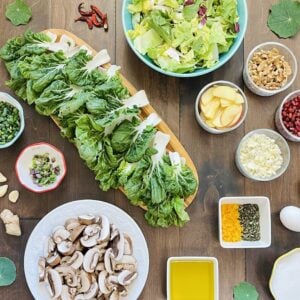
Spain deserves a separate section because the PREDIMED trial was conducted entirely in Spanish populations, and Spain’s national dietary guidance (and grocery store landscape) is closer to the studied diet than Italy’s or France’s. The PREDIMED trial recruited 7,447 participants from 11 centers across Spain between 2003 and 2009. The intervention diets were defined precisely: at least 4 tablespoons of extra-virgin olive oil per day (or 30 grams of mixed nuts per day for the second arm), 3 or more servings of fruit per day, 2 or more servings of vegetables per day, 3 or more servings of legumes per week, 3 or more servings of fish per week, and very low intake of soda, baked goods, and red and processed meat.
The result, published in the New England Journal of Medicine in 2013 and republished after a correction in 2018, was a hazard ratio of 0.70 (95 percent confidence interval 0.53 to 0.91) for the EVOO group and 0.70 (95 percent CI 0.53 to 0.94) for the nuts group, compared to the low-fat control. That translates to roughly a 30 percent reduction in major cardiovascular events. No diet-related adverse effects were reported.
Nutritional profile
The Spanish Mediterranean diet is essentially the PREDIMED diet: heavy on olive oil, fresh produce, fish, legumes, and nuts. Cherry tomatoes and basil are particularly central in Spanish home cooking. Sherry vinegar and lemon are the acids.
Argentina: the asado tradition and the parsley-cilantro flag
Argentina has less codified national dietary guidance than the European nations covered above. The Argentine traditional diet is heavily beef-centered (the asado, or grilled meat tradition, is a national institution) but is also notable for the universal use of chimichurri, the herb sauce made from parsley, cilantro, oregano, garlic, vinegar, and olive oil.
Argentine per capita beef consumption has historically been among the highest in the world, though it has declined substantially over the past decade. Observational research on heavy red meat consumption is consistent: a 2020 meta-analysis in the BMJ found that high unprocessed red meat consumption was associated with a small but statistically significant increase in cardiovascular mortality, though the absolute risks were modest and the meta-analysis was conducted on observational data.
What’s nutritionally interesting about the Argentine pattern is the chimichurri itself. The herb-and-vinegar sauce delivers a substantial dose of polyphenols and antioxidants alongside the meat, and the fresh-herb-heavy preparation provides a counterweight to the protein-heavy main dish.
Nutritional profile
A traditional Argentine meal is high in protein, moderate in saturated fat, low in carbohydrates relative to other national patterns, and heavily herbed. The herb profile is narrower than the Mediterranean one but very specific: parsley and oregano dominate, with cilantro and bay leaf supporting.
What to take away
For someone enjoying Argentine-style grilled meat regularly, the chimichurri tradition offers a real upgrade: the herb sauce is what makes the meal more nutritionally complete. Garden parsley, cilantro, and oregano are the difference between a real chimichurri and a grocery-store version.
England: the post-war shift and the modern Mediterranean adaptation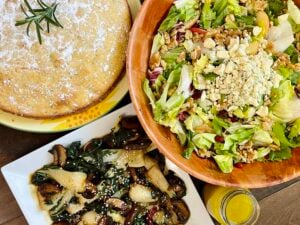
English national dietary guidance falls under the UK government’s Eatwell Guide, which is similar in structure to the United States MyPlate framework. Vegetables and fruits should make up roughly 40 percent of the plate, starchy carbohydrates 38 percent, protein 12 percent, dairy 8 percent, and oils and spreads 1 percent.
The English traditional diet has shifted substantially over the past century. The post-WWII rationing era (which lasted in the UK until 1954) actually improved population nutritional health in some measurable ways, as forced rationing reduced sugar, fat, and meat consumption while increasing vegetable intake. The modern English diet has, like much of the developed world, drifted toward higher ultra-processed food intake, though there has been a parallel return to Mediterranean-influenced cooking, garden-grown produce, and farmers-market shopping in the past two decades.
The signature English fresh-herb tradition is narrower than the Mediterranean: mint with lamb, parsley with potatoes, dill with fish, thyme in stews. Tea, both as a beverage and as a meal-occasion, is the strongest cultural anchor.
Nutritional profile
The traditional English pattern is moderate across most macronutrients, with the typical issues of any Western diet (high refined carbohydrate and ultra-processed food intake) tempered by the strong cultural tradition of garden-grown produce and herb-driven cooking that persists in many British households.
What to take away
The English Eatwell Guide is closest to the standard American nutritional advice. The modern UK return to garden-grown produce, fresh herbs, and home cooking offers a useful model: small portions, lots of vegetables, fresh herbs, tea as a meal-pacing tool.
What all seven traditions share
Despite very different culinary identities, the seven World Cup-winning nations all converge on three dietary patterns that are well-supported in the nutrition literature:
- Vegetable-forward meals: every tradition treats produce as the foundation of the plate, not the side dish.
- Fresh herbs as the primary flavor source: every tradition leans on same-day-picked herbs (basil, oregano, parsley, cilantro, mint, dill, thyme) rather than salt-and-sugar-driven flavor.
- Minimal ultra-processed food: every tradition rewards cooking at home from whole ingredients.
The strongest scientific case is for the Mediterranean dietary pattern (Spain, Italy, France), supported by PREDIMED, CORDIOPREV, and the 2024 meta-analysis of 87 studies and 1.4 million participants. The Brazilian framework for thinking about food processing (NOVA classification) has independent evidence supporting its anti-ultra-processed message. The German 2024 guidelines are an interesting case of mathematical optimization producing a recommendation (75 percent plant-based) that aligns with most of the evidence for diet-related disease prevention.
The Gardyn connection
Three of the seven traditions (Italy, France, Spain) lean heavily on Mediterranean herbs: basil, oregano, parsley, mint, thyme, rosemary, and sage. Brazil and Argentina both use cilantro, parsley, and oregano as foundational herbs. Germany uses dill, parsley, chives, and thyme. England uses mint, parsley, dill, and thyme. Across all seven, the same handful of herbs appears again and again.
A Gardyn Home column grows all of them, plus the cherry tomatoes, cucumbers, lettuces, and microgreens that round out the menus. The smaller Gardyn Studio grows the same yCubes in a slightly smaller footprint, and the Gardyn Microgreens Kit produces the microgreen garnish layer that finishes any Mediterranean or Brazilian plate. For a household trying to adopt elements of any of these dietary patterns (and the Mediterranean pattern in particular has the strongest evidence base of any), a home indoor garden makes the herb supply practical and continuous in a way that grocery-store herb purchases rarely are.
| Grow the herbs that anchor the world’s most-studied dietary traditions
A Gardyn floor column produces the basil, oregano, parsley, cilantro, mint, thyme, and dill that anchor every dietary pattern in this article. |
Frequently asked questions
Which national diet has the strongest scientific evidence?
The Mediterranean dietary pattern, as followed in Spain, Italy, and southern France. The Spanish PREDIMED trial (7,447 participants, 4.8 year follow-up) showed roughly a 30 percent reduction in major cardiovascular events compared to a low-fat control. The CORDIOPREV trial (1,002 participants, 7 year follow-up) replicated the result in secondary prevention. A 2024 meta-analysis covering 87 studies and more than 1.4 million participants found consistent associations between Mediterranean diet adherence and reduced cardiovascular disease risk.
Should I follow the Mediterranean diet, the German 2024 guidelines, or the Brazilian guidelines?
All three are evidence-based and consistent with the broader nutrition literature, but they emphasize slightly different things. The Mediterranean diet has the strongest randomized trial evidence for cardiovascular disease prevention. The Brazilian guidelines are the easiest to internalize (avoid ultra-processed food). The German 2024 guidelines are the most explicit about plant-to-animal ratio. Most nutrition researchers would say any of the three is a substantial improvement over a typical American eating pattern. Talk to your doctor or a registered dietitian before making significant dietary changes.
What is the NOVA classification system?
NOVA is a food classification system developed by Brazilian researcher Carlos Augusto Monteiro at the University of São Paulo. It classifies foods into four groups by degree of industrial processing: unprocessed or minimally processed, processed culinary ingredients, processed foods, and ultra-processed foods. The system underpins the 2014 Brazilian Dietary Guidelines and is now used by the Pan American Health Organization, the UN Food and Agriculture Organization, and dozens of national health agencies for nutrition research.
Is the German 2024 dietary guideline a vegan recommendation?
No. The German DGE 2024 guidelines recommend a diet that is at least 75 percent plant-based and a maximum of 25 percent animal-based, but not exclusively plant-based. Meat is limited to a maximum of 300 grams per week, dairy is recommended at two daily portions (down from three in previous guidelines), and fish is encouraged. The framework is sometimes called “flexitarian” in English-language coverage.
Is red meat consumption a problem in the Argentine diet?
The peer-reviewed evidence on red meat is mixed and depends on whether the meat is processed or unprocessed. A 2020 meta-analysis in the BMJ found that high unprocessed red meat consumption was associated with a small but statistically significant increase in cardiovascular mortality. Argentine per capita beef consumption has historically been among the highest in the world but has declined substantially over the past decade. For someone enjoying Argentine-style asado regularly, balancing with the heavy fresh-herb chimichurri tradition and lots of vegetables, as the actual Argentine table does, is a reasonable approach. Talk to your doctor if you have cardiovascular risk factors.
What’s the best one change I can make today to move toward any of these dietary patterns?
Cook more meals at home from whole ingredients, and add fresh herbs to those meals. This single change moves you toward the Mediterranean pattern, the Brazilian anti-ultra-processed framework, and the German 75-percent-plant-based recommendation simultaneously. A garden, even a small indoor one, makes the herb part of this practical year-round.
Is this article medical advice?
No. This article is an explanatory overview of national dietary traditions and the peer-reviewed evidence base for some of them. It is not a substitute for individualized medical or nutritional advice. If you have cardiovascular disease, diabetes, kidney disease, or any other chronic condition, talk to your doctor or a registered dietitian before making significant changes to your diet.