Cookies help us deliver the best experience on our website. By clicking Accept you are agreeing to the placement and use of cookies as described in our privacy policy.


Most grilling guides are organized by herb: here’s rosemary, here’s what to do with it, repeat. That works if you’re already standing in front of your garden trying to figure out what to make. It does not work when you’re standing in front of the grill with a flank steak in one hand and no idea which herb to grab.
This guide flips the script. Start with the protein you’re cooking and find the herbs that actually elevate it, plus the specific applications (marinade, rub, finishing butter, sauce) that get the most out of each pairing. Built for all of summer, useful for every cookout.
Key takeaways
- An herb and protein pairing guide is about flavor logic, not rules. Rosemary loves red meat because the resinous notes cut through fat. Basil dies on heat but elevates anything off the grill.
- The big six grilling herbs each have a primary protein match: rosemary for beef and lamb, thyme for everything, oregano for chicken and lamb, sage for pork, basil for vegetables, cilantro for fish and Mexican preparations.
- Compound butters, chimichurri, and herb marinades give you three reliable application formats that work for almost any protein.
- Indoor-grown herbs picked seconds before cooking outperform grocery herbs because the volatile flavor compounds peak at harvest and decline within hours.
- A four-yCube herb setup covers 80 percent of grilling applications: rosemary, thyme, basil, cilantro.
Why this guide is organized by protein
Most home grillers don’t think “I have rosemary, what should I cook?” They think “I’m grilling steak, what makes it better?” The answer is almost always herbs, but the specific herbs depend entirely on what’s on the grates. This guide gives you the matrix you actually need.
The big six grilling herbs (rosemary, thyme, oregano, sage, basil, cilantro) cover almost every cookout protein. Each one has a primary match (the protein it was practically born for), one or two secondary matches (where it works well), and at least one category to avoid.
Steak and red meat
Primary herb: rosemary
Rosemary‘s piney, resinous flavor was made for beef and lamb. The volatile oils cut through fat and char in a way no other herb can match. Use rosemary in three ways for grilled steak:
- Compound butter: chop rosemary needles fine, fold into softened butter with garlic and flaky salt, top hot steak as it rests.
- Marinade: blend rosemary with olive oil, garlic, lemon zest, and salt. Coat flank steak or skirt steak for 30 minutes to 2 hours before grilling.
- Smoking branch: lay whole rosemary stalks directly on hot coals or a smoker box. The smoke perfumes anything cooking above it.
Secondary herb: thyme
Fresh thyme is less aggressive than rosemary but plays the same role. Strip the leaves into a butter or marinade for steak. Particularly good for cuts like ribeye where you don’t want to fight the marbling.
Avoid
Basil and cilantro on steak. Both wilt under high heat and lose their character. Save them for finishing or for vegetable sides.
 Chicken
Primary herb: oregano
Oregano is the foundation of Greek and Italian chicken cooking. Its bright, pungent flavor has a slight bitterness that balances the relative mildness of chicken. The Greek classic (oregano, lemon, garlic, olive oil) is one of the great marinades.
Secondary herbs: thyme, rosemary, sage
Thyme is the safe universal pick for chicken. Rosemary works on roasted chicken thighs. Sage tucked under chicken skin before grilling creates a savory crust as the fat renders.
Avoid
Mint on chicken (unless you’re going specifically Middle Eastern). Cilantro works only in Latin or Asian preparations.
Pork
Primary herb: sage
Sage‘s deep, earthy, slightly menthol flavor pairs specifically well with pork’s richness. Most grillers underuse sage, partly because they associate it with Thanksgiving. It belongs at every cookout.
- Wrap whole sage leaves around pork tenderloin or sausages before grilling.
- Add chopped sage to compound butter for pork chops.
- Make a sage-and-apple sauce: chop sage into reduced apple cider with a knob of butter, spoon over grilled pork.
Secondary herbs: rosemary, thyme, oregano
All three work on pork. Rosemary for porchetta-style preparations. Thyme for everything. Oregano for Italian-style sausages.
Avoid
Mint and dill don’t quite work on pork, despite both being technically pork-compatible. The flavor profile is off.
Fish and seafood
Primary herb: dill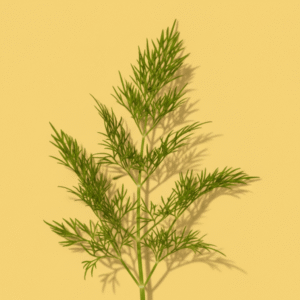
Dill is the classic fish herb. The bright, slightly anise-licorice flavor pairs with the delicate fat of salmon, trout, and white fish. Use it three ways:
- Stuff whole dill sprigs inside a whole fish (snapper, trout) before grilling.
- Chop dill into compound butter for grilled fish steaks.
- Combine dill with yogurt, garlic, and lemon for a sauce that elevates anything coming off the grill.
Secondary herbs: thyme, chives, basil, cilantro
Thyme works on white fish. Chives finish anything. Basil pairs with grilled shrimp and tomato. Cilantro is essential for Mexican-style preparations like fish tacos.
Avoid
Rosemary and sage are too assertive for most fish. The exception is salmon, which can handle a brief rosemary marinade because of its higher fat content.
“The grill master who pairs herbs by protein outperforms the one who pairs by recipe. Recipes break. The logic of which herb belongs with which fat doesn’t.” Gardyn test kitchen
Lamb
 Primary herb: mint
Mint and lamb is a classic pairing because the bright, cooling flavor of fresh mint cuts through lamb’s distinctive richness. Mint sauce (chopped mint, vinegar, sugar, salt) is the British classic. A mint-and-yogurt sauce is the Middle Eastern version.
Secondary herbs: rosemary, oregano
Rosemary on lamb chops is iconic. Oregano in a Greek-style lamb marinade is essential. Both work with lamb in ways they don’t quite work with other meats.
Avoid
Basil and cilantro miss the mark on lamb. The flavor profiles compete rather than complement.
Shrimp and shellfish
Primary herb: basil
Basil is for finishing, not for the grill itself (it scorches). Toss grilled shrimp with torn fresh basil, olive oil, and lemon. The cold-warm contrast is the dish.
Secondary herbs: cilantro, chives, dill
Cilantro is essential for Mexican-style shrimp (with lime and chili). Chives finish anything. Dill works on shellfish in Scandinavian-style preparations.
The cheat sheet
By protein
- Steak: rosemary primary, thyme secondary
- Chicken: oregano primary, thyme/rosemary/sage secondary
- Pork: sage primary, rosemary/thyme/oregano secondary
- Fish: dill primary, thyme/chives/basil/cilantro secondary
- Lamb: mint primary, rosemary/oregano secondary
- Shrimp: basil primary, cilantro/chives/dill secondary
By herb
- Rosemary: steak, lamb, pork roast, vegetables
- Thyme: everything
- Oregano: chicken, lamb, Mediterranean vegetables
- Sage: pork, butternut squash, brown butter sauces
- Basil: shrimp, vegetables, tomato dishes (finishing)
- Cilantro: fish tacos, Latin grilling, Asian preparations
- Dill: fish, lamb, yogurt sauces
- Mint: lamb, fruit salads, cocktails
The summer herb column
A four-yCube setup covers 80 percent of grilling applications: rosemary, thyme, basil, and cilantro. Add oregano, sage, dill, and mint for a seven-to-eight yCube grilling station that handles every protein on this list. A Gardyn Home has room for all eight plus cherry tomatoes and lettuces for the sides.
| Build a grilling station that beats anything in a grocery aisle
A Gardyn floor column grows the eight essential grilling herbs in two square feet. |
Frequently asked questions
Which herb is the most versatile for grilling?
Thyme. It works on virtually every protein and most grilled vegetables without overwhelming any of them. If you’re going to grow only one grilling herb, make it thyme.
Can I use dried herbs if I don’t have fresh?
For marinades and rubs, yes. Dried herbs hold up to long contact with acid and oil. For finishing, no. Dried herbs in compound butter or sprinkled over hot food just taste like dust. The fresh-versus-dried decision depends on how the herb will be used, not what dish you’re making.
How far ahead can I make a marinade?
Marinades with herbs and oil hold for 5 to 7 days in the fridge. Marinades with garlic should be used within 5 days and never stored at room temperature for more than an hour because of botulism risk.
What about smoking? Do the same pairings apply?
Mostly yes. Rosemary, thyme, sage, and oregano all hold up to long smoke times. Soft herbs like basil and cilantro should be added at the end, never to the smoker itself.
Is fresh basil really off-limits for direct grilling?
Yes for the leaf, no for the stem. Basil leaves scorch and go bitter. Basil stems can be tossed onto coals to release aromatic smoke.
What’s the single biggest mistake home grillers make with herbs?
Putting fresh herbs on too early. Basil, cilantro, parsley, chives, and mint should all be added in the last 60 seconds or after the food comes off the grill. Heat destroys their character.