Cookies help us deliver the best experience on our website. By clicking Accept you are agreeing to the placement and use of cookies as described in our privacy policy.


Most people know one basil: the large-leaf Genovese type used in Italian cooking and pesto. There are dozens of basil varieties with meaningfully different flavors, textures, and culinary applications. Growing multiple types simultaneously opens up a much wider range of cooking. Here’s a practical guide to the basil varieties most worth growing and using.
Key takeaways
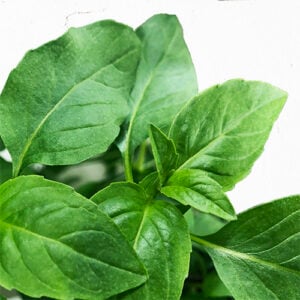
- Genovese basil (sweet Italian) is the most versatile and productive type for general culinary use: the default choice forbeginners.
- Thai basil, purple basil, and holy basil are distinct enough in flavor to serve different culinary purposes : not interchangeable with Genovese.
- Flavor in all basil types is most intense immediately after cutting, volatile aromatic compounds (including linalool and eugenol) dissipate rapidly after harvest.
- Multiple basil types can grow simultaneously in a Gardyn system, each occupies one yCube slot and is maintained with the same care.
Basil varieties at a glance
| Variety | Flavor | Best uses | Growing notes |
| Genovese (sweet Italian) | Sweet, anise, clove | Pesto, caprese, pasta, salads, pizza | Most productive; classic choice |
| Sweet Thai basil | Anise + slight licorice, more assertive | Thai curries, pho, Vietnamese stir-fries, spring rolls | Bold flavor; flowers quickly, remove spikes |
| Purple basil | Mild sweet basil, slightly peppery, visually dramatic | Salads, garnish, basil oil, infused vinegar | Same care as Genovese; slower growing |
| Holy basil (Tulsi) | Clove-forward, spicy, peppery | Thai stir-fries (pad krapow), teas, Ayurvedic use | Most intense flavor; bolts quickly |
| Lemon basil | Bright lemon-citrus plus mild basil | Seafood, salad dressings, desserts, teas | Delicate; handle gently |
| Cinnamon basil | Sweet basil + cinnamon | Fruit desserts, teas, unusual garnish | Ornamental and edible |
Genovese basil: the kitchen standard
Genovese basil has the broadest culinary range of any basil variety, sweet, aromatic, slightly anise-like, with large leaves that hold up to handling. It’s the variety used in classic Italian pesto, Neapolitan pizza, and Caprese. For most home cooks, a continuously producing Genovese basil yCube is the highest-return herb slot in a Gardyn system.
Uses: Torn into salads and onto pizza. Blended into pesto. Layered in caprese with fresh mozzarella and tomato. Added whole to pasta at the end of cooking. Used heavily in tabbouleh’s optional basil addition. Finished into soups and risottos. Infused into olive oil.
Thai basil: the Southeast Asian workhorse
Thai basil (also called sweet Thai basil) has narrow, glossy leaves, purple stems, and a more assertive flavor than Genovese, stronger anise note, slightly spicy. It holds up to heat better than Genovese, making it suitable for stir-fries and curries where Genovese would wilt and lose its flavor. The Thai basil yCube is essential for cooks who regularly make Thai, Vietnamese, or Indonesian dishes.
Uses: Added to Thai curries (red, green, Massaman) at the end. Pho topping. Spring roll filling. Pad Thai. Vietnamese herb salads. Any Southeast Asian dish calling for “fresh basil.”
Note: Thai and Genovese basil are not interchangeable in Southeast Asian recipes. Using Genovese in a Thai curry produces a different, less authentic result. The substitution works in a pinch but is noticeable.
Purple basil: visual impact, similar flavor
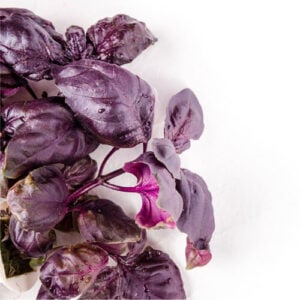 Purple basil has deep burgundy-purple leaves and a flavor similar to Genovese, slightly more peppery, slightly less sweet. Its primary advantage is visual: it adds dramatic color contrast to salads, caprese, and garnishes. The flavor profile means it can substitute for Genovese in most applications.
Uses: Salads where color contrast is wanted. Purple basil vinegar (infuse in white wine vinegar for 2 weeks : the vinegar turns pink). Garnish for plates where visual impact matters.
Holy basil (Tulsi): the most intensely flavored
Holy basil has jagged leaves, purple-tinged stems, and a distinctly clove-forward, peppery, almost medicinal intensity that is different enough from sweet basil to be considered a separate culinary ingredient. In Thai cooking, holy basil : not Thai basil, is the correct herb for pad krapow (Thai basil stir-fry). The holy basil yCube is a specialist herb but irreplaceable for the dishes that call for it.
Uses: Pad krapow (Thai basil chicken/pork stir-fry). Indian cooking. Tulsi tea (steep fresh leaves). Ayurvedic preparations.
Growing multiple basil varieties simultaneously
Each Gardyn yCube slot is independent, you can run Genovese, Thai basil, and purple basil simultaneously in three slots, harvesting each according to its cycle. The care requirements are identical across all varieties; only the harvest and usage differ.
A practical three-slot basil configuration: one Genovese yCube for Italian cooking and salads, one Thai basil yCube for Southeast Asian dishes, one purple basil yCube for visual variety in salads. All three harvested using the same node-pruning technique.
|
| Grow the basil variety your recipe actually calls for. |
| Genovese, Thai, purple, holy basil, all available as yCubes. Run two or three simultaneously and have the right variety for every dish. |
Further reading: USDA FoodData Central — Basil, fresh: nutritional profile; NIH — Ocimum basilicum: a review of biological activities and phytochemistry; University of Florida IFAS — Basil varieties for home gardens and containers
Frequently asked questions
What is the difference between Thai basil and regular basil?
Genovese (regular) basil is sweet, mild, and anise-like : the Italian cooking standard. Thai basil has a stronger, more assertive anise flavor, glossy narrow leaves, and holds up better to heat. They are not interchangeable in Southeast Asian recipes where Thai basil is called for. Holy basil, sometimes confused with Thai basil, is spicier and clove-forward.
Which basil is best for pesto?
Genovese basil, specifically. The large, tender leaves have the right flavor balance and blend smoothly. Thai basil pesto exists and has its uses, but the assertive anise flavor is less neutral and doesn’t pair as well with pasta as a sauce base.
Can you substitute one basil for another?
Genovese and purple basil substitute well for each other in most recipes, similar flavor, different visual. Genovese and Thai basil can substitute in a pinch but produce different results, especially in Southeast Asian dishes. Holy basil should not be substituted in recipes that specifically call for it, its flavor is distinct enough that alternatives don’t replicate the dish.
How many basil plants do you need?
For regular cooking (salads, pasta, caprese, finishing dishes), one productive Genovese basil plant pruned correctly provides more than enough for most households. If you cook Asian food regularly, adding a Thai basil plant is worthwhile. Running two or three varieties gives you flexibility across cuisines without redundancy.