Cookies help us deliver the best experience on our website. By clicking Accept you are agreeing to the placement and use of cookies as described in our privacy policy.


Even well-designed hydroponic systems encounter problems. The good news: most hydroponic issues follow recognizable patterns, and once you can read the signs, fixing them is straightforward. This guide covers the most common problems home hydroponic growers face, and what to do about each one.
Key takeaways
- Most hydroponic problems fall into four categories: nutrient issues, light problems, water quality issues, and disease/p
 est management.
 - Yellowing leaves are the most common symptom : the pattern of yellowing (where on the plant, which leaves first) points tothe specific deficiency.
- Root rot is the most serious hydroponic problem; prevention through good aeration and reservoir hygiene is far easier than treatment.
- Algae growth is manageable with reservoir covers and light exclusion, it rarely kills plants but depletes nutrients.
- Gardyn’s Kelby AI monitors your system continuously and flags problems before they become serious.
Diagnosing yellowing leaves
Yellow leaves are the most common alarm bell in hydroponic growing, and the most ambiguous. Yellow can mean many different things depending on where and how it appears:
| Yellowing pattern | Likely cause | Fix |
| Older (lower) leaves yellow first | Nitrogen deficiency | Increase N concentration; check pH (5.5–6.5) |
| Yellowing between leaf veins (young leaves) | Iron deficiency | Lower pH to 5.5–6.0; check iron in nutrient solution |
| Yellowing between veins (older leaves) | Magnesium deficiency | Add Epsom salt or Mg supplement |
| Pale yellow all over (new growth) | Sulfur deficiency | Check nutrient solution; replace reservoir |
| Yellow with brown tips | Nutrient burn (EC too high) | Dilute solution; flush with plain water |
| Yellow with mushy stems | Root rot / overwatering | Improve aeration; treat with hydrogen peroxide solution |
Root problems
Root rot
Root rot is caused by Pythium and other water mold species that thrive in warm, stagnant, oxygen-depleted water. Symptoms: brown, slimy roots with an unpleasant smell; wilting despite adequate water; rapid plant decline.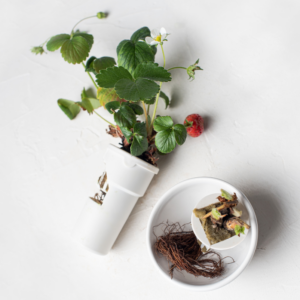
Prevention is far more effective than treatment. Keep reservoir temperatures below 72°F (22°C), ensure adequate water oxygenation (air stones or regular circulation), and maintain good reservoir hygiene, change solution completely every 1–2 weeks and clean the reservoir between cycles.
If you catch root rot early, removing affected roots, thoroughly cleaning the reservoir, and treating with 3% hydrogen peroxide solution (1 part H2O2 to 5 parts water) can save the plant. Severe rot usually means starting over.
Brown, dry root tips
Unlike the slimy brown of root rot, dry brown root tips indicate dehydration, roots aren’t reaching the nutrient solution. Check reservoir level, pump function, and that roots are positioned correctly to contact water flow.
Algae growth
Algae (green, brown, or black slime on reservoir walls, roots, or growing panels) is one of the most common nuisances in hydroponic systems. Algae itself rarely kills plants, but it competes for nutrients, can clog pumps and nozzles, and signals a light leak that should be fixed.
Solutions: cover your reservoir completely to block light; use opaque tubing; clean reservoir surfaces with diluted hydrogen peroxide solution during reservoir changes. If algae is covering roots, gentle removal followed by improved light exclusion usually resolves it.
Gardyn’s system is designed to minimize light exposure to the water reservoir. For more on maintaining a clean system, see: algae or biofilm, what’s the difference?
Leggy, stretched seedlings
Seedlings that stretch toward light (etiolation) are a reliable sign of insufficient light intensity or duration. In hydroponic systems, this almost always means the grow light is too far from the plant canopy, or the light cycle is too short.
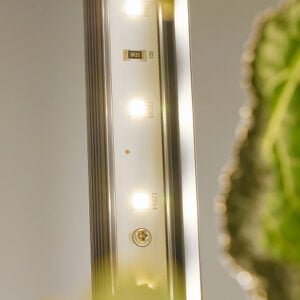 Fix: lower lights to within 2–4 inches of seedlings (for LED grow lights); ensure 16–18 hours of light daily during seedling and vegetative stages. Once plants are established, most herbs and greens do well with 14–16 hours.
Wilting despite adequate water
Paradoxically, wilting can occur even when plants are surrounded by water, if roots can’t absorb it. The most common causes:
- Root rot (see above), damaged roots can’t transport water effectively
- Root ball too dry, roots haven’t reached water flow; increase reservoir level
- Transplant stress, normal within 24–48 hours of transplanting; usually resolves on its own
- Temperature stress, if temperatures exceed 85°F (29°C), plants will wilt even with adequate water
Pests in hydroponic systems
Hydroponics eliminates soil-borne pests (fungus gnats, root aphids, nematodes), but above-ground pests can still arrive:
- Aphids: Small clusters on new growth and leaf undersides. Treat with insecticidal soap or neem oil spray.
- Spider mites: Fine webbing on leaves; tiny dots on leaf surfaces. Increase humidity; treat with neem oil or predatory mites.
- Whiteflies: Small white insects on leaf undersides; fly up when disturbed. Yellow sticky traps and insecticidal soap are effective.
For more on pest prevention, see our guides on tips for new Gardyners and indoor garden maintenance and cleaning tips.
How Gardyn reduces troubleshooting burden
Kelby, Gardyn’s AI assistant, monitors plant health continuously through the Gardyn app, tracking light exposure, water levels, and plant development patterns. Rather than waiting for visible symptoms, Kelby can flag early-stage problems and prompt action before they escalate. Combined with Gardyn’s sealed Hybriponic™ system design, which minimizes light leak, maintains consistent water flow, and prevents the aeration failures that cause root rot, the overall troubleshooting burden is dramatically lower than DIY systems.
|
|
Frequently asked questions
Why are my hydroponic plant leaves turning yellow?
Yellowing is the most common hydroponic symptom and can indicate several different issues depending on the pattern. Lower leaves yellowing first suggests nitrogen deficiency; yellowing between veins on young leaves points to iron deficiency; all-over pale yellowing may indicate sulfur deficiency. Check pH first, most nutrient deficiencies are actually pH-related lockout rather than true deficiencies.
How do I get rid of algae in my hydroponic system?
Block all light from reaching the nutrient reservoir, algae cannot grow without light. Use opaque covers, black tubing, and light-blocking caps. Clean affected surfaces with diluted hydrogen peroxide solution. Address the root cause (light leak) and algae will not recur.
Can I save a plant with root rot?
In early stages, yes, remove affected roots, clean the reservoir thoroughly, and treat with 3% hydrogen peroxide solution. In advanced root rot where the majority of root mass is affected, plant recovery is unlikely and starting fresh is the better option.
My plants are growing slowly. What could be wrong?
Slow growth is usually caused by insufficient light, pH outside optimal range, nutrient solution too dilute (low EC), or temperatures outside the ideal range (65–80°F for most crops). Check these four variables first before assuming a more complex problem.