Cookies help us deliver the best experience on our website. By clicking Accept you are agreeing to the placement and use of cookies as described in our privacy policy.


The hydroponic starter kit market has exploded. Small countertop units, tower systems, modular setups, basic basil kits : the options are genuinely confusing, and most product descriptions lead with marketing rather than the practical details that determine whether a system works for your life. This guide cuts through to what actually matters.
Key takeaways
- The most important factor in choosing a starter kit isn’t price, it’s ongoing cost and maintenance commitment.
- Capacity matters more than beginners expect: small 3–9 pod systems limit what you can grow and harvest.
- Integrated lighting is essential for most indoor spaces; systems that rely on natural light fail in most homes.
- Automation reduces the risk of failure through neglect : the biggest reason beginner systems go unused.
- Gardyn offers two starter options: the Studio (16 plants, 1.4 sq ft) and the Home (30 plants, 2 sq ft).
What’s actually in a hydroponic starter kit?
Most hydroponic starter kits include some combination of:
- A growing system (reservoir, pump, growing panels or columns)
- Grow lights (integrated or separate)
- Growing medium (clay pebbles, rockwool, starter plugs, or proprietary pods)
- Seeds or starter plants
- Nutrient solution (usually a starter supply)
- pH testing kit or meter (sometimes)
What distinguishes kits is the quality and completeness of each component, and crucially, what the ongoing supply costs look like once the starter materials run out.
The 5 things that actually determine if a kit works for you
1. Capacity
Starter kits range from 3-pod countertop units to 30+ plant tower systems. The temptation is to start small, but growers consistently report wishing they’d started with more capacity. A 3-pod system can barely keep one person in fresh basil; a 16–30 plant system can genuinely supplement grocery runs with herbs and greens.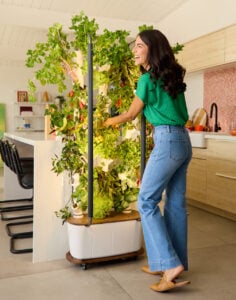
Think about how much fresh produce you actually use. If your household goes through a bunch of fresh basil every week and regularly buys packaged salad, a small pod system won’t move the needle on your grocery bill.
2. Lighting
Many beginner kits omit integrated lighting or include weak supplemental light “for windowsill use.” Most homes don’t have a windowsill that provides 6–8 hours of direct sun : the minimum herbs and greens need. A kit without adequate integrated lighting is a kit that will underperform. See our guide on full spectrum grow lights for more on what plants actually need from artificial light.
3. Automation
This is the factor that most directly determines whether a beginner grower succeeds. Hydroponic systems that require daily or near-daily attention, manual watering, pH testing, light scheduling, impose a maintenance burden that most households don’t sustain. Systems that automate water circulation, lighting schedules, and monitoring dramatically improve success rates.
4. Ongoing costs
The kit price is a one-time cost. Seeds, growing medium, nutrients, and any replacement parts are ongoing. Calculate what you’ll spend per year on supplies before committing to a system. Some low-cost starter kits have expensive proprietary pods or nutrients that make them costly to maintain long-term.
5. Plant variety selection
If your system only supports a handful of seed varieties, your growing is limited before you’ve started. Look for systems with an expansive and regularly updated plant catalog. Gardyn currently offers 50+ yCube varieties across herbs, greens, fruiting plants, edible flowers, and specialty crops, including seedless yCubes for growing from your own seed collection.
Starter kit comparison
| System type | Typical capacity | Lighting | Automation | Best for |
| Basic pod kits (3–9 pods) | 3–9 plants | Basic LED arm | Timer only | Gift; single herb focus |
| Mid-range countertop (9–20 pods) | 9–20 plants | Integrated LED | Timer + alerts | Regular herb cooking |
| Gardyn Studio | 16 plants | Full-spectrum LED | AI monitoring (Kelby) | Solo growers; small apartments |
| Gardyn Home | 30 plants | Full-spectrum LED | AI monitoring (Kelby) | Families; diverse growers |
| DIY systems | Variable | Separate purchase | Manual | Technically minded hobbyists |
What Gardyn starter kits include
Both the Gardyn Home and Gardyn Studio ship as complete starter systems: the full growing structure, integrated LED lighting calibrated for 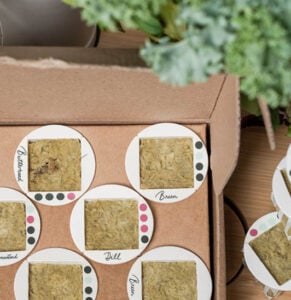 Hybriponic™ growing, a water reservoir, and a starter selection of yCubes. Kelby AI is included from day one, monitoring your garden, sending grow updates, and guiding first-time growers through the early weeks.
The Gardyn membership provides ongoing yCube delivery, member pricing on additional pods, and full access to Kelby’s growing guidance. For growers who want to stay stocked and remove the restocking burden, membership simplifies ongoing costs significantly.
|
For more guidance on choosing your first setup, see our indoor gardening for beginners guide and our comparison of indoor gardening systems.
|
|
Frequently asked questions
What is the best hydroponic starter kit for beginners?
For beginners, the most important feature is automation, systems that handle watering, lighting, and monitoring remove the maintenance burden that causes most starter kits to go unused. Gardyn’s systems with Kelby AI monitoring are specifically designed to succeed in the hands of first-time growers.
How much does a hydroponic starter kit cost to run?
Ongoing costs vary significantly by system. For Gardyn, the primary ongoing cost is yCubes (approximately $5–8 per pod depending on membership) and electricity (the LED lighting system is energy-efficient). The Gardyn membership covers yCube restocking and is the most cost-effective approach for regular growers.
Can I grow vegetables in a hydroponic starter kit?
Yes, Gardyn’s systems support fruiting vegetables including cherry tomatoes, peppers, cucumbers, and beans. Fruiting plants take longer than herbs and greens (8–12 weeks to first harvest), but are fully compatible with Gardyn’s Hybriponic™ system.
Is a hydroponic starter kit worth it?
For households that regularly buy fresh herbs and salad greens, the economics are compelling, particularly when factoring in reduced grocery spend and eliminated food waste on bought-and-not-used produce. The most important success factor is choosing a system with enough automation to sustain consistent use.