Cookies help us deliver the best experience on our website. By clicking Accept you are agreeing to the placement and use of cookies as described in our privacy policy.


Mint is one of the most useful culinary herbs and one of the easiest to grow, with one complication. In garden beds, mint spreads aggressively and takes over. Indoors in a container or hydroponic system, that aggressive growth works in your favor: it produces abundantly, regrows rapidly after cutting, and is almost impossible to kill once established. Here’s how to grow mint successfully indoors and make the most of what it produces.
Key takeaways
- Mint grows vigorously indoors in any container, its aggressive spreading habit becomes a productivity advantage when
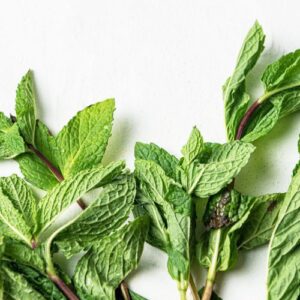 contained.
 - Always grow mint in its own pot or yCube slot, never in a shared soil bed where it will outcompete everything nearby.
- Harvest frequently: cutting mint back actually stimulates faster, bushier regrowth. Mint that is never cut becomes leggy and less productive.
- In a Gardyn hydroponic system, mint reaches harvestable size in 3–4 weeks and produces continuously for months.
- Most “mint” in cocktails, teas, and desserts is spearmint : the mildest and most versatile variety for culinary use.
Mint varieties worth growing
| Variety | Flavor profile | Best uses |
| Spearmint (Mentha spicata) | Sweet, mild, classic mint | Cocktails, teas, tabbouleh, desserts : the most versatile |
| Peppermint (Mentha × piperita) | Strong, cooling, high menthol | Teas, dark chocolate desserts, after-dinner use |
| Chocolate mint | Spearmint + slight chocolate undertone | Desserts, hot chocolate, interesting cocktails |
| Apple mint (Mentha suaveolens) | Softer, slightly fruity | Fruit salads, mild teas, less assertive than spearmint |
| Vietnamese/Asian mint | Distinctly spicy, not sweet | Vietnamese and Thai dishes specifically |
The Gardyn mint yCube grows classic spearmint: the most broadly useful variety for cooking and drinks.
Growing mint in soil vs hydroponics
Soil growing, what to know
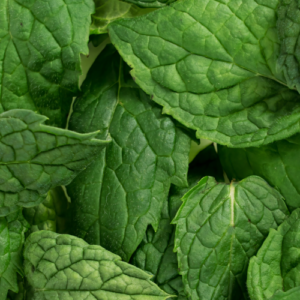 Mint in a pot grows well but has specific requirements: soil that stays consistently moist but drains well (mint does not tolerate waterlogged roots), at least 6 hours of indirect light, and a pot large enough to allow spreading. The most common failure is inconsistent watering, letting it dry out completely, then overwatering. Mint shows stress quickly but recovers quickly.
The most important rule with soil-grown mint: grow it alone. Even in a container, mint will outcompete other herbs given a few weeks. Give it its own pot.
Hydroponic growing, why it suits mint
Mint thrives in hydroponic systems because its three core requirements, consistent moisture, adequate nutrients, and stable temperature, are all automatically provided. In Gardyn’s Hybriponic™ system, mint is one of the most reliably productive plants. It grows faster than in soil (no energy spent searching for water and nutrients), produces more leaf mass, and requires no attention between harvests.
How to care for mint indoors
Light
Mint prefers indirect to moderate light, at least 4–6 hours. Unlike basil, it tolerates lower light conditions better and won’t bolt in partial shade. In a Gardyn system, the integrated LED provides the correct spectrum and duration automatically.
Water
Consistent moisture is critical, mint does not tolerate drying out. In a soil pot, check soil moisture daily and water when the top inch is dry. The Gardyn system handles this automatically.
Harvesting : the key to productivity
Harvest mint regularly, this is the most important maintenance task. Cutting mint back by one-third to one-half stimulates new bushy growth from the base. Mint that is never harvested becomes tall, leggy, and eventually flowers (bolts), after which leaf production declines.
Cut from the top, just above a leaf node, exactly the same technique as basil (see: how to prune basil). The plant will grow two new stems from the cut point.
Preventing bolting
Mint flowers in response to long days and heat. Indoors, this is less of a problem than outdoors, but watch for tall flower spikes (small pale purple flowers) and remove them immediately at the base. Once the main spike is removed, the plant redirects energy to leaf production.
Using fresh mint
- Drinks: Mojitos, mint juleps, mint lemonade, sparkling water with mint and cucumber, fresh mint tea (pour just-off-boil water over leaves, steep 5 minutes).
- Salads: Tabbouleh, fattoush, Greek salad, Vietnamese herb salad, watermelon-feta. See: tabbouleh recipe and fresh herb salads.
- Cooking: Lamb dishes, pea and mint combinations, tzatziki, mint chutney, Middle Eastern grain dishes.
- Desserts: Chocolate and mint, fruit salads, panna cotta, ice cream.
|
| Mint that regrows every time you cut it. |
| The Gardyn mint yCube grows spearmint continuously, harvest it back heavily and it regrows within days. Cocktails, teas, salads, always ready. |
Further reading: NIH — Mentha piperita (peppermint): biological and pharmacological activities; University of Minnesota Extension — Growing herbs indoors; USDA FoodData Central — Spearmint, raw: nutritional profile
Frequently asked questions
Does mint grow well indoors?
Yes, mint is one of the easiest herbs to grow indoors. It tolerates lower light than basil, grows vigorously, and is difficult to kill once established. The main requirements are consistent moisture (it doesn’t tolerate drying out) and regular harvesting to prevent legginess and bolting.
How often should you harvest mint indoors?
Every 2–3 weeks for a significant cut (one-third to one-half of the plant). More frequent light harvesting, taking a few sprigs at a time, is fine any time. The more you harvest, the more the plant produces. Letting it grow uncut for more than 4 weeks causes it to become leggy and bolt.
Why is my indoor mint dying?
The most common causes: inconsistent watering (the most frequent), too little light, root rot from overwatering in poorly draining soil, and lack of harvesting causing bolting and decline. In a hydroponic system, the first two are handled automatically, most mint issues in Gardyn systems resolve with more frequent harvesting.
What is the difference between spearmint and peppermint?
Spearmint has a sweet, mild flavor with lower menthol content : the most versatile for cooking and drinks. Peppermint has much higher menthol content, giving it the strong cooling sensation associated with toothpaste and candy. For culinary use, spearmint is the default. For teas and applications where strong mint flavor is the point, peppermint.