Cookies help us deliver the best experience on our website. By clicking Accept you are agreeing to the placement and use of cookies as described in our privacy policy.


The gut microbiome is the largest single immune and metabolic system in the body, and the single most powerful lever you have to influence it is fiber from plants. Not probiotic supplements, not fermented drinks, not expensive prebiotics in a powder. Fiber, from a varied diet of vegetables and especially leafy greens.
Here is what the research actually shows about gut health and fiber, the leafy greens with the highest fiber contribution per serving, and which ones grow easiest indoors for steady summer access.
Key takeaways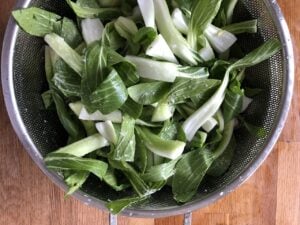
- High fiber vegetables are the most evidence-backed way to support gut microbiome diversity and health.
- Diversity of plant fiber sources matters more than the total fiber count. Eating 30+ different plants per week is the threshold associated with the healthiest microbiome.
- Leafy greens are unusually concentrated sources of fiber per calorie: kale, chard, arugula, mustard greens, and bok choy all deliver high fiber with minimal carbohydrate load.
- Brassicas (kale, chard, mustard greens, bok choy) double as sources of glucosinolates, which support liver detoxification pathways.
- An indoor garden makes daily access to 5+ different leafy green varieties realistic for the first time for most people.
Why fiber is the single most important nutrient for gut health
The microbes that live in your colon eat fiber. They cannot eat anything else: not protein, not fat, not carbohydrates from the small intestine. Fiber is the only food the microbiome receives, and the variety and quantity of fiber you eat directly determines which species thrive and which ones starve.
When you eat a diet rich and varied in plant fiber, the microbiome produces beneficial compounds called short-chain fatty acids (butyrate, propionate, acetate) that nourish the intestinal lining, regulate inflammation, support immune function, and even influence mood through the gut-brain axis. When fiber intake is low or narrow (as in most Western diets), the microbiome diversity collapses and these protective compounds drop.
The 30-plants-per-week threshold
The American Gut Project, the largest study of human microbiome composition, found that people who ate 30 or more different plant species per week had measurably more diverse microbiomes than people who ate fewer than 10. The variety mattered more than the total fiber count. Someone eating 30 different plants in small amounts had a healthier microbiome than someone eating only spinach and broccoli in large amounts.
Thirty plants sounds like a lot until you start counting. Herbs count. Spices count. Each variety of leafy green counts separately. A single salad with mixed greens, herbs, nuts, seeds, and a fruit can hit 8 to 10 plants. The threshold is genuinely reachable for anyone who diversifies their plate.
 The leafy greens with the highest fiber contribution
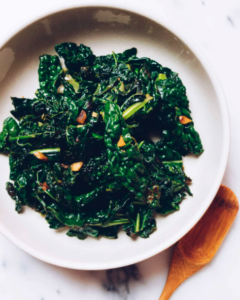
Kale (5g fiber per 100g)
Kale is the heavyweight. Five grams of fiber per 100 grams of raw kale, plus high vitamin K, C, and a meaningful glucosinolate content. The fiber profile is balanced between soluble and insoluble, both of which feed different microbiome species.
Swiss chard (3g fiber per 100g)
Swiss chard is underrated in American eating. It cooks down fast, has a slightly sweeter flavor than kale, and the colorful stems contribute additional fiber. Especially useful for people who find kale too tough.
Arugula (1.6g fiber per 100g)
Arugula has lower fiber by weight than kale or chard but is typically eaten in larger volumes (a full salad of arugula vs. a few leaves of kale). It also contributes glucosinolates and is one of the easiest greens to eat raw in quantity.
Mustard greens (3.3g fiber per 100g)
Green mustard bring a peppery, almost wasabi-like flavor and a substantial fiber load. They also have one of the highest glucosinolate contents in the leafy green family.
Bok choy (1g fiber per 100g, but eaten in large quantities)
Bok choy is mild, fast-cooking, and works in nearly any preparation. The fiber per 100 grams is lower than kale, but the typical serving size is much larger (a whole head versus a few leaves of kale), so the per-meal contribution is comparable.
| “The gut microbiome doesn’t respond to expensive supplements. It responds to fiber from varied plant sources, eaten consistently over months and years. The boring answer is the right one.”
Lindsay Springer, Ph.D., Director of Plants, Nutrition & Digital Agriculture, Gardyn |
Beyond fiber: the brassica advantage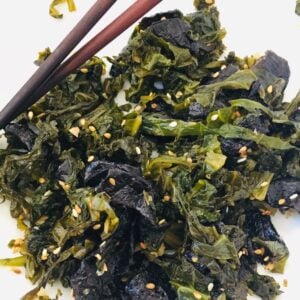
Kale, chard, mustard greens, and bok choy all belong to the brassica family (along with broccoli, cabbage, and cauliflower). Brassicas contain a unique class of compounds called glucosinolates, which break down during chewing and digestion into isothiocyanates. These compounds support the liver’s detoxification pathways and have documented anti-inflammatory and even anti-cancer effects in cellular studies.
The brassica double-effect (high fiber plus glucosinolates) is why these greens are emphasized in evidence-based nutrition more than the standard “eat your vegetables” advice acknowledges. They’re doing two things at once.
How to actually eat 30 plants per week
This is the practical challenge. Most Americans eat a far narrower variety than they realize. Here’s a realistic approach:
- Build a daily salad with 5+ ingredients (4 to 6 greens, plus seeds, nuts, fruit). One meal can deliver 8 to 10 plants.
- Add herbs liberally to everything (basil, parsley, cilantro, dill, mint, oregano). Five herbs across a week is five plants.
- Vary the leafy greens you use. Don’t eat the same spinach salad daily. Rotate kale, chard, arugula, mustard greens, bok choy, tatsoi.
- Add fermented foods to your weekly rotation (kimchi, sauerkraut, miso, yogurt with live cultures) for direct microbiome support.
- Include a daily handful of mixed seeds (chia, flax, pumpkin, sunflower) for additional fiber and variety.
Plant a gut-supporting garden
A six-yCube setup for gut health: kale, swiss chard, arugula, mustard greens, bok choy, plus your favorite herbs. All grow continuously in a Gardyn Home column. Add a Microgreens Kit for the rotating variety that pushes you past 30 plants per week without effort.
| Eat the diversity your microbiome needs
A Gardyn floor column grows multiple varieties of high-fiber greens at once. Memorial Day sale is on now. |
Frequently asked questions
How much fiber do I need per day?
The Institute of Medicine recommends 25g for adult women and 38g for adult men. Most Americans consume about half of that. A daily salad of mixed leafy greens plus a serving of beans, lentils, or whole grain easily hits the target.
Is fiber from supplements the same as fiber from food?
No. Whole-food fiber comes paired with vitamins, minerals, polyphenols, and the complex carbohydrate structure that the microbiome actually digests. Supplemental fiber (psyllium, methylcellulose) supports regularity but doesn’t replicate the full microbiome-feeding effect of food.
What if I get bloated when I eat more vegetables?
Gradual is the right pace. The microbiome shifts over weeks, not days. If you add 30g of fiber overnight, you will be uncomfortable. Add small amounts and let the microbiome adjust. Within two to three weeks the bloating typically resolves.
Are raw or cooked greens better for fiber and gut health?
Both. Cooked greens are easier to digest and concentrate the nutrients in smaller volumes. Raw greens preserve heat-sensitive compounds like vitamin C and the active glucosinolate forms. Variety is the right answer.
Do I need to take a probiotic?
Most healthy adults don’t. Probiotic supplements deliver narrow strains that may not establish in your gut. Eating fermented foods and a high-fiber diet does more for microbiome diversity than supplementation.
How do I track 30 plants per week?
You don’t need to count exactly. Aim for variety rather than precision. If you can name 5 leafy greens, 5 fruits, 5 herbs and spices, 5 nuts/seeds, and 5 other vegetables you ate this week, you’re in the right zone.