Cookies help us deliver the best experience on our website. By clicking Accept you are agreeing to the placement and use of cookies as described in our privacy policy.


In April 2025, Duda Farm Fresh Foods recalled Marketside Celery Sticks sold at Walmart stores across 28 states and Washington, D.C. after a routine sample by the Georgia Department of Agriculture tested positive for Listeria monocytogenes. Separately, in July 2025, the FDA classified a recall of organic whole celery seed from The Whole Herb Company as Class I, its highest risk level, due to Salmonella contamination.
Celery has a longer and more serious recall history than most consumers realize. In 2010, contaminated pre-cut celery from Sangar Fresh Cut Produce caused a Listeria outbreak in Texas that killed five people and sickened ten, one of the deadliest celery contamination events in U.S. history. In 2024, pre-packaged celery and carrot snack packs sold at Whole Foods were recalled for potential E. coli contamination.
This article covers the history of celery recalls, why celery is vulnerable to contamination, how to respond when a recall is announced, and how growing celery at home in an indoor hydroponic system eliminates the field and processing risks entirely.
Key takeaways
- Celery sold at Walmart across 28 states was recalled in April 2025 after testing positive for Listeria monocytogenes.
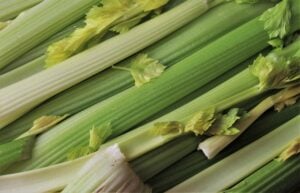
- In 2010, contaminated pre-cut celery from a Texas processing facility killed five people and sickened ten, making it one of the deadliest celery outbreaks in U.S. history.
- Pre-cut, washed, and ready-to-eat celery is the most commonly recalled format because processing steps (cutting, washing, packaging) create cross-contamination opportunities.
- Celery is a Dirty Dozen produce item, meaning it carries high pesticide residues in addition to pathogen recall risk.
- Gardyn sells celery yCubes that grow indoors in a closed Hybriponic system, eliminating both pathogen contamination and pesticide exposure.
Timeline of major celery recalls
| Year | Event | Pathogen | Scale |
| 2025 | Whole Herb Company organic celery seed (Class I) | Salmonella | 439 bags (56.25 lb each), Iowa |
| 2025 | Duda Farm/Marketside Celery Sticks at Walmart | Listeria monocytogenes | 1,587 cases, 28 states + D.C. |
| 2025 | UNFI/General Produce (celery among 30 items) | Potential contamination | 4 states + D.C. |
| 2024 | F&S Fresh Foods celery/carrot snack packs at Whole Foods | E. coli | AZ, CA, HI, ID, NV |
| 2018 | National Frozen Foods frozen green beans and mixed vegetables with celery | Listeria monocytogenes | 17,049 cases, 21 states |
| 2010 | Sangar Fresh Cut Produce pre-cut celery | Listeria monocytogenes | 10 sick, 5 deaths, Texas |
The 2010 Texas outbreak stands out as a critical case study. The Listeria contamination was traced to a processing facility, not to field-growing conditions, and the Texas Department of State Health Services ultimately demanded that Sangar Fresh Cut Produce cease production. It demonstrated that pre-cut, ready-to-eat celery carries elevated risk because the processing steps that make it convenient also create contamination opportunities.
Types of celery affected: pre-cut, whole stalks, celery seed, and prepared foods
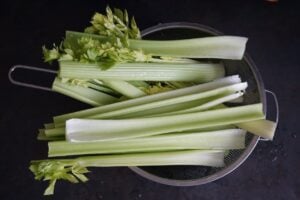 Pre-cut and ready-to-eat celery sticks
Pre-cut celery is the highest-risk format. Cutting exposes interior flesh to any pathogens present on the outer surface or in the processing environment. Washing and packaging happen on shared equipment where cross-contamination can occur. The 2025 Walmart recall and the 2010 Texas outbreak both involved pre-cut products.
Whole celery stalks
Whole celery is less frequently recalled than pre-cut but is not immune. The July 2025 UNFI recall included celery among 30 produce items, and whole celery shares the same field irrigation and soil contact vulnerabilities as other ground-level crops.
Celery seed
The July 2025 Whole Herb Company recall of organic celery seed was classified as Class I for Salmonella. While celery seed is used as a spice rather than a fresh vegetable, it illustrates that contamination can affect every form of the crop.
Celery in prepared foods and snack packs
Celery appears in snack packs (celery and peanut butter, celery and hummus), chicken salad, stuffing, soups, and juice blends. The 2024 Whole Foods recall involved celery/carrot snack packs where the celery component was the contamination source. These multi-ingredient products are difficult for consumers to trace back to a celery-specific recall.
Why celery is vulnerable to contamination
High water content and porous structure
Celery is approximately 95% water with a fibrous, channel-like structure that can harbor bacteria internally. Unlike smooth-skinned produce,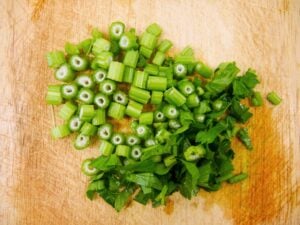 celery’s ribbed surface and hollow interior provide protected spaces where pathogens can survive washing.
Ground-level growth
Celery grows at soil level with stalks emerging directly from the crown. Soil splash from irrigation, rainfall, and agricultural runoff contacts the edible portion of the plant throughout the growing cycle.
Processing facility risks
Pre-cut celery passes through washing, cutting, and packaging operations on shared equipment. The 2010 Texas outbreak was traced specifically to contamination within the processing facility. Listeria monocytogenes is particularly problematic in processing environments because it can form biofilms on equipment surfaces and persist even after standard cleaning protocols.
Extended cold chain
Celery has a relatively long shelf life compared to leafy greens, which means it spends more time in refrigerated supply chains where Listeria can grow. Listeria monocytogenes is unusual among foodborne pathogens in that it thrives at refrigerator temperatures (35 to 46 degrees F), making cold storage less protective than consumers assume.
| Listeria grows at refrigerator temperatures
Unlike Salmonella and E. coli, which multiply most rapidly at warm temperatures, Listeria monocytogenes can grow in refrigerated environments. This is why the FDA recommends discarding recalled celery even if it has been properly refrigerated, and why cleaning your refrigerator after removing recalled products is important. |
What to do when celery is recalled
- Check recall details. Identify the specific brand, lot code, best-by date, and UPC. The 2025 Walmart recall covered a single lot code (P047650) with a specific best-by date (03/23/2025), but consumers who froze the celery may still have it.
- Check your freezer. Pre-cut celery that has been frozen may still be in your freezer months after the recall announcement. Freezing does not kill Listeria.
- Check prepared foods. If you made chicken salad, soup, or other dishes with recalled celery, discard those as well.
- Clean your refrigerator. Listeria can survive and spread on refrigerator surfaces. Wash shelves and drawers with hot soapy water, then sanitize.
- Discard, do not wash. The FDA recommends discarding recalled celery rather than attempting to wash or cook it.
Celery on the Dirty Dozen: pesticide concerns
In addition to pathogen contamination, celery is a recurring Dirty Dozen produce item. The EWG’s annual Shopper’s Guide consistently ranks celery among the 12 fruits and vegetables with the highest pesticide residue levels. For a household concerned about both pathogen safety and pesticide exposure, growing celery indoors addresses both issues simultaneously.
See our full guide to the Dirty Dozen produce list for more on pesticide residues across produce categories.
Growing celery indoors with Gardyn
 Gardyn sells celery yCubes that grow in the Hybriponic™ system. Indoor-grown celery eliminates every contamination pathway.
- No field irrigation: Clean tap water in a closed loop. No agricultural runoff, no canal water.
- No processing facility: Harvest stalks directly from the plant. No shared cutting equipment, no washing lines, no biofilm risk.
- No cold chain: Your celery is alive and growing until the moment you harvest it. No days or weeks in refrigerated trucking where Listeria can multiply.
- No pesticides: Indoor growing has no pest pressure requiring chemical treatment, addressing the Dirty Dozen pesticide concern simultaneously.
A single Gardyn Home (30 plants) or Gardyn Studio (16 plants) can grow celery alongside spinach, kale, lettuce, herbs, cherry tomatoes, peppers, and strawberries, covering virtually every high-risk produce category.
| Grow celery without the recall risk or the pesticides.
Gardyn’s celery yCubes grow indoors in a closed Hybriponic™ system. No Listeria, no Salmonella, no pesticide residue, no supply chain. Shop celery yCubes or explore the Gardyn Home system. |
Further reading
FDA: Duda Farm Fresh Foods Celery Recall
FDA Recalls, Market Withdrawals & Safety Alerts
CDC: Listeria Infection Information
Frequently asked questions
Is celery safe to eat right now?
Check the FDA recall database for any active celery recalls. Outside of active recall events, commercially sold celery is considered safe. Growing celery indoors eliminates the recall question entirely.
Why is pre-cut celery riskier than whole celery?
Cutting exposes interior flesh to pathogens present on the surface or in the processing environment. Shared cutting and packaging equipment can spread contamination across batches. Listeria monocytogenes can form biofilms on processing equipment surfaces that persist even after standard cleaning. The 2010 Texas outbreak that killed five people involved pre-cut celery from a processing facility.
Does freezing celery kill Listeria?
No. Listeria monocytogenes can survive freezing temperatures. This is why the 2025 Walmart recall specifically warned consumers to check their freezers. Frozen recalled celery should be discarded, not consumed after thawing or cooking.
Can I grow celery indoors?
Yes. Celery grows in indoor hydroponic systems with integrated lighting. Gardyn’s celery yCubes produce harvestable stalks in the Gardyn Home or Gardyn Studio systems year-round.
Is celery on the Dirty Dozen list?
Yes. Celery is a recurring Dirty Dozen produce item with high pesticide residue levels in conventional growing. Indoor hydroponic growing eliminates pesticide exposure entirely. See our Dirty Dozen guide for the full list.