Cookies help us deliver the best experience on our website. By clicking Accept you are agreeing to the placement and use of cookies as described in our privacy policy.


This summer, a parasite most people had never heard of has been all over the news, usually under a memorable and unpleasant nickname: the “explosive diarrhea” parasite. Its real name is Cyclospora, and in 2026 it has sickened thousands of people across the United States. As of early July, more than 4,000 cases had been reported nationally, and the Centers for Disease Control and Prevention had confirmed hundreds across more than 30 states, with investigators still working to identify the source.
If you eat salads and fresh herbs, that is unsettling. But the most useful thing to understand is also the most reassuring: an outbreak like this almost always begins far upstream, in parts of the food supply chain you never see. And there are real, practical steps that are within your control.
Key takeaways
|
What is actually happening right now
Cyclosporiasis, the illness Cyclospora causes, turns up every year, usually as a few hundred to a few thousand cases concentrated in late spring and summer. What makes 2026 stand out is the scale and the speed. Multiple states have reported sharp increases, with the Midwest and Northeast seeing the largest clusters. Michigan has been the epicenter, reporting thousands of cases in a matter of weeks, many times its usual annual total, and states including New York, Ohio, Illinois, and North Carolina have all reported rising numbers.
As of this writing, no single grower, supplier, or product has been named as the source, and federal and state investigators are running traceback work to find it.
Why officials are careful with the word “outbreak”
The CDC has been deliberately cautious. It has said it does not yet have evidence tying all of the current cases to one national source, and it is treating the situation as several clusters under investigation rather than a single confirmed outbreak. That caution is a feature, not a weakness. Cyclospora is genuinely hard to trace, and naming the wrong food would do real harm to growers and shoppers alike.
What Cyclospora is, and how it spreads
Cyclospora cayetanensis is a single-celled parasite so small it can only be seen under a microscope. People become infected by swallowing food or water that has been contaminated with feces containing the parasite. One quirk of its biology works in our favor: after it is shed, Cyclospora needs days to weeks before it can infect anyone else, which is why it does not pass directly from person to person the way a stomach virus does. The time between infection and feeling sick is usually about a week.
What it feels like
The hallmark symptom is watery diarrhea, often frequent and, yes, explosive. It commonly comes with loss of appetite, stomach cramps, bloating, nausea, and pronounced fatigue. Left untreated, the illness can drag on for weeks and may seem to fade and then return. This article is educational and is not a substitute for medical advice; if you are unwell, your health care provider is the right person to guide your care.
 Why it keeps coming from fresh produce
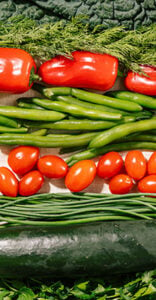
Look at the history of Cyclospora in the United States and the same foods appear again and again: raspberries, basil, cilantro, snow peas, mesclun and other salad mixes. The common thread is that these are field-grown crops, often eaten raw, and the contamination generally enters at the growing stage, through water or sanitation conditions in the field. That is also why it is so difficult to trace back to a single farm.
Why washing is not enough
Here is the part that surprises people. According to the FDA, rinsing or washing produce is not likely to remove Cyclospora. Washing is still worth doing for general food safety, but it is not a reliable defense against this particular parasite. The one dependable kill step is heat: cooking produce to 158°F (70°C) or higher. For much of what we love about fresh greens and herbs, though, cooking defeats the purpose. For more on what actually rides along with store-bought greens, see the baggage that comes with your lettuce.
What you can actually control
So where does that leave you? With more options than the headlines suggest. Health officials, including Michigan’s health department, point to a handful of practical steps that lower your risk:
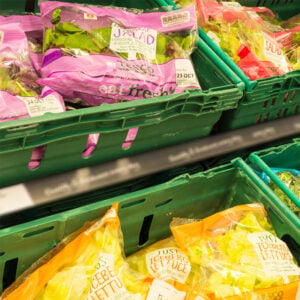
- Choose whole heads of lettuce over pre-washed, bagged mixes, discard the outer two to three layers of leaves, and wash the inner leaves under running water.
- Cook leafy greens and other produce when the dish allows for it.
- Wash your hands, and sanitize cutting boards, utensils, and surfaces before and after handling produce.
- Refrigerate cut or peeled produce promptly, and cut away any bruised or damaged areas.
Shortening your own supply chain
There is one more lever, and it is the one Gardyn was built around: shortening the distance between where your food grows and where you eat it. Every step in a long supply chain, from field irrigation to harvest by many hands to processing lines and days in transit, is a step where contamination can be introduced. When you grow lettuce and herbs at home in a controlled Hybriponic™ system, you manage the water and the inputs yourself, and you remove the field-irrigation and multi-hand handling steps where an outbreak like this one typically begins.
It is worth being precise about what that is and is not. Growing your own greens takes several of the riskiest links out of your personal supply chain. It does not make any produce, home-grown included, guaranteed free of foodborne illness. Clean hands, a clean water source, and clean equipment still matter at home, just as they do in a commercial kitchen. A little routine care goes a long way; see our indoor gardening maintenance and cleaning tips.
Whether you start with the Gardyn Home for a full wall of greens, the Gardyn Studio Gen2 for a smaller footprint, or a Microgreens Kit to dip a toe in, the principle is the same: fewer steps, fewer hands, and produce you picked minutes before it reaches your plate.
Many of these crops grow right on your Gardyn wall
Here is something worth sitting with. Look back at the produce most often tied to Cyclospora, and a striking number of those exact crops are ones you can grow at home on a Gardyn. The same herbs and salad greens that show up in outbreak after outbreak are staples of the Gardyn plant library, each available as a yCube you drop into your wall:
- Cilantro, a repeat name in Cyclospora investigations, and one of the fastest herbs to grow at home.
- Basil, a perennial outbreak flag, and a Gardyn favorite in several varieties.
- Snow peas and peas, long linked to past Cyclospora cases, grown crisp and fresh on the vine.
- Cucumbers, among the produce that health officials say to scrub carefully, and an easy climber on a Gardyn column.
- Green onions (scallions), on the health department’s wash-carefully list of foods tied to past outbreaks, and easy to keep cutting and regrowing.
- Lettuces and salad greens, from romaine and buttercrunch to peppery arugula, the backbone of the bagged mixes that are recalled so often.
One honest exception: raspberries, another crop with a long Cyclospora history, are a field-grown cane fruit that a countertop system cannot replicate. For the leafy greens and herbs at the heart of most produce recalls, though, growing your own is very much within reach.
 Wellness is more than nutrients
There is an emotional dimension to all of this, too. Food-safety scares can leave people feeling powerless, because the risk is invisible and sits somewhere upstream, out of sight. Growing even a portion of your own herbs and greens hands some of that control back. You know where the plant grew, who handled it, and when it was picked. That is not a promise of safety, it is something quieter and just as real: confidence in your own food.
Wellness, after all, is not only about nutrients. It also includes food safety, trust, freshness, access, and the simple confidence to prepare a meal knowing exactly what went into it. Keeping fresh greens and herbs within arm’s reach supports several of those at once:
- Fresher means more nutrients. Greens and herbs begin losing nutrients such as vitamin C and folate soon after they are cut, so eating them minutes after harvest helps you keep more of what is there.
- You choose the inputs. Nothing reaches your plants that you did not put there, so you can grow without synthetic pesticides and know exactly what your food touched.
- It is easier to eat more greens. When fresh produce is an arm’s reach away, it tends to end up on the plate, and convenient access is one of the strongest nudges toward eating more vegetables.
- More variety, naturally. A Gardyn wall grows dozens of greens, herbs, and vegetables, which makes a more varied, plant-forward plate the easy default.
- Better flavor, better habits. Herbs and greens picked fresh simply taste better, which makes salads and home cooking more appealing than packaged options.
- A little wellbeing built in. Tending plants is a small daily ritual many people find calming, a quiet bonus on top of the food itself.
The risk in a produce outbreak is almost always introduced long before the food reaches your kitchen, somewhere in a supply chain you never see.
| A NOTE ON EXPECTATIONS
Growing your own greens removes exposure to several of the supply-chain points where Cyclospora outbreaks begin. It does not make any produce, home-grown included, guaranteed free of foodborne illness. Clean hands, clean water, and clean equipment still matter. |
When to see a doctor
One practical note can save you weeks of misery. Cyclospora is often missed by standard stool tests, so people can bounce between diagnoses before landing on the right one. If you have watery diarrhea that lasts more than a few days, especially if it fades and returns, see your provider and ask specifically about testing for Cyclospora. Once it is correctly identified, it is treatable with antibiotics. Again, this is general information, not medical advice for your particular situation.
The healthiest response is not to retreat
Here is the takeaway worth holding onto. Fresh produce remains foundational to a healthy diet, and the lesson of a Cyclospora summer is not to stop eating plants. It is to understand where risk can enter the system, and to build habits that make fresh produce safer, easier, and more consistent.
The healthiest response to a produce outbreak is not to retreat from fresh plants. It is to build a produce routine with more visibility, more confidence, and more control. That is exactly the kind of routine a Gardyn is designed to support.
| Grow food you control
A Gardyn wall gives you fresh lettuce, herbs, and greens at home, picked minutes before you eat them. See how it works and find the system that fits your space. |
Frequently asked questions
Should I stop eating salads and fresh herbs right now?
Most experts are not recommending that. Because no specific produce has been named as the source, the guidance from health officials is to take extra care, cook produce when you can, and follow good washing and handling practices, rather than to cut fresh produce out entirely.
Does washing produce remove Cyclospora?
Not reliably. The FDA notes that rinsing or washing is not likely to remove the parasite. Washing still helps with general food safety and is worth doing, but the only dependable way to kill Cyclospora is to cook produce to 158°F (70°C) or higher.
Can I catch Cyclospora from another person?
It is very unlikely. After the parasite is shed, it needs days to weeks before it can infect someone else, so it does not pass directly from person to person the way a stomach virus does.
Would growing my own greens protect me from this?
Growing at home removes the field-irrigation and multi-hand handling steps where these outbreaks usually start, which lowers your exposure to those specific risks. It is not a guarantee against foodborne illness, and good hygiene at home still matters.
What are the symptoms, and when should I see a doctor?
Watery, often explosive diarrhea, fatigue, and loss of appetite, sometimes lasting for weeks in an on-and-off pattern. If diarrhea lasts more than a few days, see your provider and ask specifically about a Cyclospora test, since routine panels can miss it.