Cookies help us deliver the best experience on our website. By clicking Accept you are agreeing to the placement and use of cookies as described in our privacy policy.


Picky eating in children is one of the most common and most stressful nutrition challenges parents face. Between 25 and 40 percent of toddlers and preschoolers are classified as picky eaters by their caregivers, with preferences often strongest against precisely the vegetables that nutrition guidelines prioritise: leafy greens, bitter vegetables, and anything visually unfamiliar.
Two strategies have consistent research support for addressing picky eating. The first is repeated exposure: children often need to be offered a food 10 to 15 times before accepting it. The second is involvement: children who participate in growing, selecting, or preparing food show significantly higher willingness to try and consume that food. Home growing addresses both strategies simultaneously and adds a third: nutrient-dense foods that integrate into familiar meal formats without requiring the child to accept them as visible vegetables.
Key takeaways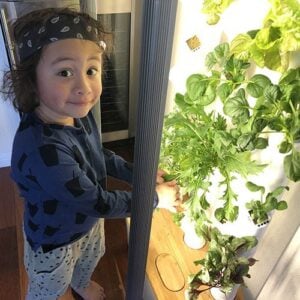
- Children often need to be offered a new food 10 to 15 times before accepting it — research shows repeated low-pressure exposure is more effective than any persuasion strategy.
- Children who grow food eat more of it. A systematic review of 20 school garden programme studies found significant positive effects on vegetable consumption and variety.
- Food neophobia (refusal of unfamiliar foods) peaks between ages 2 and 6 and is an evolved protective mechanism — it responds to gradual exposure, not force.
- Spinach blended into a fruit smoothie with dark-coloured fruits is undetectable by taste and colour, delivering ~100mg vitamin C, 80mg magnesium, and meaningful folate per serving.
- Cherry tomatoes have among the highest child acceptance rates of any vegetable — and growing them together with children is one of the highest-success interventions for increasing vegetable acceptance.
- Assigning a specific plant to a child (their own cherry tomato, their own basil) creates an ownership relationship that significantly increases the probability of that food being consumed.
Why children are picky: the food science
Neophobia and bitterness sensitivity
Food neophobia — the refusal of unfamiliar foods — peaks between ages two and six and is an evolved protective mechanism. Bitter taste aversion is particularly strong in young children because bitter compounds in nature are often toxic, and children have higher density of bitter taste receptors than adults. This explains why leafy greens, which contain bitter glucosinolates and phenolic compounds, are among the most rejected foods by children.
The exposure effect
A 2014 study in the journal Appetite found that offering children a previously rejected vegetable 10 to 14 times significantly increased acceptance, even when initial refusals were strong. Growing food at home provides repeated low-stakes exposure through the growing process itself — children observe, touch, smell, and occasionally taste plants during harvesting before any eating pressure is applied.
The growing involvement effect
Multiple studies on children’s garden programmes have found that children who grow food eat more of it. A systematic review of 20 studies on school garden programmes found significant positive effects on vegetable consumption and variety. The proposed mechanisms include ownership, curiosity and pride, and the positive social and sensory experiences associated with the growing context.
Back to school: healthy ways to add nutrition to your kids’ day

The most nutrient-dense plants that integrate into kid-friendly meals
Spinach: the highest-impact hidden vegetable
A handful of fresh baby spinach blended into a fruit smoothie is undetectable by taste and colour if paired with darker fruits like blueberries or mango. The nutritional delivery from two tablespoons of fresh spinach in a smoothie — approximately 100mg vitamin C, 80mg magnesium, meaningful folate and iron — is meaningful and requires no negotiation at the table.
Basil: nutrients kids eat without knowing
Fresh basil contains meaningful amounts of vitamin K, calcium, magnesium, and antioxidants including rosmarinic acid. Children who reject basil as a visible herb frequently accept it as pesto, which is consumed enthusiastically with pasta, on pizza, and as a dip. Children who made the pesto themselves are substantially more likely to eat it — the involvement effect in action.
Mint: the herb children almost universally accept
Mint is one of the most child-accepted herbs due to its sweet, cooling flavour profile. Fresh mint in water, smoothies, or as a garnish for fruit is enthusiastically received by most children who reject virtually every other green plant. It provides small but consistent amounts of vitamin A, potassium, and iron.
Grow mint at home and how to grow mint indoors.
Cherry tomatoes: the gateway fruit-vegetable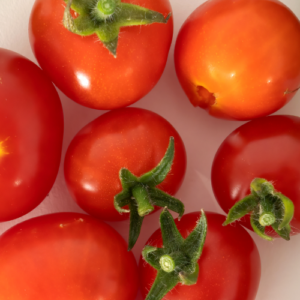
Cherry tomatoes are accepted by children at much higher rates than most vegetables. Growing cherry tomatoes with children and having them harvest directly from the plant is one of the highest-success interventions for increasing vegetable acceptance in picky eaters.
Chives: nutrients in a non-threatening format
Chives provide vitamin K, folate, and allicin in a mild, non-pungent form. Snipped fresh chives over scrambled eggs, potato dishes, or creamy pasta are accepted by most children who strongly reject onions and garlic. They are also one of the easiest plants to involve children in harvesting — snipping with scissors is satisfying and requires no knife.
Hiding nutrients in kid-friendly formats
The smoothie
A standard smoothie base of banana, frozen mango, and orange juice masks the colour and flavour of one to two large handfuls of fresh spinach and a few fresh mint leaves. The resulting smoothie looks orange-yellow, tastes of mango and banana, and delivers approximately 100mg of vitamin C, 80mg of magnesium, 100 micrograms of folate, and meaningful iron from the spinach.
Pasta sauce
A standard tomato-based pasta sauce with two large handfuls of wilted spinach blended in is indistinguishable from plain tomato sauce to most children. Adding a tablespoon of fresh basil pesto reinforces the vitamin K and rosmarinic acid contribution. The meal is accepted as pasta, delivers meaningful greens nutrition, and requires no table negotiation.
Age-appropriate growing tasks for involvement
- Ages 2 to 4: watering, observing, gentle harvesting of herbs with adult guidance
- Ages 4 to 7: harvesting independently, snipping herbs with child-safe scissors, washing produce
- Ages 7 to 12: managing a specific plant, tracking growth, contributing to meal preparation using their harvest
Frequently asked questions
At what age can children start participating in growing food?
Children as young as two can participate in watering and gentle observation. Meaningful harvest participation begins around age three to four. By school age, children can take on regular harvesting responsibilities that build the ownership effect most strongly associated with increased vegetable acceptance.
Is hiding vegetables in food dishonest?
This is a genuine debate in paediatric nutrition. Some nutritionists argue that hiding vegetables prevents children from learning to accept their appearance and taste. Others prioritise nutritional delivery in the short term while building acceptance through repeated exposure via other means. Growing food with children and making both the hidden and visible versions available is a balanced approach.
Will involving children in growing guarantee they eat what they grow?
Not always, but research consistently shows higher acceptance rates for food children grew compared to the same food from a store. Even children who initially refuse to eat their harvest are building familiarity through the growing process that makes future acceptance more likely.