Cookies help us deliver the best experience on our website. By clicking Accept you are agreeing to the placement and use of cookies as described in our privacy policy.


Walk into any grocery store in America and you find the same five leafy greens: iceberg, romaine, spring mix, baby spinach, kale. The bagged salads vary on the margins but the actual diversity of greens available to most Americans is small.
The category of “specialty greens” is enormous beyond that. Red sorrel, watercress, tatsoi, mizuna, endive, and dozens more are all easier to grow indoors than to source. They’re also nutritionally distinct from the standard rotation, with flavor profiles that change how summer eating works.
Here are five specialty greens worth dedicating space to in your indoor garden, what each one tastes like, and how to use them in everyday cooking.
Key takeaways
- Specialty greens to grow at home open up flavor and nutrition territory most American eaters never encounter through the grocery store.
- Red sorrel has a bright lemony flavor and a vibrant purple-red color that makes salads visually striking and replaces lemon juice in some dressings.
- Watercress is one of the most nutrient-dense vegetables on Earth and forms the base of one of the best summer soups.
- Tatsoi, mizuna, and endive each bring distinct flavors (mild, peppery, bitter) that change how a salad bowl reads.
- All five grow indoors, harvest within 4 to 6 weeks, and produce continuously.
Why grocery stores don’t carry these
Specialty greens are fragile. Watercress wilts within hours of harvest. Sorrel oxidizes quickly. Mizuna bruises easily. None of these greens survive the truck-to-warehouse-to-store-to-bag-to-shelf journey that grocery produce takes. They’re available at farmers markets in some cities, and at specialty stores in even fewer. For most Americans they’re effectively invisible.
Indoor growing eliminates the supply chain problem. The greens go from plant to plate in minutes, which is the only context in which most of these actually shine.
1. Red sorrel: the lemon-leaf
Sorrel has a bright, tart, lemony flavor that comes from oxalic acid in the leaves (the same compound that gives rhubarb its tang). Red sorrel adds visual drama with deep purple-red leaves.
How to use sorrel
- Tear into salads with creamy cheese (goat, ricotta, burrata) to balance the tartness.
- Blitz into a sorrel soup with potatoes and cream (a French classic).
- Use in place of lemon juice in fish or chicken preparations.
- Wilt briefly into pasta with butter and parmesan.
Nutrition note
Sorrel is high in vitamin C and beta-carotene. The oxalic acid content means people with kidney stones should eat it in moderation. For everyone else, it’s a powerful seasonal green.
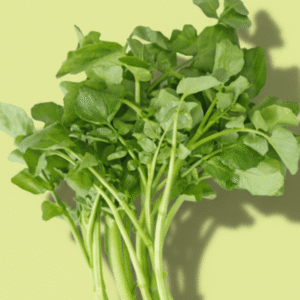 2. Watercress: the most nutrient-dense vegetable on earth
The CDC has ranked watercress as the single most nutrient-dense fruit or vegetable, ahead of kale, spinach, and chard. It scores especially high in vitamins K, C, and A, plus a range of minerals. The peppery, mustard-like flavor is distinctive.
How to use watercress
- Make a watercress soup with potato and a splash of cream (a 15-minute classic that’s exceptional cold in summer).
- Pile onto sandwiches, especially with roast beef, smoked salmon, or grilled chicken.
- Add to salads with sweet fruits (orange, pear) to balance the peppery edge.
- Use as a bed for grilled fish.
Nutrition note
Studies have found measurable benefits from regular watercress consumption, including improvements in markers associated with cardiovascular health and antioxidant capacity. It’s also unusually high in iron for a leafy green.
3. Tatsoi: the mild Asian green
Tatsoi has small, spoon-shaped, deep green leaves and a mild, slightly sweet flavor. It’s in the brassica family (related to bok choy and broccoli) but is more delicate and faster-growing than its cousins.
How to use tatsoi
- Salad raw with a sesame-ginger dressing.
- Quick stir-fry with garlic and soy sauce for one minute (longer and it gets too soft).
- Wilt into miso soup or any noodle broth at the end of cooking.
- Substitute for spinach in egg dishes.
Nutrition note
Like other brassicas, tatsoi contains glucosinolates (sulfur-containing compounds with documented anti-inflammatory and cellular-health benefits). It’s also a strong source of folate and vitamin K.
| “If you want to actually change how you eat in summer, plant the greens you cannot buy. The standard grocery rotation is the floor, not the ceiling.”
Lindsay Springer, Ph.D., Director of Plants, Nutrition & Digital Agriculture, Gardyn |
4. Mizuna: the peppery feathered green
Mizuna is a Japanese mustard green with fine, feathery leaves and a peppery bite that’s milder than arugula but more interesting than spring mix. It’s the workhorse green of high-end restaurant salad mixes for a reason.
How to use mizuna
- Base a salad on mizuna instead of mixed greens for a more distinctive flavor.
- Add to ramen or soba at the end of cooking, where the heat wilts it slightly.
- Wrap fillings (grilled chicken, smoked fish) for an alternative to lettuce wraps.
- Combine with sweet fruit (peach, persimmon) and a sharp cheese.
5. Endive: the bitter centerpiece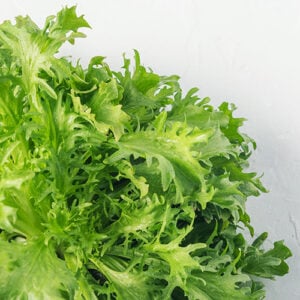
Endive is grown in two forms: curly endive (frisee) and Belgian endive (the elongated pale spears). Both have a pleasant bitterness that opens the palate and pairs especially well with rich foods like cheese, cured meats, and creamy dressings.
How to use endive
- Make a classic frisee salad with bacon, poached egg, and warm vinaigrette.
- Use Belgian endive leaves as scoops for dips or cheese.
- Grill or braise endive halves (the bitterness mellows beautifully).
- Mix with sweet pears, blue cheese, and walnuts.
Nutrition note
Endive’s bitterness comes from compounds (inulin, sesquiterpene lactones) that support gut health and digestion. Bitter greens are widely understudied in American nutrition writing but are a foundation of healthy eating in most Mediterranean and Asian traditions.
How to fit five specialty greens into one indoor garden
A Gardyn Home easily handles all five plus several standard greens. A five-yCube specialty-green setup (sorrel, watercress, tatsoi, mizuna, endive) produces continuously through summer, with enough variety that no salad has to be the same as the previous week’s.
For a smaller commitment, start with two: red sorrel and watercress. Those are the two most underrepresented in American eating and the two with the biggest flavor and nutrition payoff.
| Eat greens you can’t buy at the grocery store
A Gardyn floor column grows specialty greens that are too fragile for grocery supply chains. Memorial Day sale is on now. |
Frequently asked questions
How long until I can harvest specialty greens?
Most specialty leafy greens are ready for the first cut within 3 to 5 weeks of planting. After that, continuous harvest (picking outer leaves) keeps the plant producing for months.
Are specialty greens harder to grow than common greens?
No. In a controlled indoor system, specialty greens grow as easily as lettuce. The reason they’re uncommon isn’t difficulty; it’s shelf life. They don’t survive grocery distribution.
Which specialty green should I try first?
Red sorrel for the visual and flavor impact (the lemon-bright leaves change salads instantly), or watercress for the nutrition density. Both are easy starters.
Can I substitute these for spinach or kale in recipes?
Generally yes, with flavor adjustments. Sorrel is more tart than spinach, mizuna is more peppery, watercress is more assertive. Tatsoi is the closest direct spinach substitute.
Do specialty greens have more nutrients than common greens?
Some do significantly. Watercress is the most nutrient-dense vegetable by CDC ranking. Sorrel is high in vitamin C. Bitter greens like endive support gut health. The nutritional diversity is part of the case for growing them.
What’s the easiest specialty green to use in everyday cooking?
Tatsoi. It’s mild enough to substitute for spinach in almost anything, grows fast, and has the most universal flavor of the five.