Cookies help us deliver the best experience on our website. By clicking Accept you are agreeing to the placement and use of cookies as described in our privacy policy.


Menopause is the natural end of a woman’s reproductive years, marked by the cessation of menstrual cycles and a substantial decline in estrogen production. The transition (perimenopause), typically starting in a woman’s 40s, and the years after menopause bring changes in bone density, cardiovascular risk, body composition, and symptom experience (hot flashes, sleep disruption, mood changes).
Diet doesn’t make menopause go away. Nothing does; it’s a normal life stage. But the peer-reviewed evidence suggests that specific dietary patterns can meaningfully support bone health, cardiovascular health, and, in some cases, symptom severity. This article walks through what the research actually says, what six leafy greens deliver in that context, and how a home garden fits into a broader strategy. It is educational content, not medical advice. For personalized guidance, especially about hormone replacement therapy, calcium supplementation, or specific symptom management, work with your doctor or a registered dietitian who specializes in menopause.
Key takeaways
- Peer-reviewed evidence supports the Mediterranean dietary pattern as one of the best-studied approaches to supporting cardiovascular and metabolic health through the menopausal transition. Leafy greens are central to that pattern.
- Six leafy greens (kale, arugula, watercress, Swiss chard, bok choy, spinach) deliver a concentrated combination of calcium, magnesium, folate, and vitamin K that supports bone health, which becomes a priority as estrogen declines.
- Phytoestrogens (plant compounds that weakly mimic estrogen) from soy, flaxseed, and legumes have been associated with modest hot flash reductions in some studies. Leafy greens are not a major phytoestrogen source, but they are foundational to the broader dietary pattern that supports symptom management.
- Bone health becomes a priority: adult women in this life stage typically need 1,200 to 1,500 mg of calcium daily. Leafy greens are a real contributor alongside dairy or fortified alternatives.
- This article is educational. For personalized menopause guidance, especially around symptoms, medications, and supplements, work with your doctor or a registered dietitian.
What the research actually says
The strongest peer-reviewed evidence on diet and menopause supports the Mediterranean dietary pattern (vegetables, fruits, whole grains, legumes, nuts, olive oil, fish, moderate dairy, limited red meat). A 2024 systematic review published in AIMS Public Health by Gonçalves and colleagues reviewed the Mediterranean diet as an intervention for menopausal women and found consistent benefits for cardiovascular risk factors, body composition, and quality of life indicators.
A more recent 2025 narrative review of dietary interventions for menopausal health confirmed that adherence to the Mediterranean pattern consistently reduces blood pressure and triglycerides in this population, and that plant-based dietary patterns rich in whole grains, fruits, and vegetables are associated with reduced symptom severity.
Leafy greens are foundational to both of these patterns. They aren’t a miracle food for menopause. They’re a reliable delivery vehicle for the nutrients most needed during and after the transition.
Why bone health becomes a priority
Estrogen plays a direct role in bone remodeling. When estrogen declines at menopause, bone loss accelerates, and osteoporosis risk rises substantially. Cleveland Clinic and other clinical references recommend adult women in perimenopause and postmenopause aim for 1,200 to 1,500 mg of calcium daily to help mitigate bone loss.
Dairy is the classic calcium source, but leafy greens are a real contributor. A serving of cooked kale delivers about 180 mg of calcium; a serving of cooked bok choy delivers about 160 mg; watercress and Swiss chard both provide 100+ mg per serving. Spread across meals, leafy greens can supply 300 to 500 mg of a woman’s daily calcium target, alongside dairy or fortified plant milks.
 What phytoestrogens actually do (and don’t)
Phytoestrogens are plant compounds structurally similar to estrogen. They bind weakly to estrogen receptors and can produce mild estrogen-like effects. The best-studied phytoestrogens are soy isoflavones (in soy foods) and lignans (in flaxseed, sesame, and some vegetables).
For hot flashes specifically, a 2012 study in Menopause: The Journal of The North American Menopause Society found that women consuming an average of 54 mg of soy isoflavones daily experienced about a 20 percent reduction in hot flash frequency compared to placebo. That’s a modest but statistically meaningful benefit.
Leafy greens are not a major source of phytoestrogens. They support menopausal health primarily through their calcium, folate, magnesium, and vitamin K content, plus their role as a foundational element of the Mediterranean dietary pattern. If phytoestrogens are a specific dietary target, soy foods (tofu, tempeh, edamame, soy milk) and ground flaxseed are the higher-yield sources.
The 6 leafy greens
- Kale
Kale is the highest calcium-per-calorie green in this list. One cooked cup delivers about 180 mg of calcium, 3.5 mg of iron, and substantial vitamin K (essential for bone matrix formation). It also carries an unusually high concentration of glucosinolates, sulfur compounds that support cellular detoxification.
- Arugula
Arugula provides calcium (125 mg per cooked cup), folate, and nitrates (which support cardiovascular health). It’s also mild-flavored enough to eat raw in large quantities as a salad base, which is where most calorie-efficient nutrient absorption happens.
- Swiss chard
Swiss chard delivers magnesium (150 mg per cooked cup) alongside calcium. Magnesium is often deficient in the American diet and plays a role in bone formation, sleep quality, and muscle function, all relevant during and after menopause.
- Bok choy
Bok choy has among the highest calcium bioavailability of any leafy green (the calcium in bok choy is more efficiently absorbed than the calcium in spinach, which is bound to oxalates). About 160 mg of calcium per cooked cup, most of which is actually absorbed by the body.
- Watercress
Watercress is exceptionally nutrient-dense per calorie. It provides calcium, vitamin K, and a broad phytonutrient profile. Peppery flavor makes it a distinctive addition to salads and sandwiches.
- Spinach
Spinach delivers folate, iron, and magnesium in high concentrations. Its calcium is bound to oxalates and less bioavailable than the calcium in kale or bok choy, so spinach is best treated as a folate and iron source rather than a primary calcium contributor.
“Menopause diet is not about miracle foods. It’s about the same evidence-based pattern that supports women’s health at every life stage, applied with more attention to bone density, cardiovascular risk, and dietary consistency.” , Lindsay Springer, Ph.D.
Practical eating strategies through the transition
Daily leafy greens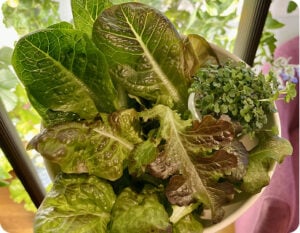
A realistic target: two cups of raw or one cup of cooked leafy greens daily. Split between meals: a handful of arugula or spinach in a smoothie or omelet at breakfast, a large salad at lunch, or cooked kale/chard as a dinner side.
Calcium across the day
The 1,200 to 1,500 mg daily calcium target is easier to hit if it’s distributed. A yogurt with breakfast (300 mg), a leafy green salad at lunch (150 mg), a serving of cooked greens with dinner (200 mg), and a calcium-fortified beverage in the evening (300 mg) reaches most of the target from food alone.
Phytoestrogen consistency
If soy or flaxseed is a personal choice, daily consistency matters more than volume. A small serving of tofu or a tablespoon of ground flaxseed several days per week produces more consistent phytoestrogen exposure than occasional larger servings.
Alcohol and sugar limits
The 2025 review noted that limiting added sugars, refined carbohydrates, and alcohol is consistently associated with reduced symptom severity in menopausal women. Alcohol in particular can worsen hot flashes and sleep disruption for many women.
What this article is not
Not a substitute for a conversation with your doctor about menopause management. Not medical advice about hormone replacement therapy. Not a claim that any single food or supplement will eliminate symptoms. Individual responses to dietary changes vary substantially, and the peer-reviewed evidence supports pattern-level changes (Mediterranean-style eating, consistent leafy green consumption, adequate calcium and vitamin D) rather than any specific food as a treatment.
For personalized guidance, especially about hormone replacement therapy, calcium and vitamin D supplementation, hot flash management, or sleep disruption, work with your doctor or a registered dietitian who specializes in women’s midlife health.
The Gardyn menopause-support garden
A Gardyn Home column produces kale, arugula, watercress, Swiss chard, and bok choy continuously. That means daily fresh greens without a grocery run, without the recall exposure of grocery leafy greens, and at peak nutritional density (nutrients decline in leafy greens within days of harvest, so same-day-picked greens deliver more of the calcium, magnesium, folate, and vitamin K they’re growing for).
| Grow the daily leafy greens women need at midlife
A Gardyn floor column produces kale, arugula, watercress, Swiss chard, and bok choy continuously, at peak nutritional density. |
Frequently asked questions
Can diet actually reduce hot flashes?
The peer-reviewed evidence supports modest benefits from a Mediterranean-style dietary pattern and, in some cases, from consistent phytoestrogen intake (soy isoflavones, flaxseed). A 2012 study in Menopause found that women consuming 54 mg of soy isoflavones daily experienced about a 20 percent reduction in hot flash frequency compared to placebo. Individual responses vary significantly. Diet is not a substitute for medical management of severe symptoms.
How much calcium does a woman need after menopause?
Cleveland Clinic and other clinical references recommend 1,200 to 1,500 mg of calcium daily for adult women in perimenopause and postmenopause, higher than the general adult recommendation. This can come from dairy, calcium-fortified plant milks, leafy greens, and calcium-set tofu. Talk to your doctor about whether supplementation is appropriate for you.
Are leafy greens as good a calcium source as dairy?
Depends on the green. Bok choy, kale, and collard greens deliver calcium in a highly bioavailable form (well absorbed by the body). Spinach and Swiss chard have calcium bound to oxalates, which reduces absorption. Bok choy and kale are the strongest leafy green calcium sources; spinach is better as a folate and iron source than a primary calcium contributor.
Should I take a calcium supplement?
Talk to your doctor. Calcium supplementation carries its own considerations (potential cardiovascular effects at high doses in some studies, GI side effects, drug interactions). For many women, dietary calcium plus vitamin D is preferable to supplementation. Your doctor can help you assess your individual situation.
Is the Mediterranean diet really the best pattern for menopause?
The Mediterranean pattern has the strongest peer-reviewed evidence base of any dietary pattern for menopausal women’s cardiovascular and metabolic health, and consistent evidence for quality of life measures. Other plant-forward patterns (DASH, MIND) have similar profiles. The specific label matters less than the pattern: whole foods, lots of vegetables, healthy fats, moderate protein, minimal ultra-processed food.
What about phytoestrogens? Are they safe?
Dietary phytoestrogens (from soy foods, flaxseed, legumes) are generally considered safe for most women. Concentrated phytoestrogen supplements are a different question. Women with a history of hormone-sensitive cancers should discuss any phytoestrogen strategy with their oncologist. For general population use, dietary sources have decades of safety data.
Is this article medical advice?
No. This article is educational content compiled from peer-reviewed research. It is not a substitute for personalized medical or nutritional advice. For hormone replacement therapy questions, symptom management, calcium supplementation decisions, or any specific health concern, work with your doctor or a registered dietitian who specializes in menopause.