Cookies help us deliver the best experience on our website. By clicking Accept you are agreeing to the placement and use of cookies as described in our privacy policy.


Every parent has lived some version of this. At dinner, your kid pushes the carrot to the edge of the plate, declares it disgusting, and refuses to make eye contact with it. The next afternoon, that same kid is in the kitchen eating handfuls of cherry tomatoes straight off the vine, asking for more. You chalk it up to a fluke, or to mood, or to whatever inscrutable logic governs four-year-olds.
It is not a fluke. There is real developmental psychology behind why a vegetable a kid grew themselves does not register as the same scary, mysterious thing as a vegetable from a clamshell. Once you understand what is going on in their head, you can stop relying on luck and start using the mechanism on purpose.
Key takeaways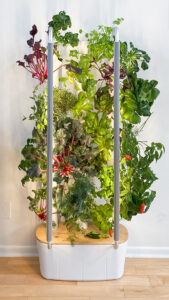
- Kids accept foods they have seen, touched, smelled, and watched grow over time, often before they taste them.
- It can take 8 to 15 exposures before a child will even try a new food, and most grocery vegetables never get those reps.
- Children defend, and eat, things they helped create. Ownership psychology is a real lever.
- Hidden vegetables and pressure tactics work against the long game. Low-pressure exposure works with it.
- Cherry tomatoes, strawberries, basil, and butterhead lettuce are the easiest first wins for picky kids.
The science, made readable
Three concepts explain almost everything about how kids develop food preferences. None of them are mysterious, but they are not intuitive either, and most parenting advice ignores them entirely.
Sensory familiarity
Children accept foods they have repeatedly encountered with their senses, even before they taste them. A kid who has spent three weeks watching a cherry tomato turn from green to red, who has touched the leaves and smelled the vines, has built a relationship with that tomato that is completely different from the relationship they have with a tomato they meet for the first time on a fork. The brain treats the familiar as safe and the unfamiliar as suspect. Research on early food exposure consistently shows that visual and sensory familiarity precede taste acceptance, often by weeks.
Ownership psychology
Humans defend the things they helped create. This is true for adults (sunk-cost-as-feature, not bug) and even more true for children. A kid who watered a basil plant, who watched it grow, who chose where to put it, has skin in the game. Eating that basil is not nutrition. It is identity. It is the natural outcome of caring for something. The vegetable becomes part of how they see themselves.
Repeated low-pressure exposure
Most parents underestimate how many exposures it takes for a kid to accept a new food. Pediatric nutrition research consistently puts the number between 8 and 15 separate exposures before genuine acceptance, and that is in the optimistic studies. Grocery-store vegetables almost never get those reps. They show up at dinner, get refused, get cleared, and are not seen again for two weeks. Vegetables a kid grows are different: they are seen daily, touched daily, and become part of the kitchen landscape. The exposure budget compounds without anyone forcing it.
“A vegetable a kid grew is not nutrition. It is identity.”
Why grocery-store produce works against you
Think about how a kid meets most vegetables for the first time. Cold, washed, pre-portioned, on a plate, with an expectation. No context, no story, no relationship. Just a thing on a plate that an adult is asking them to put in their mouth. The whole encounter is engineered for refusal.
Now think about how a kid meets a vegetable they grew. As a tiny seedling on the kitchen counter that they helped plant. As a leaf they watched unfurl. As a tomato that turned colors over weeks. By the time it gets to a plate, the kid already has a relationship with it. The plate is not the first encounter. It is the last step in a long, low-pressure introduction.
This is not a small difference. It is the entire difference.
The plants most likely to convert a picky kid
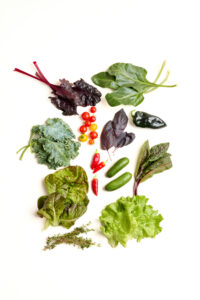
Some plants are dramatically better than others as a starting point. The criteria: fast visible progress, sweet or mild flavor, satisfying to harvest, and impossible to ruin. In rough order of how often they convert resistant kids:
1. Cherry tomatoes
The undisputed champion. Sweet, candy-like, gratifying to pick, and visually exciting as they ripen. Kids who refuse every other vegetable will eat cherry tomatoes straight off the vine. Best for ages 3 and up. Pair them with a salt shaker for a kid-favorite snack.
2. Strawberries
If your Gardyn supports them, strawberries are the closest thing to a guaranteed win. Sweet, instantly recognizable, and the harvest moment (gentle twist, immediate reward) is genuinely magical for a kid. Best for any age that can be trusted not to eat them all in one afternoon.
3. Sugar snap peas
Crunchy, sweet, and fun to open. Kids will eat sugar snap peas like a snack food, especially if they get to harvest them themselves. The peapod also doubles as a kid-friendly first lesson in plant anatomy: look, the seeds are inside! Best for ages 3 and up.
4. Basil
Not a vegetable, but it earns its place because of smell. Crushing a basil leaf between your fingers releases an aroma that kids find intoxicating. The smell builds positive association before any taste happens. Bonus: kids who help make pesto eat pesto. Best for ages 2 and up.
5. Butterhead lettuce
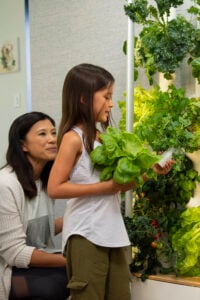
Mild, soft, and approachable. Butterhead lettuce is the gateway green for kids who reject romaine and arugula on sight. The leaves are pretty, the harvest is satisfying (you snip a leaf, a new one appears), and it can be torn into a salad by even very small hands. Best for ages 2 and up.
6. Microgreens
Fast, novel, and visually impressive. Microgreens grow visibly day to day, which makes them perfect for short attention spans. Kids feel like scientists. The harvest is a tiny, neat snip that kids find satisfying. Sprinkle them on eggs, sandwiches, or pasta. Best for any age.
How to involve kids by age (without making it a chore)
The biggest mistake well-meaning parents make is treating kid-involvement as one thing. A 3-year-old and a 9-year-old need completely different jobs. Here is what actually works at each stage.
Ages 2 to 4: sensory exploration
Their job is to look, smell, touch, and harvest whole leaves with safety scissors. They should not be measuring, planning, or following instructions. They should be experiencing the plants. Let them choose which one to water today. Let them snip a basil leaf and smell it. Resist the urge to make it educational. The point is the relationship.
Ages 5 to 7: small jobs and choices
They can snip herbs more carefully, wash harvested produce in a colander, tear lettuce for a salad, and start participating in choices. Let them pick what color flower to grow next. Let them decide if dinner gets basil or cilantro. Choice is the hidden ingredient at this age, more than skill.
Ages 8 to 12: full ownership
They can take ownership of a section of the garden, plan around what is ready to harvest, and build an entire dish from their own contributions. “Salad is your job tonight” works at this age in a way it does not at 5. Give them real responsibility, not pretend responsibility. Let them succeed and fail with it.
|
What not to do (the well-meaning mistakes)
Even parents who buy into all of this still sabotage themselves with five common moves. Worth flagging:
- Forcing a taste. “You grew it, so you have to try it” destroys the whole ownership effect. Now the vegetable is associated with
 pressure. Offer, do not require.
 - Over-praising. “Good job eating that!” turns growing into performance and eating into a transaction. Stay matter-of-fact. The harvest is just dinner.
- Treating refusal as failure. If they helped grow it and still will not eat it, the exposure still counts. They saw it, touched it, smelled it. That is a deposit. The withdrawal might happen in a month.
- Hiding vegetables in other foods. This builds distrust, not acceptance. Kids who learn that food might secretly contain things they do not like become more suspicious of all food, not less.
- Making it educational. Kids can smell a lesson coming from across the room. The garden should feel like play, not curriculum. The learning happens anyway.
“If they helped grow it and still will not eat it, the exposure still counts.”
The long game (what changes in 6 months)
Realistic expectations matter. You are not flipping a switch. In month one, your picky kid is curious about the garden but probably not eating much new. In month two, tasting increases, especially of things they grew or chose themselves. By month three, you start to see regular acceptance of one or two new vegetables. By month six, the dinnertime-resistance dynamic has shifted noticeably.
This is slower than the marketing on most picky-eating products promises. It is also more durable. Kids who develop food acceptance through this kind of gradual familiarity tend to keep that openness as they grow up. Kids who eat broccoli only because they were bribed with dessert tend to stop eating broccoli the moment the bribes stop.
An indoor garden does not work magic. What it does is stack the deck. It puts kids in proximity to vegetables daily, gives them ownership of a few specific ones, makes the harvest fun, and removes the artificial pressure of grocery-store-as-first-introduction. Over months, that adds up. Over years, it changes a kid’s relationship with food.
|
Frequently asked questions
What if my kid still refuses to eat anything new after we start growing?
Stay patient and stay consistent. The exposure is doing work even when you cannot see it. Most kids who reject food at month one are eating it (or at least tasting it) by month three. The mechanism is slow on purpose. If you push it, you break it.
What is the youngest age this works for?
Toddlers as young as 18 months can participate meaningfully in the sensory side. They can touch leaves, smell herbs, watch you harvest. The eating side scales up as they age, but the relationship with the plants can start very early.
Do I need a Gardyn for this to work?
No, but the constant proximity matters. A windowsill basil plant works in principle. The challenge is keeping it alive long enough for the relationship to develop. The reason indoor gardens work for this is that they remove the failure points (light, water, timing) that kill most home growing attempts before kids get attached.
What if I have multiple kids at different ages?
Each gets their own role. The toddler waters and harvests leaves. The 6-year-old snips and washes. The 10-year-old picks the recipes and builds dinner. The fact that they are all engaged with the same plants strengthens the family-meal habit, which is itself a major driver of long-term healthy eating.
How does this compare to a backyard vegetable garden?
Same principle, different operations. Outdoor gardens work beautifully when the season cooperates and the gardener has time. Indoor gardens work year-round, indoors, in any climate, with minimal expertise required. For families without yard space or gardening experience, indoor is often the only path that survives the first six months.