Cookies help us deliver the best experience on our website. By clicking Accept you are agreeing to the placement and use of cookies as described in our privacy policy.


Iron deficiency is the most common nutritional deficiency globally and disproportionately affects women of reproductive age. The combination of monthly blood loss, higher baseline iron needs during pregnancy, and diets that are often lower in red meat creates a persistent gap between iron intake and iron requirements for many women.
Key takeaways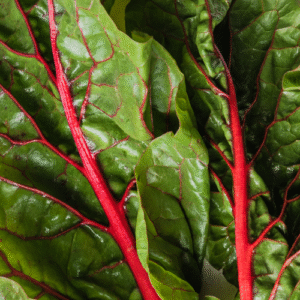
- The recommended daily iron intake for premenopausal women is 18mg — nearly three times the 8mg recommended for men — reflecting monthly losses from menstruation.
- Non-heme iron from plants is absorbed at 2 to 20%, versus 15 to 35% for heme iron from animal sources — but pairing plant iron with vitamin C dramatically increases absorption.
- Spinach provides ~2.7mg iron per 100g raw and also contains vitamin C, which partially offsets its own oxalate-mediated absorption reduction.
- Kale has low oxalate content and contains both iron (~1.5mg/100g) and vitamin C, making its iron among the most bioavailable of any leafy green.
- Swiss chard has lower oxalates than spinach with similar magnesium levels, making it a practical complement for iron-focused eating.
- Fresh-harvested spinach is more effective for iron absorption than week-old store spinach because vitamin C — the primary enhancer — degrades rapidly with storage.
Why iron matters and who is most at risk
Iron’s roles in the body
Iron is a component of haemoglobin, which carries oxygen in red blood cells. It is also part of myoglobin in muscle tissue, required for mitochondrial energy production, and necessary for immune function, neurotransmitter synthesis, and thyroid hormone metabolism. Even before full anaemia develops, low ferritin produces fatigue, poor concentration, impaired immune response, and cold intolerance.
Ferritin: the overlooked measure
Standard blood iron tests can be normal while ferritin (stored iron) is depleted. Research has documented significant fatigue and cognitive symptoms at ferritin levels below 30 to 50 ng/mL even when haemoglobin appears normal. If you suspect low iron and your standard panel is normal, ask specifically for a ferritin test.
Heme versus non-heme iron: why it matters
Iron from animal sources (heme iron) is absorbed at rates of 15 to 35 percent of the amount present. Iron from plant sources (non-heme iron) is absorbed at 2 to 20 percent — with the wide range reflecting how dramatically absorption enhancers and inhibitors affect the outcome. Vitamin C is the most potent dietary enhancer of non-heme iron absorption; consuming it alongside plant iron sources can increase absorption two to four-fold.
Absorption inhibitors
Tannins in tea and coffee, calcium in dairy, and oxalates in spinach and chard all inhibit non-heme iron absorption to varying degrees. The practical takeaway is timing: avoid drinking tea or coffee within one hour of iron-rich plant meals, and do not combine high-calcium foods with your primary iron source at the same meal.
The most iron-rich home-growable greens
Spinach: ~2.7mg iron per 100g raw
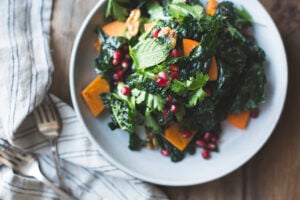
Spinach is the highest-iron leafy green among commonly grown varieties. It also contains vitamin C, which partially offsets its own oxalate-mediated absorption reduction. Cooking spinach reduces oxalate content, improving iron bioavailability from cooked spinach relative to raw. The freshness dimension is particularly relevant here: vitamin C content declines with storage, and since vitamin C is the primary absorption enhancer, week-old store spinach delivers worse iron absorption than harvest-fresh spinach even when iron content itself is relatively stable.
Swiss chard: ~1.8mg iron per 100g raw
Swiss chard provides approximately 1.8mg of iron per 100g raw with lower oxalate levels than spinach, making its iron more bioavailable without any preparation changes.
Kale: ~1.5mg iron per 100g raw
Kale is one of the more bioavailable plant iron sources because of its very low oxalate content. It is also a meaningful source of vitamin C — approximately 80mg per cup raw — which enhances absorption from its own iron content simultaneously.
Watercress: iron plus exceptional vitamin C
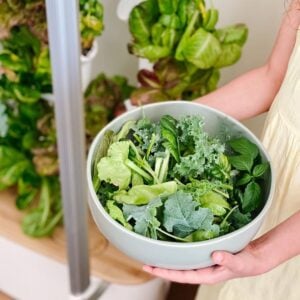
Watercress provides approximately 0.2mg of iron per 100g — lower than spinach — but its exceptional vitamin C content (43mg per 100g) significantly enhances absorption from other iron sources eaten alongside it. Including watercress in an iron-focused salad alongside spinach improves net iron delivery from the meal beyond what spinach alone would provide.
Building an iron-maximizing meal from homegrown greens
The ideal iron salad
A large mixed salad of fresh spinach (high iron, vitamin C), watercress (high vitamin C enhancer), and kale or arugula (low oxalate iron sources) dressed with lemon juice (additional vitamin C) and olive oil is among the most iron-efficient plant-based meals possible.
What to avoid at iron-focused meals
- Tea and coffee within 60 minutes of the meal — tannins inhibit absorption
- Large calcium servings at the same meal — dairy competes with iron absorption
- Excess whole grain bran added to the same meal — phytates bind iron
Frequently asked questions
How much spinach do I need to eat for meaningful iron intake?
A 200g serving of cooked spinach provides approximately 7mg of iron. With good absorption conditions (vitamin C present, no inhibitors), 20 to 30 percent of that is absorbed, yielding approximately 1.5 to 2mg absorbed iron. Meeting an 18mg daily requirement requires multiple iron sources across the day, not spinach alone.
Can I get enough iron from plants alone?
Yes, with attention to absorption. Vegetarian and vegan women have higher recommended iron intake (approximately 32mg daily) because of lower non-heme iron absorption rates. This is achievable with consistent consumption of diverse iron-rich plants alongside absorption enhancers.
Does growing spinach at home increase its iron content?
The iron content of spinach is primarily determined by genetics and growing conditions, not harvest timing. However, the vitamin C content that enhances iron absorption does decline with storage — meaning fresh-harvested spinach delivers better iron absorption outcomes even if its iron content per gram is similar to store-bought.