Cookies help us deliver the best experience on our website. By clicking Accept you are agreeing to the placement and use of cookies as described in our privacy policy.


The soil vs. hydroponics debate has been going on for decades, but for most home growers, the comparison looks very different than it does for commercial farms. This guide cuts through the noise with an honest, data-backed look at how these two approaches perform where it actually matters: your kitchen, your schedule, your results.
Key takeaways
- Hydroponic plants grow 30–50% faster than soil-grown plants and use up to 95% less water.
- Soil gardening offers lower startup costs and a more intuitive growing experience for beginners starting outdoors.
- Hydroponic systems eliminate soil-borne pests and diseases, reducing the need for pesticides.
- Taste and nutrition are comparable : both methods can produce high-quality food with proper care.
- For indoor growing, hydroponics wins on almost every practical measure: space, speed, yield, and consistency.
The basics: how each method works 📝
Soil gardening
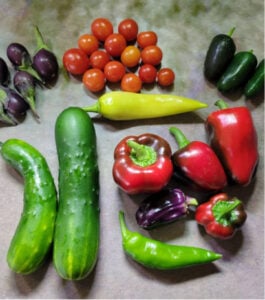
In traditional soil gardening, plants anchor their roots in a growing medium that contains a complex ecosystem of minerals, organic matter, bacteria, and fungi. Plants extract nutrients as they become available through soil chemistry : a process shaped by moisture levels, pH, microbial activity, and temperature. This buffering complexity makes soil forgiving to a point, but also unpredictable.
Hydroponics
In hydroponic growing, soil is removed entirely. Plants are supported in an inert medium or growing chamber, and roots receive a precisely formulated nutrient solution directly. There’s no waiting for soil chemistry to make nutrients available, roots absorb what they need immediately. For a deeper dive into the methods involved, see our guide to types of hydroponic systems.
Head-to-head comparison 🥊
| Factor | Soil gardening | Hydroponics |
| Water use | High, up to 20x more | 95% less than soil |
| Growth speed | Standard | 30–50% faster |
| Space required | Significant outdoor space | As little as 1.4 sq ft indoors |
| Pest & disease risk | Soil-borne pests and fungi common | Eliminated with no soil |
| Startup cost | Low (seeds, soil, containers) | Moderate to high depending on system |
| Ongoing maintenance | Watering, weeding, fertilizing | pH monitoring, reservoir changes |
| Year-round growing | Seasonal (outdoor) | Yes, fully year-round indoors |
| Nutrient control | Indirect via soil chemistry | Precise and direct |
| Learning curve | Low for basics, high for mastery | Moderate, simplified with automation |
Water: the clearest advantage💧
Water consumption is where hydroponics wins most decisively. Traditional soil gardening loses the majority of applied water to evaporation, runoff, and deep percolation beyond root zones. Hydroponic systems recirculate water continuously : a Gardyn system uses about 2 gallons per week for up to 30 plants, compared with the gallons per day a comparable soil garden might require.
For apartment growers or anyone conscious of their environmental footprint, this difference is significant. See also: 3 easy ways to help the environment.
Growth speed and yield👟
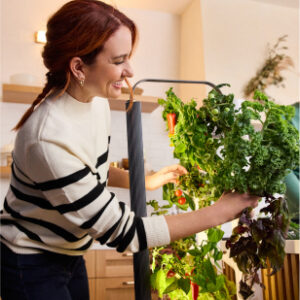 Hydroponic plants consistently outperform soil-grown counterparts on speed. Direct nutrient access eliminates the root energy cost of searching soil for nutrients, that energy goes into above-ground growth instead. Most herbs and greens in a Gardyn system are harvestable within 3–4 weeks of planting, compared with 6–8+ weeks in soil.
Yield per square foot is also dramatically higher in vertical hydroponic systems. A Gardyn Home grows 30 plants in just 2 square feet of floor space. Learn more about how much each plant actually produces.
Taste and nutrition✅
This is the question most people ask, and the honest answer is that both methods can produce excellent-tasting, nutritious produce when done well. The key variable isn’t the growing method; it’s how quickly produce is consumed after harvest.
Nutrient degradation begins at the moment of harvest. Grocery store produce may sit in transit for days before reaching your plate. Home-grown produce, hydroponic or soil, eaten immediately retains far more nutritional value. Our research on why eating at harvest is healthier explores this in detail.
|
Where soil gardening still makes sense
Soil gardening remains the right choice for outdoor growing, raised beds, root vegetables like carrots and potatoes, and growers who find the hands-in-soil experience meaningful in itself. For large-scale backyard growing, soil is economical and effective.
Where soil gardening struggles is indoors. Soil in containers is heavy, messy, prone to fungus gnats and overwatering, and dependent on adequate natural light. For indoor food production specifically, hydroponics is simply better suited to the environment.
Indoor growing: hydroponics wins🏆
For anyone growing food inside, whether in an apartment, a house without outdoor space, or a home where consistent access to natural light isn’t possible, hydroponic systems remove every practical obstacle that makes indoor soil gardening frustrating. No mess, no pests, no guessing on watering. The Gardyn Home and Gardyn Studio take that further with full automation, Kelby AI monitors your garden around the clock so you don’t have to.
|
|
Frequently asked questions❓
Does hydroponics produce better-tasting vegetables than soil?
Taste differences between hydroponically grown and soil-grown produce are minimal when both are eaten fresh. The bigger factor is freshness, produce harvested and eaten immediately always tastes better than store-bought, regardless of growing method.
Is hydroponic growing more expensive than soil gardening?
Initial setup costs for hydroponic systems are higher than basic soil gardening. However, year-round indoor production, dramatically reduced water use, and elimination of pest control costs can offset this over time, particularly for frequent harvesters.
Can I grow root vegetables hydroponically?
Most root vegetables like carrots, beets, and potatoes are not well-suited to hydroponic growing, they require the physical resistance of soil to develop properly. Hydroponics excels with herbs, greens, lettuces, and many fruiting plants.
Is hydroponic produce safe to eat?
Yes. Hydroponic produce grown in a clean system with properly formulated nutrients is safe. In some respects it’s safer than field-grown produce because it eliminates exposure to soil-borne pathogens and reduces or eliminates pesticide use.