Cookies help us deliver the best experience on our website. By clicking Accept you are agreeing to the placement and use of cookies as described in our privacy policy.


When people consider hydroponic growing, one question comes up consistently: is produce grown in water as nutritious as produce grown in soil? It is a fair question, and the answer is more nuanced and more favourable to hydroponics than most people expect.
The short answer is that well-managed hydroponic systems produce vegetables with comparable or superior nutritional profiles to conventionally grown equivalents — and that the freshness advantage of home hydroponic growing adds a dimension that no growing-method comparison can capture.
Key takeaways
- Well-managed hydroponic systems produce vegetables with comparable or superior nutritional profiles to conventionally grown equivalents
 when growing conditions are properly controlled.
 - Multiple studies have found hydroponically grown lettuce and spinach contain comparable or higher vitamin C content than soil-grown equivalents of the same variety.
- Mineral content — including calcium, potassium, magnesium, and iron — is broadly comparable between hydroponic and soil-grown produce when nutrient solutions are properly formulated.
- Hydroponic systems can be tuned to produce higher concentrations of specific phytochemicals including anthocyanins and glucosinolates through lighting and nutrient adjustments.
- The most important nutritional variable is post-harvest freshness — which home hydroponic growing addresses by eliminating the supply chain entirely.
- Poorly managed hydroponic systems with incomplete nutrient solutions can produce mineral-deficient vegetables; the quality of the nutrient formulation is critical.
What determines nutritional content in vegetables?
Genetics: the foundation
The most significant determinant of a vegetable’s nutritional potential is its genetics. The variety of kale, lettuce, or basil you grow determines the upper bound of its nutrient and phytochemical content. This is true regardless of whether it is grown in soil or a hydroponic system. Nutrient-dense varieties produce more nutritious food than commodity varieties in any growing environment.
Post-harvest handling: where many gains are lost
As covered in detail in the companion articles on vitamin C loss and folate degradation, post-harvest handling is often the most significant variable affecting the nutritional value of food at the time of eating. A nutritionally superior vegetable that spends two weeks in a supply chain may deliver less nutrition than an average vegetable eaten within hours of harvest.
What the research shows on hydroponic nutrition
 Vitamin C and antioxidants: often higher in hydroponics
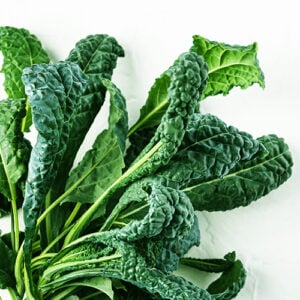
A study published in Scientia Horticulturae found hydroponically grown lettuce had higher ascorbic acid content than soil-grown lettuce from the same variety. Research on basil has found consistently higher antioxidant content in hydroponic versus conventionally grown plants. The proposed mechanism is that controlled hydroponic environments allow optimisation of light exposure and nutrient delivery, both of which stimulate vitamin C synthesis.
Mineral content: comparable with caveats
Several studies comparing hydroponically and conventionally grown vegetables find that mineral content — including calcium, potassium, magnesium, and iron — is broadly comparable when hydroponic nutrient solutions are properly formulated. In some cases, hydroponic vegetables show higher mineral concentrations because nutrients can be precisely delivered to the root zone at optimal concentrations, eliminating the soil chemistry variables that can limit uptake in conventional growing.
Nitrate content: an important distinction
Hydroponically grown leafy greens can have higher nitrate content than soil-grown equivalents if nitrogen in the nutrient solution is not carefully managed. High nitrate intake from food is generally considered safe for healthy adults and may even be beneficial — dietary nitrate from greens has been studied for blood pressure effects — but elevated nitrates in food for infants or immunocompromised individuals requires attention.
| Gardyn’s Hybriponic technology
Gardyn’s proprietary Hybriponic system combines elements of deep water culture and drip irrigation in a column format optimised for home growing. The nutrient solution is formulated to support consistent mineral delivery across all 30 pod positions, and the LED lighting spectrum is optimised for the specific plants in the catalog. This controlled environment approach is precisely what allows hydroponic growing to match or exceed soil-growing nutritional outcomes. |
The freshness variable: why it changes the comparison
Any comparison between hydroponic and soil-grown produce that doesn’t account for the harvest-to-consumption timeline is incomplete. Home hydroponic growing, as opposed to commercial hydroponic production, adds the freshness dimension that commercial comparison studies lack. When you grow hydroponically at home and harvest minutes before eating, you capture nutritional value at or near peak regardless of the growing medium.
Why eating at harvest is healthier covers the harvest timing dimension in detail.
Frequently asked questions
Are hydroponic vegetables organic?
Not automatically. Organic certification for hydroponics is a contested topic — some certifying bodies allow hydroponic certification, others do not. Gardyn’s system grows without pesticides, which is the primary concern for most consumers.
Do hydroponic plants taste different from soil-grown plants?
High-quality hydroponics often produces more consistently flavoured produce because growing conditions are controlled. Most taste comparisons between well-managed hydroponic and conventional produce find no significant difference.
Is there any nutritional advantage to soil-grown vegetables that hydroponics cannot replicate?
Soil-grown vegetables in high-quality organic soil can express the benefits of diverse soil microbiome interactions. However, these benefits are highly variable and often not reflected in commercial soil-grown produce from depleted agricultural soils. Well-managed hydroponics with complete nutrient solutions reliably outperforms average commercial soil-growing.