Cookies help us deliver the best experience on our website. By clicking Accept you are agreeing to the placement and use of cookies as described in our privacy policy.


If you’ve read the news at any point in the last two years, you’ve seen produce recalls. Salmonella in tomatoes. E. coli in romaine. Listeria in spinach. Hepatitis A in strawberries. Each recall is a specific event, but the pattern is systemic: the fresh produce categories that Americans eat most often are also the categories most likely to be pulled from shelves.
There’s a practical response beyond just checking recall notices: grow the highest-risk categories at home. Not all of them, and not to replace the entire produce aisle, but the specific ones where home-growing eliminates the contamination pathways that cause commercial recalls. Here’s the ranked list.
Key takeaways
- The fresh produce categories most often recalled: leafy greens (romaine, spinach, kale), fresh herbs (basil, cilantro, parsley), soft berries (strawberries), and pre-cut vegetables (cucumbers, celery).
- The reason these categories dominate recalls: shared irrigation water, wash stations, packing facilities, and long-distance shipping in the commercial supply chain. Home growing eliminates all four.
- The categories NOT worth growing to avoid recalls (bananas, apples, citrus, tree nuts) are lower-risk to begin with and don’t grow indoors anyway.
- For a household that eats fresh greens, herbs, and berries daily, growing at home saves 200 to 400 dollars a year in grocery costs while eliminating the recall exposure.
- A single Gardyn column produces every high-recall-risk category (leafy greens, herbs, cherry tomatoes, strawberries) continuously.
Why some produce keeps getting recalled
Not all produce is equally risky. The categories that appear again and again in recall news share four structural features:
- Grown in fields where irrigation water is drawn from surface sources (rivers, canals) that can be contaminated by livestock runoff
- Harvested and washed in shared packing facilities, where one contaminated batch can spread to many
- Shipped long distances at warm temperatures, giving bacteria time to multiply
- Distributed across dozens of grocery chains, which is why a single contaminated batch shows up in recall notices from multiple states
Home hydroponic growing eliminates every one of these features. Water comes from your household supply. There’s no shared washing. There’s no shipping. There’s no distributed retail.
Rank 1: Fresh leafy greens
 The single most-recalled category, year over year. Romaine has led the news repeatedly. Spinach, kale, and mixed spring greens follow closely behind. See our full coverage on lettuce recalls and food safety for the specific incident history.
Why it’s high-risk: field-grown leafy greens have massive surface area for bacteria to attach. Irrigation with surface water in growing regions near livestock operations is a documented contamination pathway. And the textured leaves make washing much less effective than for smooth-skinned produce.
Why home-growing works: indoor hydroponic kale and arugula use only your household water supply, are harvested by you, and never leave your kitchen. Every contamination pathway that causes commercial leafy green recalls is eliminated.
Rank 2: Fresh herbs
Herbs are recalled less often than leafy greens by volume, but the recall rate per unit produced is comparable. Basil recalls have involved Salmonella multiple times. Cilantro and parsley have had similar incidents.
Why it’s high-risk: same field-growing pathway as leafy greens, plus fresh herbs are often served raw as garnishes, meaning any surface contamination reaches the eater directly.
Why home-growing works: fresh basil, cilantro, and other herbs are the single most valuable category to grow indoors. Grocery herbs are also the fastest to lose flavor after harvest, so the home-grown quality upgrade is dramatic. Recall avoidance is a bonus.
Rank 3: Soft berries
Strawberries have been in the news for both Salmonella and hepatitis A recalls in recent years.
Why it’s high-risk: soft skin, high surface area, often eaten raw and unwashed.
Why home-growing works partially: strawberries grow well in a Gardyn column, though not in volumes that fully replace a grocery haul during peak berry season. But for daily fresh-berry consumption (a handful on cereal, a garnish for dessert, a snack for a kid), home-grown strawberries eliminate the recall exposure for that portion of consumption.
“The categories that get recalled most often are also the categories that grow best indoors: leafy greens, herbs, cherry tomatoes, strawberries. That’s not coincidence, it’s an inverted supply chain telling you where the risk lives.” , Gardyn editorial
Rank 4: Cherry tomatoes and pre-cut vegetables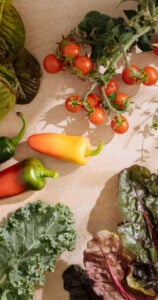
Tomato recalls happen, though less often than leafy greens. Pre-cut vegetables (celery sticks, cucumber slices, packaged salad kits) are recalled at high rates because the cutting process introduces contamination and creates surface area for bacterial growth.
Why home-growing works: cherry tomatoes and cucumbers both grow well in a Gardyn column and taste dramatically better fresh from the plant than from a grocery.
Categories NOT worth growing (for recall reasons)
Not everything makes sense to grow at home. Some categories are relatively safe from recalls to begin with:
- Tree fruits (apples, pears, citrus): relatively low recall rate. Not practical to grow indoors.
- Bananas: negligible recall rate. Not indoor-growable.
- Root vegetables (potatoes, onions, carrots): relatively low recall rate. Not indoor-growable at meaningful scale.
- Tree nuts: low recall rate for the finished product.
- Frozen or canned produce: shelf-stable, low recall rate.
The best home-growing strategy focuses on the high-recall-risk categories that also happen to be the ones that grow easily indoors.
The economics
For a household that eats fresh leafy greens, herbs, and berries daily, the annual grocery cost runs $300 to $600 depending on organic vs conventional and local produce prices. A Gardyn Home column that produces those same categories continuously covers the equipment cost in the first year, roughly, and produces indefinitely after that.
The recall-avoidance benefit is real but hard to price. What’s the value of never worrying whether the romaine your kid is eating is on this month’s recall list? Depending on how often you shop those categories, and depending on how much your household eats fresh salads and herb-heavy meals, it’s a meaningful safety upgrade.
The realistic home-growing scope
This isn’t about growing 100 percent of your produce at home. That’s not possible in a hydroponic column, and it’s not necessary. The productive strategy:
- Grow the high-recall categories at home (leafy greens, herbs, cherry tomatoes, strawberries)
- Buy the low-recall categories at the grocery (tree fruit, root vegetables, bananas, citrus)
- Buy the categories you can’t grow (grains, dairy, protein, tree nuts) at the grocery
That approach captures the recall-avoidance benefit for the categories where it actually matters, without asking your kitchen to become a full farm.
| Grow the produce that gets recalled most
A Gardyn floor column produces leafy greens, herbs, cherry tomatoes, and strawberries, the exact categories most affected by commercial recalls. |
Frequently asked questions
Does home-growing really eliminate food safety risk entirely?
No. Home-grown produce still requires normal food safety practices: washing hands before harvest, cleaning surfaces, storing correctly. What home-growing eliminates is the supply-chain-specific risks (shared irrigation, packing facility contamination, long-distance shipping) that cause most commercial recalls.
How much fresh produce can a Gardyn column actually produce?
A Gardyn Home column produces enough leafy greens, herbs, and cherry tomatoes to substantially cover a household’s daily consumption of those categories. Full grocery replacement for a family of four is not the goal, but continuous fresh supply of the high-risk categories is realistic.
Is hydroponic produce as safe as organic?
Both are safer than conventional field-grown produce for different reasons. Organic reduces pesticide exposure. Hydroponic reduces microbial contamination exposure (no soil, no shared irrigation, no wildlife access). Neither is a guaranteed pathogen-free option, but both improve on the risk profile of conventional grocery produce.
What if my kid still wants supermarket salad kits?
Fine. Home-grown greens don’t have to replace all salad consumption. The value is having a safe option for the day-to-day home-cooked meals. Save the salad kits for occasional use.
How do I know when a Gardyn is ready to harvest?
Kelby, the AI assistant built into every Gardyn, tracks harvest windows in the app. For most leafy greens, harvest starts around week 4 and continues indefinitely as you cut and the plant regrows. Cherry tomatoes fruit around week 8. Strawberries around week 6.
Are there any produce categories NOT to eat raw from home growing?
For safety, treat home-grown produce like any produce: wash before eating, refrigerate cut produce, and follow normal food safety practices. Home-grown produce is safer than commercial in terms of contamination pathways, but it’s still food and deserves normal handling.