Cookies help us deliver the best experience on our website. By clicking Accept you are agreeing to the placement and use of cookies as described in our privacy policy.


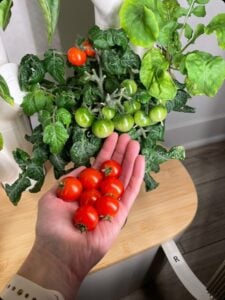
Cherry tomatoes are the most rewarding plant you can grow indoors. They start ripening at the front edge of summer, peak through July and August, and (in the right setup) keep producing into October. The plant itself is gorgeous, the harvest is unrelenting once it starts, and the flavor of a vine-ripened indoor cherry tomato is genuinely unlike anything you can buy at a grocery store.
Here is the complete guide to growing cherry tomatoes indoors: what the plant actually needs, the step-by-step from planting to first ripe fruit, and how to stretch the harvest from May through October.
Key takeaways
- Growing cherry tomatoes indoors works year-round with the right setup: full-spectrum lights, stable water and nutrients, and hand pollination.
- First ripe tomatoes arrive about 8 to 10 weeks after planting. After that, the harvest is continuous.
- Cherry tomatoes need full-spectrum light, support for vining growth, hand-pollination (or gentle shaking), and consistent water and nutrient delivery.
- A Gardyn Home is the best fit for tomatoes because the taller column supports vining. A Studio works for smaller-scale indoor tomato growing.
- Staggered plantings extend the harvest. Start a second yCube six to eight weeks into the first plant’s production for continuous fruit from May into October.
Why indoor cherry tomatoes are having a moment
Outdoor tomato growing is, frankly, hard. The plants want a long warm season, deep stable soil, and steady moisture, all of which are unpredictable in most American climates. Hot summers, late frosts, hornworms, blight, and watering inconsistency all conspire against the home gardener.
Indoor cherry tomato growing eliminates most of those variables. Light is controlled. Water is controlled. Nutrients are controlled. There are no pests, no weather, no surprise frost in May or hailstorm in July. The plant just grows, fruits, and produces.
For someone who has tried outdoor tomatoes and been disappointed, this is the version that finally works. For someone who has never had a garden, this is the easiest first tomato success in the catalog.
What cherry tomato plants actually need
Light (the most important factor)
Tomatoes are heavy light-feeders. They need 14 to 16 hours of full-spectrum light per day during their growing phase to produce real fruit. A south-facing window is rarely enough. Gardyn’s full-spectrum LED lights are calibrated specifically for fruit-bearing plants like tomatoes.
Support
Cherry tomato plants vine. They reach two to four feet of growth indoors and need vertical support so the stems do not break under the weight of fruit. The Gardyn column does this structurally.
Pollination
Outdoor tomatoes are pollinated by wind and insects. Indoor tomatoes need either hand-pollination (gently touching the inside of each flower with a small brush) or, simpler, daily gentle shaking of the plant during flowering. Either method works. Shaking takes 10 seconds a day.
Stable water and nutrients
Tomatoes are sensitive to water stress and nutrient swings. Blossom end rot (the brown patch on the bottom of the fruit) is almost always a sign of inconsistent calcium uptake, which traces back to inconsistent water delivery. The Hybriponic™ system delivers water and nutrients on a stable schedule, which is why indoor tomatoes in a Gardyn rarely show the stress problems home growers usually face.
 Step-by-step: from yCube to first ripe tomato
Step 1: Install the yCube
The Gardyn cherry tomato yCube arrives pre-seeded in a compostable pod. Pop it into a column slot near the middle of the column (tomato plants want light from multiple angles as they grow tall). Plug the yCube into the watering system.
Step 2: Set the light schedule
The Gardyn app handles this automatically when you tell Kelby you have planted a tomato. Light cycles run for 14 to 16 hours during the growth phase.
Step 3: Wait for germination
Germination takes 5 to 10 days. You will see the first true leaves emerge from the top of the yCube. From here, vegetative growth is rapid.
Step 4: Watch for first flowers (week 4 to 6)
Yellow flowers appear at the leaf nodes. This is when pollination begins. From now on, give the plant a gentle daily shake or brush the inside of each flower once per day.
Step 5: Prune suckers (optional but recommended)
Suckers are the small shoots that emerge in the joint between the main stem and a leaf. Pinching them off concentrates the plant’s energy into fruit production rather than vegetative growth. Do this weekly during the production phase.
Step 6: Harvest at peak ripeness (week 8 to 10)
Cherry tomatoes are ready to pick when they have reached their full color and give slightly when squeezed. Pick them warm if possible (warm tomatoes have the strongest flavor) and eat them within a day or two. The flavor peak is short.
|
Indoor varieties worth growing
Our cherry tomato yCube is bred specifically for indoor growing: compact enough for a column, productive, and selected for flavor over shipping durability. The plants stay manageable in size (no eight-foot rambling vines) while producing the kind of high-sugar, full-flavor fruit you cannot get from any grocery shelf.
Companion well with basil. Tomato and basil grow well together because they share similar light and water needs, and the kitchen pairing is the entire point. A column with a cherry tomato yCube and two basil yCubes is the most-used summer-cooking column in our catalog.
How to get tomatoes from May through October
A single cherry tomato plant produces heavily for about 12 weeks. To get a full summer-into-fall harvest, stagger plantings:
Staggered planting schedule
- Plant 1: install in early March, first harvest in May, continuous through July
- Plant 2: install in late May, first harvest in late July, continuous through September
- Plant 3 (optional): install in late July, first harvest in late September, continuous through November
With three staggered plantings in a Gardyn Home (which has the column capacity for it), you can have fresh cherry tomatoes on your counter from May to November. That is six months of fruit, indoors, in any climate.
Troubleshooting indoor cherry tomatoes
Flowers are dropping without fruit
Almost always a pollination issue. Increase the daily shaking, or use a small soft brush to pollinate each flower individually. Some Gardyn growers run a small clip-on fan for a few hours a day to simulate wind.
Fruit has brown spots on the bottom (blossom end rot)
Calcium uptake issue, usually caused by inconsistent water delivery. Check that the reservoir has not been allowed to run low and confirm that the pump is delivering water on schedule.
Yellowing lower leaves
Normal as the plant ages and redirects nutrients upward. If it starts happening on younger leaves, check the nutrient schedule in the app.
|
Frequently asked questions
How long until my first cherry tomato harvest?
About 8 to 10 weeks from yCube installation to first ripe fruit. After that, harvest is continuous for roughly 12 weeks per plant.
Do I need to pollinate cherry tomatoes by hand?
Yes, in some form. Without wind or pollinators, indoor tomatoes need help. The easiest method is a gentle daily shake of the plant during flowering. A small soft brush brushed inside each flower also works.
What about pests indoors?
Indoor growing eliminates most outdoor tomato pests (hornworms, aphids in significant numbers, cutworms). Occasional fungus gnats can show up in any indoor growing setup; they are harmless to mature plants and managed with sticky traps if needed.
Can I grow cherry tomatoes in a Studio (smaller column)?
Yes. The Studio supports cherry tomatoes well at a smaller scale. The harvest will be smaller than from a Home, but the plant grows happily and produces. The Home is preferred only if you want larger volume or multiple staggered plantings.
What about heirloom cherry tomato varieties?
Our cherry tomato yCubes are selected for indoor performance and flavor rather than shipping durability. You get the heirloom-style flavor profile (high sugar, complex acidity) in a plant bred to thrive in a column system.
Do indoor cherry tomatoes really taste different from grocery ones?
Yes, dramatically. Grocery tomatoes are picked green for shipping and gas-ripened. They develop color but not the flavor compounds that form on the vine. Vine-ripened indoor cherry tomatoes have the full sugar, acid, and aromatic profile that grocery tomatoes simply do not.