Cookies help us deliver the best experience on our website. By clicking Accept you are agreeing to the placement and use of cookies as described in our privacy policy.


Late summer is when your Gardyn produces more than you can possibly eat fresh. The cherry tomatoes are at peak. The basil is bushy and constant. The chives, dill, and cilantro are running at full speed. And you’re staring at the abundance thinking: how do I not waste this?
Freezing is the answer. Done right, it preserves 80 to 90 percent of the fresh flavor of your garden-picked herbs and produce, holds for 6 to 12 months, and takes about 30 minutes of active work to lock in a whole month’s harvest. Here’s the step-by-step for the four categories that freeze best: herbs, cherry tomatoes, peppers, and cooked bases like pesto and chimichurri.
Key takeaways
- Freezing preserves 80 to 90 percent of the fresh flavor of garden herbs and produce, dramatically better than air-drying or dehydrating for most soft-textured herbs.
- The four categories that freeze best: soft herbs (basil, cilantro, parsley), hardy herbs (rosemary, thyme, oregano), cherry tomatoes whole, and cooked bases like pesto and chimichurri.
- Flash-freezing on a tray before bagging prevents clumping, which lets you portion out exactly what you need from the freezer bag.
- Ice-cube-tray herb portions (herbs in olive oil, frozen into cubes) are the most useful freezer format because you drop one cube directly into a hot pan and it melts into an instant flavored oil.
- Frozen garden herbs hold 6 to 8 months at peak quality. Frozen cherry tomatoes hold 8 to 12 months. Pesto and chimichurri hold 6 months.
Why freezing beats drying (for most things)
Dried herbs work for a few things (bay leaves, oregano, and thyme all dry well). But for the soft-textured herbs (basil, cilantro, parsley, chives, dill), drying destroys most of the volatile flavor compounds that make them worth growing in the first place. Freezing keeps those compounds intact.
The tradeoff: frozen herbs lose their fresh texture. Basil comes out of the freezer soft and dark, not bright green and crisp. But the flavor is preserved almost entirely, which is what matters for cooking applications.
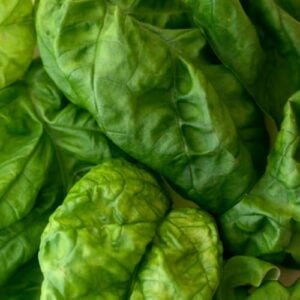 Category 1: Soft herbs (basil, cilantro, parsley)
Best method: herb-and-oil cubes
This is the most useful freezer format for soft herbs. Chop the herbs finely, pack into an ice cube tray, and top with olive oil. Freeze until solid, then pop the cubes out into a labeled freezer bag.
To use: drop a cube directly into a hot pan. The oil melts, the herbs release, and you have an instant flavored base for whatever you’re cooking. Perfect for sautéing vegetables, finishing pasta, or starting a sauce.
Ingredients (makes 12 cubes)
- 2 cups packed fresh basil, cilantro, or parsley (or a mix)
- 1/2 cup extra-virgin olive oil
- Optional: 2 garlic cloves, chopped
Method
Chop herbs finely. Pack into ice cube tray compartments (about 2 tablespoons of herbs per compartment). Top with olive oil until covered. Freeze 4 hours or overnight. Transfer cubes to a labeled freezer bag. Holds 6 months.
Category 2: Hardy herbs (rosemary, thyme, oregano)
Best method: whole sprigs, flash-frozen
Hardy herbs freeze well as whole sprigs. The flavor stays concentrated and you can pull sprigs one at a time as needed.
Method
Rinse and thoroughly dry the sprigs. Spread on a parchment-lined tray in a single layer. Freeze 2 hours until solid. Transfer to a labeled freezer bag. Holds 8 months.
To use: drop frozen sprigs directly into soups, stews, roasts, or braises. They’ll infuse the same way fresh sprigs do.
Category 3: Cherry tomatoes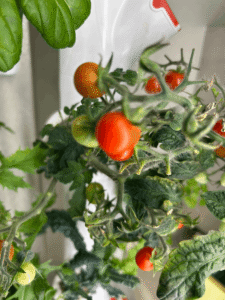
Best method: whole, flash-frozen
This is the surprise category. Cherry tomatoes freeze beautifully whole, and the skins slip off almost by themselves after thawing. The result is a concentrated, sweet frozen tomato that’s perfect for winter sauces and stews when garden fresh isn’t an option.
Method
Rinse cherry tomatoes and pat dry. Do not remove stems. Spread on a parchment-lined tray in a single layer. Freeze 4 hours until solid. Transfer to labeled freezer bags. Holds 12 months.
To use: pull out what you need and let sit at room temperature 15 minutes. The skins slip off. Or drop frozen directly into a simmering sauce; they’ll break down as they thaw.
“The single most useful freezer preparation from a home garden is herb cubes in olive oil. Drop one into a hot pan and you’ve added an instant garden-fresh flavor base to whatever you’re cooking.” , Gardyn test kitchen
Category 4: Peppers
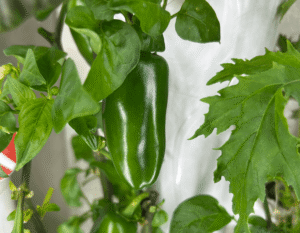 Best method: sliced, flash-frozen
Sweet peppers, jalapenos, and banana peppers all freeze well when sliced. Freezing changes the texture (they lose crispness) but preserves the flavor for cooked applications: pizza, stir-fries, soups, chili.
Method
Wash peppers and remove stems and seeds. Slice into strips or rings. Spread on a parchment-lined tray. Freeze 2 hours. Transfer to labeled freezer bags. Holds 8 months.
To use: drop frozen slices directly into whatever you’re cooking. No need to thaw first.
Category 5: Pesto and chimichurri
Best method: portioned into ice cube trays
Pre-made herb sauces are the most valuable freezer inventory you can build. A single Sunday afternoon session can produce enough pesto and chimichurri for 4 to 6 months of dinners.
Pesto method (makes about 24 cubes)
- 4 cups packed fresh basil
- 1 cup pine nuts (or walnuts, sunflower seeds)
- 2 cups grated Parmesan
- 6 garlic cloves
- 1 1/2 cups olive oil
- 1 teaspoon flaky salt
Blend everything until smooth. Portion into ice cube trays (about 2 tablespoons per cube). Freeze until solid. Transfer to a labeled bag. Holds 6 months.
Chimichurri method (makes 24 cubes)
- 2 cups packed parsley
- 1 cup cilantro
- 1/2 cup oregano
- 6 garlic cloves
- 1 teaspoon red pepper flakes
- 1 cup olive oil
- 1/3 cup red wine vinegar
- 1 teaspoon salt
Blend everything (or chop and combine). Portion into ice cube trays. Freeze. Transfer to labeled bag. Holds 6 months.
The 30-minute Sunday freezer session
Once a month, spend 30 minutes turning your late-summer harvest into 4 to 8 weeks of freezer inventory:
- Minute 0-5: harvest 2 cups each of basil, cilantro, parsley, and thyme
- Minute 5-15: chop soft herbs, portion into ice cube trays, top with olive oil
- Minute 15-20: rinse and dry cherry tomatoes and hardy herb sprigs, spread on trays
- Minute 20-30: label 3 freezer bags, put trays in freezer, transfer to bags in 4 hours
Total active time: 30 minutes. Result: enough garden-quality frozen inventory to season every dinner for a month.
The Gardyn continuous-harvest advantage
Traditional outdoor gardens have a preserving window in August and September, then it’s over. Everything you froze needs to last through winter and spring.
A Gardyn Home changes that math. The column produces continuously all year, so freezing is a convenience choice (why cook with grocery herbs when you have a batch of your own) rather than a necessity. But even with continuous fresh production, a stocked freezer of herb cubes and cherry tomato bags is one of the best investments you can make in your kitchen.
| Grow more than you can eat, then freeze the excess
A Gardyn floor column produces herbs and cherry tomatoes continuously, giving you a real freezer inventory for the whole year. |
Frequently asked questions
Do I need to blanch herbs or vegetables before freezing?
Not for herbs or cherry tomatoes. Blanching (a brief boil then ice bath) is helpful for freezing sturdier vegetables like green beans or broccoli, but for delicate herbs and small tomatoes, blanching destroys texture. Freeze them raw.
How long do frozen garden herbs actually last?
Soft herbs (basil, cilantro, parsley) in oil cubes: 6 months at peak flavor. Hardy herbs (rosemary, thyme, oregano) as whole sprigs: 8 months. Cherry tomatoes whole: 12 months. Pesto and chimichurri: 6 months. All will keep longer but flavor degrades after these windows.
Can I freeze herbs in water instead of oil?
You can, but oil is better. Water expands as it freezes and can create ice crystals that damage cell walls, releasing flavor. Oil coats the herbs and preserves flavor compounds. Water-frozen herb cubes are best for adding to soups and stocks where the water becomes part of the dish.
What’s the best way to package for the freezer?
Two-step method: freeze first on a parchment-lined tray (uncovered) until solid, then transfer to a labeled freezer bag. This prevents clumping and lets you portion exactly what you need. Squeeze the air out of the bag before sealing.
Do frozen herbs work for garnishes?
No. Freezing destroys the crisp texture needed for garnishes. Frozen herbs work only for cooked applications: sautés, sauces, soups, dressings, roasts. For fresh garnishes, harvest fresh from your Gardyn.
Which herbs should I NOT freeze?
Chives freeze OK but lose most of their character. Mint freezes for infused water but loses fresh punch. Delicate microgreens don’t freeze at all. Save these for fresh use only.