Cookies help us deliver the best experience on our website. By clicking Accept you are agreeing to the placement and use of cookies as described in our privacy policy.


Most articles about foods for seasonal allergies pad themselves with extremes (drink raw apple cider vinegar, take spirulina, juice celery on an empty stomach). The research is much more measured and much more useful: certain foods contain compounds that modulate the inflammatory and histamine responses that drive allergy symptoms. Eating them consistently won’t cure allergies, but it can meaningfully reduce the day-to-day burden of a bad allergy season.
Here is what the evidence actually says, the produce categories with the strongest research behind them, and what to grow at home for steady access to the most useful options.
Key takeaways
- Foods for seasonal allergies work through two mechanisms: blocking histamine release (quercetin, vitamin C) and reducing the underlying inflammation (omega-3s, polyphenols).
- Quercetin-rich foods (red onions, apples, leafy greens, herbs) have the strongest evidence base.
- Vitamin C-dense produce, especially watercress, peppers, and leafy greens, supports the histamine-breakdown pathway.
- Herbs like basil and parsley contain compounds with documented anti-inflammatory effects.
- Consistency matters more than peak doses. Eating these foods regularly throughout allergy season outperforms occasional megadoses.
How allergies actually work (briefly)
Seasonal allergies are an overreaction of the immune system to harmless airborne particles, primarily pollen. The body identifies the pollen as a threat and releases histamine, which causes the familiar symptoms: itchy eyes, runny nose, sneezing, congestion. Underlying the histamine response is broader inflammation, which is why allergy symptoms tend to be worse when other inflammatory pressures (poor sleep, processed foods, stress) are also high.
Food can’t shut down the histamine response entirely, but specific compounds can reduce both the histamine release and the underlying inflammation. The net effect is often less severe symptoms and faster recovery from peak-pollen days.
The science of food and allergies
Quercetin
Quercetin is a flavonoid found in red onions, apples, leafy greens, berries, and many herbs. Multiple in vitro and animal studies have shown that quercetin stabilizes mast cells (the cells that release histamine) and reduces histamine release. The evidence in humans is more modest but consistent enough that quercetin is the single most-studied food compound for allergy relief.
Vitamin C
Vitamin C supports the enzyme that breaks down histamine in the bloodstream. People with low vitamin C intake have measurably higher circulating histamine levels. Adequate vitamin C (from food, not supplements) is the floor of any food-based allergy management.
Omega-3 fatty acids
Omega-3s reduce the production of inflammatory eicosanoids that contribute to allergy symptoms. Fatty fish is the primary source, but plant sources (walnuts, flax, chia, some leafy greens) contribute.
Polyphenols
Broad category of antioxidant compounds in produce, herbs, and tea. The mechanism is general anti-inflammation rather than specific histamine modulation, but the effect on allergy symptoms is documented.
 The produce categories with the strongest evidence
Quercetin-rich greens and herbs
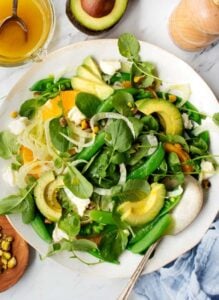
Watercress, red sorrel, parsley, dill, basil, and capers are all unusually high in quercetin. Of these, watercress is the standout: it combines high quercetin content with the highest nutrient density of any common leafy green, plus a meaningful vitamin C contribution.
Vitamin C powerhouses
Peppers (especially red and yellow), strawberries, watercress, parsley, and dark leafy greens deliver substantially more vitamin C than the citrus fruits most people associate with the vitamin. A single serving of any of these meets the daily requirement.
Anti-inflammatory herbs
Basil contains eugenol and other compounds with documented anti-inflammatory effects. Fresh basil (in noticeable, real-meal quantities) is one of the most useful herbs for allergy season. Italian parsley and oregano have similar profiles.
Bromelain-containing foods
Pineapple contains bromelain, an enzyme with anti-inflammatory effects that may help with sinus congestion. The fresh fruit is more effective than supplements for this purpose.
| “Diet won’t replace antihistamines for someone with severe allergies. But for moderate seasonal allergies, eating consistently from a small set of well-studied foods can meaningfully reduce the daily symptom burden across a season.”
Lindsay Springer, Ph.D., Director of Plants, Nutrition & Digital Agriculture, Gardyn |
A practical allergy-season eating week
This is what consistent intake looks like in practice. Aim to eat from each category several times per week, not every day. The goal is steady exposure, not single big doses.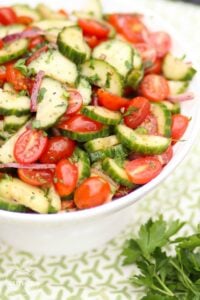
- Watercress 3 to 4 times per week: in salads, on sandwiches, or in soup
- Fresh basil daily: torn over salads, in pasta, with tomatoes, in dressings
- Bell peppers 3 to 4 times per week: raw in salads, sliced as a snack, roasted
- Parsley several times per week: in chimichurri, on grain bowls, in tabbouleh, in pesto
- Red onion 2 to 3 times per week: thinly sliced on sandwiches, in salads, pickled
- Berries (strawberries, blueberries) 3 to 4 times per week
- Fatty fish (salmon, sardines) 1 to 2 times per week, OR plant omega-3 sources daily
- Green tea, 1 to 2 cups per day (also has anti-allergic compounds)
What to skip during allergy season
A few foods can worsen allergy symptoms by either increasing histamine load or contributing to underlying inflammation:
- Aged cheeses, cured meats, and fermented foods all contain higher histamine levels. Reduce during peak symptom days if you notice a correlation.
- Alcohol, especially red wine and beer, contains histamine and reduces the body’s ability to break it down.
- Highly processed foods and added sugars increase systemic inflammation.
This is not about elimination. It’s about awareness. If your allergies spike consistently after a particular food, the histamine connection may be relevant for you.
What to plant for allergy season
A six-yCube allergy-supporting setup covers most of the produce in this guide: watercress, basil, parsley, red sorrel, dill, and oregano. All grow continuously in a Gardyn Home column, and all are difficult to keep in adequate fresh supply through the grocery store.foods-for-seasonal-allergies
| Eat consistently from your own garden through allergy season
A Gardyn floor column grows watercress, basil, parsley, sorrel, and the other quercetin-rich plants this guide recommends. |
Frequently asked questions
How long does it take to notice a difference from eating for allergies?
Most people report a difference within two to three weeks of consistent intake, not days. The effect builds with steady exposure rather than appearing immediately.
Should I take quercetin supplements instead?
Whole food sources of quercetin come paired with other compounds (vitamin C, other flavonoids) that may enhance absorption and effect. Supplements are an option, but the food-based approach has the better evidence base for sustained symptom management.
Can children follow this approach?
Yes, with the obvious adjustment that the foods are real food (not extracts or supplements). Kids who eat regular fresh fruits, vegetables, and herbs as part of a normal varied diet are getting most of these compounds already.
Will this replace my allergy medication?
For most people with moderate to severe allergies, no. Diet is a supportive measure, not a replacement for clinically indicated treatment. Talk to your doctor before making medication changes.
Are there foods I should specifically avoid?
If you have oral allergy syndrome (cross-reactions between pollen and certain foods), specific raw fruits and vegetables can trigger symptoms. Otherwise the general advice is to minimize high-histamine foods (aged cheese, cured meats) during peak symptom days.
Is hydroponic produce as nutritious as soil-grown for these purposes?
Yes. Multiple studies have shown that hydroponic produce matches or exceeds soil-grown produce on most nutritional measures, including vitamin C and many flavonoids. The freshness advantage of homegrown produce typically more than compensates for any small differences.