Cookies help us deliver the best experience on our website. By clicking Accept you are agreeing to the placement and use of cookies as described in our privacy policy.


Summer dinner has a structural problem. The heat kills your appetite for heavy meals. “Throw something together” usually means takeout. The fridge contains grocery greens that wilted on day three, herbs that were unusable by day five, and the same tired components from last week.
The fix is not a new recipe collection. It is a shorter distance between the ingredients and the plate. When your basil is alive in the next room and your cherry tomatoes ripen on their own column, the math of fast summer dinner changes. The meals are simpler. The flavor is louder. The whole thing takes 15 minutes.
Here are five summer dinner templates built around what an indoor garden actually produces, plus one full recipe with everything you need.
Key takeaways
- Easy summer dinner ideas built on fresh herbs and greens are faster than takeout once your garden is your pantry.
- Picked-seconds-before flavor compounds in basil and tomato don’t exist by the time grocery versions reach your kitchen.
- Five 15-minute dinner templates cover most weeknights: caprese, garden pasta, Greek salad, herb omelet, summer grain bowl.
- One Gardyn column feeds a family of four with continuous harvests of greens, herbs, and cherry tomatoes through the entire summer.
- The Memorial Day promo is the best entry point of the year for a first indoor garden.
The summer dinner problem nobody talks about
Most cooking advice is written for cool weather. Long simmers, oven roasts, hearty stews. None of it applies in July when the kitchen is 84 degrees and the last thing anyone wants is a heavy meal that took an hour to make.
Real summer cooking is short, raw or barely cooked, and built around things that taste like themselves. The bottleneck is not skill. The bottleneck is whether your ingredients are alive when they hit the pan.
Why food picked seconds before eating tastes different
This is not marketing language. It is plant biochemistry.
Basil contains volatile aromatic compounds (eugenol, linalool, methyl chavicol) that are responsible for nearly all of its flavor. These compounds dissipate within hours of harvest. A basil leaf you pick this minute has a measurably different aromatic profile than a basil leaf cut three days ago and shipped in a clamshell. Most home cooks have never tasted real basil because they have only ever had grocery basil.
Tomatoes are worse. Tomato flavor depends on sugar-to-acid balance plus a set of aromatic compounds that develop only on the vine. Commercial tomatoes are picked green for shipping and ripened with ethylene gas after transit. They develop color but never develop the flavor compounds, which is why grocery tomatoes taste like nothing and a same-day-vine cherry tomato tastes like a candy.
This is the unfair advantage of cooking with garden produce: the flavor floor is so much higher that simpler dishes work.
 Five 15-minute summer dinners from one Gardyn
1. Caprese with picked-this-minute basil
Tomatoes (preferably warm from the column, not chilled), torn fresh mozzarella or burrata, basil leaves torn (never cut), olive oil, flaky salt, cracked pepper. Optional balsamic if it is genuinely good balsamic. Bread alongside. 8 minutes.
2. Garden pasta
Pasta in salted water. While it cooks: olive oil in a pan, lots of garlic, halved cherry tomatoes, salt. When the tomatoes start to break down, in goes the drained pasta and a handful of torn basil and arugula. Parmesan on top. 15 minutes start to finish.
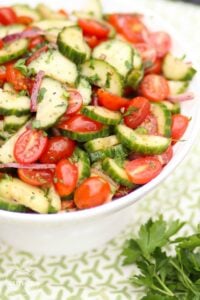
3. Greek salad with garden cucumber and herbs
If you grow cucumber: cucumber, tomato, red onion, feta, kalamata olives if you have them, olive oil, lemon, oregano (or fresh basil), salt. The garden cucumber and tomato carry the whole dish. Bread alongside makes it dinner. 10 minutes.
4. Herb omelet
Three eggs whisked with a small handful of any combination of garden herbs (basil, parsley, chives, oregano). Butter in a nonstick pan over medium-low. Cook gently, fold, serve with a green salad from the same column. 7 minutes.
5. Summer grain bowl
Cooked grain (farro, quinoa, rice, whatever is in the fridge), a generous pile of garden greens, halved cherry tomatoes, an egg or piece of grilled chicken or a scoop of beans, herbs, lemon, olive oil, salt. Compose, eat. 12 minutes if the grain is already cooked.
|
The full recipe: Gardyn caprese pasta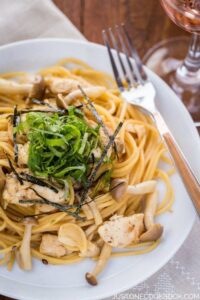
This is the meal worth memorizing. It uses three things that grow effortlessly in a Gardyn (basil, cherry tomatoes, arugula), it takes 15 minutes, and it is good enough to serve guests.
Ingredients (serves 4)
- 12 ounces short pasta (rigatoni, fusilli, or orecchiette)
- 1/4 cup good olive oil, plus more for finishing
- 4 garlic cloves, thinly sliced
- 2 cups cherry tomatoes, halved
- 1 teaspoon flaky salt, plus more to taste
- 1/4 teaspoon red pepper flakes (optional)
- 1 cup loosely packed fresh basil leaves, torn
- 2 cups loosely packed arugula
- 8 ounces fresh mozzarella, torn into chunks
- Freshly grated parmesan to finish
- Lemon zest from half a lemon
Method
- Bring a large pot of well-salted water to a boil and cook the pasta to one minute before al dente.
- While the pasta cooks, heat the olive oil in a large pan over medium heat. Add the garlic and cook gently for about a minute, until fragrant but not browned.
- Add the cherry tomatoes, salt, and red pepper flakes. Cook for four to five minutes, stirring occasionally, until the tomatoes start to slump and release their juices.
- Drain the pasta, reserving half a cup of pasta water.
- Add the pasta to the tomato pan with a splash of pasta water. Toss to combine. The starch from the water will emulsify with the oil and tomato juices into a light sauce.
- Off the heat, add the torn mozzarella, basil, and arugula. Toss gently so the cheese begins to melt and the greens wilt slightly from the residual heat.
- Plate. Finish with parmesan, a drizzle of olive oil, and the lemon zest. Serve immediately.
What grows in a Gardyn for fast summer cooking
Three-tier setup, depending on how much you cook.
If you mostly want garnishes and microgreen wins: start with the Gardyn Microgreens Kit. Seven-to-fourteen-day harvests of intensely flavored microgreens to top eggs, toast, salads, and tacos. Lowest commitment, fastest gratification.
If you are a one or two-person household cooking a few times a week: a Gardyn Studio holds 16 plants in roughly four square feet of floor space. Plenty of capacity for basil, lettuce, arugula, and one or two cherry tomato yCubes.
If you are feeding a family of four and want the kitchen to feel like a real garden: Gardyn Home grows 30 plants in two square feet. This is the version that supports daily cooking with no rotation pressure. Continuous harvest, real volume.
|
Frequently asked questions
How many people can one Gardyn feed?
A Gardyn Home (30 plants) comfortably supports daily summer cooking for a family of four. A Studio (16 plants) is well-suited to one or two people who cook often. A Microgreens Kit supplements either, or stands alone for households that want quick wins.
What if I travel mid-week?
Vacation Mode handles trips up to about two weeks without intervention. The reservoir holds enough water, the lighting schedule continues, and Kelby (the AI assistant) alerts your phone if anything needs attention. Hardy plants like kale and chard hold up best to longer absences.
How do I keep up with continuous harvesting?
Pick the outer leaves of leafy greens (lettuce, arugula, kale) and the plants regenerate. For basil, pinch above a leaf pair to encourage branching. For cherry tomatoes, pick when fully ripe and pollinate by hand or by shaking the plant. Once you settle into the routine, harvesting takes five minutes a day or less.
Will my picky kids actually eat this food?
Generally yes, especially when they help pick it. Children who participate in growing food are documented to eat measurably more of it. The cherry tomatoes and basil tend to be the gateway plants for picky eaters.
What if I don’t cook every night?
Continuous-harvest greens are forgiving. Pick what you need, when you need it. The plants keep producing whether you cook nightly or twice a week. Leftover greens can be used in smoothies, eggs, or thrown into pasta water at the end of cooking.
Can I really make pasta this good in 15 minutes?
Yes, once your garden is your pantry. The recipe in this article is the proof. Garden cherry tomatoes break down into a real sauce in five minutes. Fresh basil and arugula carry flavor that grocery versions cannot. Hot pasta plus good fat plus alive greens plus salt is genuinely a meal.