Cookies help us deliver the best experience on our website. By clicking Accept you are agreeing to the placement and use of cookies as described in our privacy policy.


On Thursday, July 30, humanity will have used more from nature than the planet can renew across the entire year. Everything consumed between that date and December 31 comes out of principal instead of interest.
That is Earth Overshoot Day, calculated each year by Global Footprint Network. And if you live in the United States, your version of the date has already passed. It was March 14.
Numbers on this scale tend to produce a shrug. The distance between “humanity is running a 1.73 Earth deficit” and “what am I supposed to do about that on a Tuesday” is where most sustainability coverage quietly falls apart.
So here is the part that closes the gap. Global Footprint Network’s own accounting says half of the planet’s biocapacity is used to feed us, and that food waste by itself accounts for roughly two weeks of the calendar. Food is not a side item in this math. It is the biggest category a household touches every single day.
We wanted to see what that looks like added up across a community of people growing at home. As of July 1, 2026, here is where our Gardyners stand.
Key takeaways
- Earth Overshoot Day 2026 falls on Thursday, July 30. The United States passed its own overshoot date on March 14.
- Humanity is using natural resources 73% faster than ecosystems can regenerate, the equivalent of 1.73 Earths. It is the highest level ever recorded.
- The 2026 date landed six days later than 2025, but that shift came from a data revision rather than from progress. Real-world overshoot got worse.
- Half of Earth’s biocapacity is used to feed us, which makes food the largest lever most households can actually pull.
- Cutting global food waste in half would move Earth Overshoot Day 13 days. The full set of food changes is worth 32 days.
- Since we started, our Gardyners have grown 4.8 million pounds of produce, avoided 3.2 million pounds of food waste, and saved 100 million gallons of water.
What our Gardyners have grown, as of July 1, 2026
These figures are cumulative across our Gardyn community since we started. The rest of this article is about what they mean, and what they do not.
| Measure | Total | Unit |
|---|---|---|
| Produce grown | 4.8M | pounds |
| Servings of produce | 40M | servings |
| Water saved | 100M | gallons |
| Pesticide avoided | 1.1M | pounds |
| Land reclaimed | 230 | acres |
| Football fields reclaimed | 170 | fields |
| Food waste avoided | 26M | servings |
| Food waste avoided | 3.2M | pounds |
| A note on these numbers
Our Gardyn figures above are cumulative since inception, not annual, and they are internal estimates. We model them from yield data, comparative water use for field-grown equivalents, and published waste rates for fresh produce. They have not been audited by a third party, and they supersede the earlier totals published on our sustainability page. The Global Footprint Network figures cited throughout this article are theirs, not ours. We have deliberately kept the two data sets side by side rather than combining them, because translating our own totals into a number of days on the global calendar produces a figure so small it would be misleading in either direction. The honest framing is this: we do not move Earth Overshoot Day, and neither does any single company. What our numbers show is what the behavior looks like when a lot of households do the same thing at once. |
What Earth Overshoot Day actually measures
The calculation is simpler than the concept. Global Footprint Network divides the planet’s biocapacity, meaning everything Earth’s ecosystems can regenerate in a year, by humanity’s Ecological Footprint, meaning everything we demand from those ecosystems. Multiply by 365 and you get the day the annual budget runs out.
The Ecological Footprint itself is built from roughly 15,000 data points per country per year. It adds up all the competing demands on biologically productive land and sea: food, timber, fibers, carbon absorption, and the space taken up by infrastructure. Carbon from burning fossil fuels accounts for 61% of the global total.
Earth first tipped into overshoot in the early 1970s. The date has moved earlier in almost every decade since, and the announcement now arrives every year on World Environment Day, June 5.
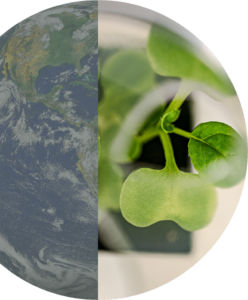 The 2026 date moved later. The problem did not.
This is the detail that gets misreported every summer, so it is worth getting right.
Earth Overshoot Day 2026 falls six days later than it did in 2025. That sounds like good news. It is not.
Global Footprint Network published the breakdown itself. Eight of those days came from a revision to the underlying data, specifically an upward revision of how much carbon the ocean absorbs. Two days moved in the opposite direction because the actual gap between what humanity demands and what the planet regenerates got wider over the past year. The net result is a later date on the calendar and a worse situation on the ground. By their accounting, 2026 represents the highest level of ecological overshoot ever recorded.
The accumulated bill is the figure that tends to stay with people. Since overshoot began in the early 1970s, the annual deficits have compounded into an ecological debt equal to 20.6 years of the planet’s full biological productivity. Over the same period, atmospheric greenhouse gas concentration has climbed from 367 parts per million CO2 equivalent to 547 today.
| “Because of the nature of physics, overshoot cannot last.”
Dr. Mathis Wackernagel, board member, Global Footprint Network |
The American overshoot date was March 14
Country Overshoot Day answers a slightly different question: if every person on Earth consumed the way residents of one particular country do, what date would the global budget run out?
For the United States in 2026, the answer is March 14. Seventy-two days into the year. Supporting all of humanity at American consumption levels would take 5.1 Earths.
| Country | Overshoot day 2026 | Earths required |
|---|---|---|
| Qatar | February 4 | 10 |
| Canada | March 8 | 5.5 |
| United States | March 14 | 5.1 |
| Australia | March 16 | 4.9 |
| France | April 24 | 3.2 |
| Germany | May 10 | 2.8 |
| United Kingdom | May 22 | 2.6 |
| China | May 27 | 2.5 |
| Brazil | August 14 | 1.6 |
| Indonesia | October 18 | 1.3 |
Roughly a dozen countries do not have an overshoot day at all, because their average per person footprint sits below what the planet can regenerate per person. If everyone lived the way people in Bangladesh do, humanity would use 46% of the Earth.
Half of Earth’s biocapacity is used to feed us
That one statistic reframes the entire conversation. Feeding people is the single largest claim humanity makes on the planet’s regenerative capacity, which is why Global Footprint Network treats food as one of its five major solution areas alongside cities, energy, population, and planet.
They have put day values on specific changes, which makes the abstract suddenly concrete:
- Cutting global food waste in half would move Earth Overshoot Day 13 days.
- Halving global meat consumption and replacing those calories with a vegetarian diet would move it 17 days, ten of which come from reduced methane emissions alone.
- Preventing food loss and waste, favoring plant-based foods, and choosing food grown with agroecological and regenerative practices would together move it 32 days.
The waste figure is the one worth sitting with. Roughly a third of all food produced for human consumption is lost or wasted, about 1.3 billion tonnes every year, according to the UN Food and Agriculture Organization. High-income and low-income countries lose comparable quantities for very different reasons. In wealthier countries, most of it happens at the retail and household end. Which is to say: in the kitchen.
In the United States the produce-specific number is worse than the all-food global average. Roughly 40% of American produce ends up in a landfill, which is what happens when fresh food is grown far away, shipped a long distance, and bought in fixed quantities by people who eat in variable ones.
Modern agriculture is also unusually fossil fuel intensive. Global Footprint Network cites an example from Belgium in which producing a single calorie of meat consumes roughly five calories of fossil fuel. Very little of that is the growing itself. It is fertilizer, processing, refrigeration, and the distance between a field and a plate.
Which brings us to what they call short chain food systems. The shorter the distance between where food grows and where it gets eaten, the less spoils in transit, the less fuel moves it, and the less ends up in a bin at the end of the week.
There is no shorter chain than a countertop.
What those numbers look like against the Footprint
Now that the framework is on the table, three of our figures from the top of this article are worth returning to, because they map onto it in different ways and one of them does not map onto it at all.
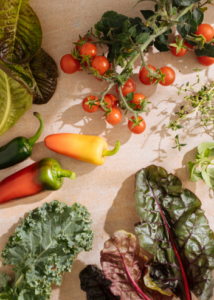 Food waste avoided: 3.2 million pounds
This is the metric that lines up most cleanly with the 13-day lever. Growing at home reduces waste at both ends of the chain. You harvest what you need when you need it, instead of buying a bunch of something and watching most of it turn to liquid in a crisper drawer. And nothing is lost in transit between a farm, a truck, a distribution center, and a shelf, because none of those exist in the process.
Land reclaimed: 230 acres
This one speaks most directly to the Ecological Footprint itself, because biocapacity is measured in biologically productive land area. 230 acres works out to about 170 football fields, or roughly 93 hectares that no longer need to be in production to feed the same number of people. Vertical growing is efficient in the dimension that the Footprint actually counts.
Water saved: 100 million gallons
Water does not appear in the Ecological Footprint, which measures land and sea area rather than volume, so this figure stands on its own rather than moving the date. It is still worth stating plainly, because agriculture is where most fresh water goes. Traditional farming accounts for nearly 70% of available fresh water, much of it used in dry, arid places where a large share evaporates before a plant ever drinks it. Hybriponic™ growing uses about 95% less water than conventional agriculture, because it recirculates through a closed, automated loop and the only water spent is what the plants actually take up. If you want the household version of this, we have written about small ways to save water elsewhere.
Why growing at home changes the math
The mechanism is not complicated, and it is worth separating from the marketing version of itself.
You harvest instead of stockpiling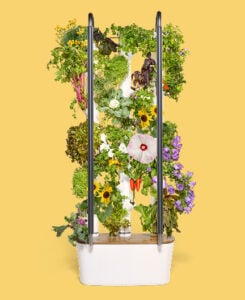
The core reason fresh produce gets wasted is that it is bought in fixed quantities and eaten in variable ones. A living plant inverts that. You take three leaves for a sandwich and the plant keeps growing. The unit of purchase stops being a bag and starts being a meal.
The supply chain shortens to zero
Every step between a field and a kitchen adds fuel, refrigeration, packaging, and an opportunity for spoilage. Removing those steps removes their footprint along with them. This is the practical form of what Global Footprint Network calls a short chain food system.
And yes, it runs on electricity
This is the fair objection, and it deserves a direct answer rather than a dodge. Carbon accounts for 61% of humanity’s Ecological Footprint, so anything that plugs in and runs year-round has to justify itself on energy.
A Gardyn costs roughly $59 a year to run. That is less than a dishwasher at about $61, less than half a refrigerator at about $150, and a rounding error next to central air at about $1,200. Grow lights sound energy hungry in the abstract, but the actual draw sits at the low end of the appliances already in a typical kitchen, and it displaces a share of the fuel that would otherwise move the same food across the country in a refrigerated truck.
Growing space stacks vertically
Biocapacity is a land measurement, and vertical growing uses a fraction of the floor area that the same yield would take in a field. That is what the 230 acre figure is describing. If you want the technical version of how that works, our how it works page walks through it, and we cover the broader picture on growing sustainably.
Where to start
If July 30 has you looking for something to actually do this week, the useful move is to pick the smallest thing you will genuinely keep up with. Ambition is not the constraint here. Consistency is.
- Start with the Microgreens Kit. It takes up almost no space and produces a harvest in a week or two, which is long enough to prove the habit works and short enough that you do not lose interest.
- Move up to Gardyn Studio Gen2. Sixteen plants is enough to change what actually ends up in your meals rather than functioning as a garnish supply.
- Grow into Gardyn Home. Thirty plants is the point where a meaningful share of a household’s fresh produce comes from indoors, and where the food waste math starts to shift noticeably.
Kelby, the AI assistant built into every Gardyn, handles the parts people usually get wrong: when to top up water, when nutrients are due, and what is ready to pick. The failure mode for home growing has never been enthusiasm. It has been forgetting.
| Move your own date
Earth Overshoot Day is a global number built out of a few billion small ones. Growing some of your own food is one of the few levers that sits entirely inside your own kitchen, and it happens to be attached to the largest category on the list. |
Frequently asked questions
When is Earth Overshoot Day 2026?
Earth Overshoot Day 2026 falls on Thursday, July 30. The date is announced each year on World Environment Day, June 5, by Global Footprint Network.
What was the United States Overshoot Day in 2026?
March 14, 2026. That is the date Earth Overshoot Day would fall on if everyone in the world consumed at the same level as the average United States resident. It would take 5.1 Earths to sustain that level of consumption globally.
Why did Earth Overshoot Day move later in 2026?
Almost entirely because of a data revision rather than real improvement. Global Footprint Network revised its estimate of how much carbon the ocean absorbs, which pushed the date eight days later. Actual worsening of the footprint to biocapacity gap pulled it two days earlier. The net was six days later, but 2026 still represents the highest recorded level of overshoot.
How is Earth Overshoot Day calculated?
Global Footprint Network divides the planet’s biocapacity by humanity’s Ecological Footprint and multiplies the result by 365. The underlying data comes from the National Footprint and Biocapacity Accounts, which draw on roughly 15,000 data points per country per year, largely sourced from UN agencies.
How much of the planet’s resources go toward food?
About half of Earth’s biocapacity is used to feed us, which is why food is one of the five solution areas Global Footprint Network tracks. Cutting food waste in half worldwide would move the date 13 days, and the full set of food system changes would move it 32 days.
Does growing food at home actually reduce your footprint?
It reduces the parts of the food footprint tied to waste, transport, and land use. It does not eliminate a household footprint, and it is not a substitute for the larger policy and energy changes that drive most of the global number. The honest version is that it is a real lever, a household-sized one, attached to the largest single category on the list.