Cookies help us deliver the best experience on our website. By clicking Accept you are agreeing to the placement and use of cookies as described in our privacy policy.


Washing produce before eating it is standard food safety advice. For bacterial contamination from handling, transport, and field conditions, washing is genuinely effective and critically important. For pesticide removal, the picture is more complicated — and the answer depends on which pesticides, which produce, and which washing method is being discussed.
Key takeaways
- Contact pesticides on produce surfaces can be partially removed by washing. Systemic pesticides absorbed into plant tissue cannot be removed by washing at all.
- Pyrethroids like permethrin and bifenthrin — the compounds most frequently detected on spinach — are lipophilic (fat-soluble) and adhere strongly to waxy plant surfaces; they are not effectively removed by water alone.
- A 2017 University of Massachusetts study found baking soda solution (1% sodium bicarbonate) removed 80% of surface thiabendazole and 96% of phosmet from apples — more effectively than water alone.
- Commercial produce washes show inconsistent results in peer-reviewed comparisons — several studies find no significant advantage over water alone.
- For vegetables treated with systemic pesticides, no washing method addresses meaningful residue — the compounds are distributed throughout plant tissue.
- Growing produce at home without any pesticide applications eliminates the question entirely — washing remains appropriate for handling hygiene, but there is no chemical load to mitigate.
Why pesticide removal by washing is complicated
Contact versus systemic pesticides
Contact pesticides remain on the surface of the plant where they were applied. Systemic pesticides are absorbed through the plant’s vascular system and distributed throughout the plant tissue. Washing can remove a proportion of contact pesticide residues from produce surfaces. It cannot remove systemic pesticides from plant tissue. For produce treated with systemic pesticides, no amount of washing meaningfully reduces the internal residue load.
Water solubility of pesticide compounds
Even among contact pesticides, water solubility varies enormously. Highly water-soluble pesticides dissolve readily and rinse away with cold water. Lipophilic (fat-soluble) pesticides — including many pyrethroids like permethrin and bifenthrin — adhere strongly to waxy plant surfaces and are not effectively removed by water alone. This is particularly relevant for spinach, which is one of the highest pesticide-load vegetables and where the most commonly found compounds are precisely the ones washing addresses least effectively.
What the research shows about washing methods
Cold water rinse: partial but limited
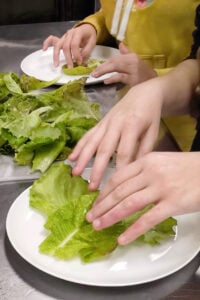
A simple cold water rinse removes a portion of surface pesticide residues — typically 10 to 30 percent of detectable contact pesticide load depending on the compound and produce type. Research published in Food Control found that rinsing under running water for 30 seconds reduced some pesticide residues on leafy greens but left a significant proportion intact, particularly for lipophilic compounds.
Baking soda solution: more effective than water alone
A 2017 study published in the Journal of Agricultural and Food Chemistry by researchers at University of Massachusetts found that soaking apples in a 1 percent baking soda (sodium bicarbonate) solution for 12 to 15 minutes removed 80 percent of surface thiabendazole and 96 percent of phosmet, versus a standard water rinse. The alkaline pH of baking soda solution degrades certain pesticide compounds chemically in addition to mechanically removing surface residues.
Importantly, this study was conducted on apples and specific pesticide compounds. Baking soda solution is more effective than water alone but is not uniformly effective across all pesticide types, and it does not address systemic pesticides or lipophilic compounds that bind tightly to plant surfaces.
Produce washes: inconsistent evidence
Multiple studies have compared commercial produce washes against plain water and found inconsistent results. Several peer-reviewed comparisons found commercial washes no more effective than water at removing pesticide residues, while others found modest improvements. The evidence base does not support a strong recommendation for commercial produce washes over a thorough water rinse or baking soda solution.
| The systemic pesticide problem that washing cannot solve
For vegetables treated with systemic pesticides absorbed into plant tissue, no washing method removes meaningful residue. The only ways to address systemic pesticides in produce are: buy organic (which prohibits synthetic systemic pesticides), or grow your own without pesticide applications. Washing remains important for microbial safety but should not be assumed to address systemic chemical residues. |
Practical washing recommendations by produce type
Leafy greens: spinach, kale, lettuce, arugula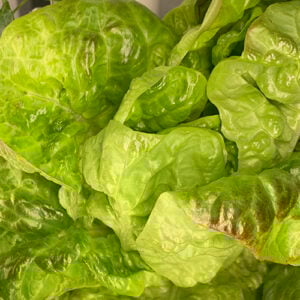
Submerging in cold water and agitating, then rinsing under running water, removes more surface residue than a simple rinse. A baking soda soak for 5 to 10 minutes before rinsing improves removal further for water-soluble compounds. Neither method addresses systemic pesticides or tightly bound lipophilic compounds like permethrin.
Firm-skinned produce: apples, peppers, cucumbers
Scrubbing with a produce brush under running water removes more surface residue than rinsing alone. The friction of scrubbing physically dislodges pesticide particles from the skin. Baking soda solution enhances this for specific compound types.
What growing your own does that washing cannot
Growing spinach, kale, lettuce, herbs, and peppers at home in a Gardyn system using no pesticide applications means there are no residues to remove. Washing is still appropriate for microbial safety from handling and dust, but it is not addressing a pesticide load that exists in any meaningful quantity. This is the fundamental difference between mitigation — which is what washing provides — and elimination — which is what home growing without pesticides provides.
Growing our own organic food inside our home covers the Gardyn approach to pesticide-free growing. The reduce pesticides page has additional strategies.
Frequently asked questions
Does warm water remove more pesticides than cold?
Warm water dissolves some pesticide compounds more effectively than cold, but it can also promote faster breakdown of delicate produce and accelerate microbial activity. Using water that is comfortably warm, combined with a baking soda solution, represents the most practical improvement over a cold rinse.
Is a 10-minute soak better than a quick rinse?
Yes, for water-soluble contact pesticides. Extended contact time allows more complete dissolution and removal of surface residues. For lipophilic compounds like pyrethroids, extended soaking provides minimal additional benefit because the compounds do not dissolve in water regardless of contact time.
Should I wash pre-washed bagged salads?
The FDA advises against washing pre-washed, ready-to-eat bagged greens because the risk of cross-contamination from kitchen surfaces and sinks may exceed the benefit. If the bag is labelled ‘ready-to-eat’ or ‘triple-washed,’ the washing step is not recommended.