Cookies help us deliver the best experience on our website. By clicking Accept you are agreeing to the placement and use of cookies as described in our privacy policy.


Cooking with a toddler in the kitchen is supposed to be a sweet bonding moment. Sometimes it is. Most of the time, honestly, it is a flour-covered hostage situation. The internet is full of cheerful “let your toddler help in the kitchen!” content that conveniently ignores the fact that toddlers cannot do most kitchen tasks safely or competently, and that you also need dinner on the table by 6 p.m.
So here are eight things they actually can do, written by people who have lived through it. Ranked roughly by how much your toddler will enjoy it and how much it actually helps you (or at least does not actively make things worse). Plus the one task that beats the other seven combined.
Key takeaways
- Most kitchen tasks marketed for toddlers are not safe or realistic. A few are.
- Harvesting from an indoor garden is the cheat code: no knives, no heat, immediate result.
- Set yourself up for success with a learning tower, pre-measured ingredients, and a timer.
- Pizza night, build-your-own salads, and smoothies are the meals where toddler help integrates well.
- Some nights, skip it entirely. That is fine.
The 8 tasks (ranked from most to least useful)
1. Harvesting leaves and herbs from an indoor garden
The clear winner. No knives, no heat, immediate visible result, satisfying snip motion, and the toddler genuinely contributed to dinner in a way they can see and brag about. A Gardyn makes this a daily option instead of a special-occasion thing. Hand them safety scissors, point at the basil or butterhead lettuce, and let them go. Best for ages 18 months and up. Will keep them engaged for 5 to 10 minutes, which is approximately their attention span anyway.
2. Washing produce in a colander
Universally satisfying. Hand them a colander of cherry tomatoes or salad greens, set them at the sink (with a stool), and let them play. They will get water everywhere. The produce will be very thoroughly washed. Best for ages 2 and up. Buy time for yourself by handing them more produce than the recipe needs.
3. Tearing lettuce and herbs
Toddlers love to destroy things, and tearing lettuce is socially acceptable destruction. Butterhead lettuce is ideal because the leaves come apart cleanly. Basil leaves are a bonus because they smell incredible when crushed. Best for ages 18 months and up. Pro tip: have them tear into a large bowl, not onto the counter.
4. Sprinkling toppings
Microgreens, grated cheese, herbs, sesame seeds. Anything that can be pinched and dropped from a height. Toddlers will sprinkle wildly uneven amounts, which is fine. The act of sprinkling is the point. Microgreens in particular work well here because they are visually exciting and the toddler ends up garnishing dinner like a tiny chef. Best for ages 2 and up.
5. Stirring (in a deep bowl, off the counter)
Stirring works only if you control three variables: the bowl is deep, the bowl is on the floor or a low table (not on the counter where they have to reach), and the contents are not hot or splashy. Pancake batter, salad dressing, dry ingredients. Best for ages 18 months and up. Hand them a wooden spoon. Accept that 30 percent will end up outside the bowl.
6. Mashing soft fruit with a fork
Bananas. Avocado. Cooked sweet potato. Soft berries. The fork-mash is satisfying gross-motor work and produces something genuinely useful for muffins, smoothies, or guacamole. Best for ages 2 and up. Bonus: kids who mashed the avocado are more likely to eat the guacamole.
7. Pressing dough or shaping balls
Cookie dough, biscuit dough, meatballs (raw, then washed hands), dumpling skins. Anything with a putty-like texture. Toddlers will not produce uniform shapes. The shapes will not be hygienic. Bake or cook accordingly. Best for ages 2 and up.
8. Pouring pre-measured ingredients
Pre-measure everything into small cups before they enter the kitchen. Their job is to dump each cup into the bowl. They get the satisfaction of pouring; you get to keep the recipe accurate. Best for ages 2 and up. Worth the 5 minutes of setup.
Why harvesting is the cheat code
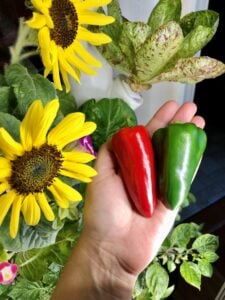 Worth pulling out as its own section. The reason harvesting beats every other task on the list is that it satisfies every parent criterion at once. There are no knives. There is no heat. There is no measurement to mess up. The result is immediate (the leaf comes off the plant; the toddler is delighted). The motion is satisfying (snip with safety scissors; pinch and twist a tomato). And, most importantly, the toddler genuinely contributed to a meal in a way they can point at.
Most toddler kitchen tasks are theater. The toddler thinks they helped, but the parent is doing the actual work plus an extra job of supervising. Harvesting is the rare task where the kid did the real thing. The basil on the pizza came off the plant they cut it from. That matters more than parenting books usually credit.
“Most toddler kitchen tasks are theater. Harvesting is the rare task where the kid did the real thing.”
Setup that saves your sanity
The difference between a fun cooking-with-toddler night and a stress-explosion is almost entirely setup. Five things that change the outcome:
- Get a learning tower or sturdy step stool. Trying to cook with a toddler who cannot reach the counter is a guaranteed meltdown.
- Pre-measure everything before they enter the kitchen. Pre-measuring takes 5 minutes and saves 30.
- Set a 10-minute timer. Toddler attention spans are short. When the timer goes off, they are excused. You finish the meal. Everyone wins.
- Have a damp washcloth ready. Sticky toddler hands plus walking around the kitchen equals chaos. A washcloth at the ready is the difference between minor incident and full reset.
- Accept that you will re-clean the kitchen. There is no version of this where the kitchen ends up cleaner. Build the cleanup into your time estimate and you will not feel cheated.
|
What to actually cook with their help
Some meals integrate toddler help; most do not. Three that work consistently:
Build-your-own salad night
Toddler harvests greens and herbs from the garden. Toddler washes them in a colander. Toddler tears the lettuce into a bowl. You handle the protein, the dressing, and the actual assembly. Toddler is highly invested in the salad they helped make. Butterhead lettuce and cherry tomatoes are the ideal toddler-friendly base.
Personal pizzas
Pre-make the dough. Pre-measure toppings into small bowls. Toddler sprinkles cheese, scatters toppings, places basil leaves. You handle the oven. Pizza night is forgiving (uneven topping distribution still tastes great), and toddlers love the agency of building their own.
Smoothies
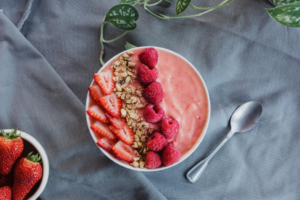
Toddler washes berries. Toddler dumps pre-measured frozen fruit into the blender. You add liquid and blend. Smoothies are forgiving, kid-friendly, and almost foolproof. Bonus: you can sneak in a handful of greens that the toddler will not notice.
When to skip it (and that is okay)
Some nights you do not have it in you. Some recipes do not leave room for help. Some toddlers are not in the mood. Cooking with kids is a long-term habit, not a daily mandate. The point is to build positive associations with food and cooking over years, not to make every dinner a teaching moment.
If tonight is a make-pasta-and-collapse night, skip it. Try again tomorrow. The relationship with food is built across thousands of small moments, not perfected in any one of them.
|
Frequently asked questions
What is the youngest age for cooking with a toddler?
Around 18 months for the most basic tasks (handing them a leaf, sprinkling, pouring from a small cup). Most of the tasks on this list scale up around age 2.
How long should a cooking session last?
Match the toddler’s attention span: 5 to 15 minutes is realistic. Set a timer. End on a high note before they get bored, not after.
What if my toddler refuses to participate?
Skip it that night. Forcing participation backfires and makes the next attempt harder. Cooking with kids works only when it feels like a fun thing they get to do, not a chore they have to do.
Are safety scissors really safe for harvesting?
Yes, for ages 2 and up with supervision. Plastic toddler safety scissors are designed to cut paper, fabric, and soft plant matter without cutting skin. The harvesting motion (pinch, snip) is gentle and predictable.
What if I do not have an indoor garden?
Most of the tasks on this list still work with grocery-store produce. The harvesting task specifically benefits from a constantly available indoor garden because it makes the kitchen-helper habit a daily option instead of an occasional one. The Microgreens Kit is a low-commitment way to test the dynamic before going bigger.